


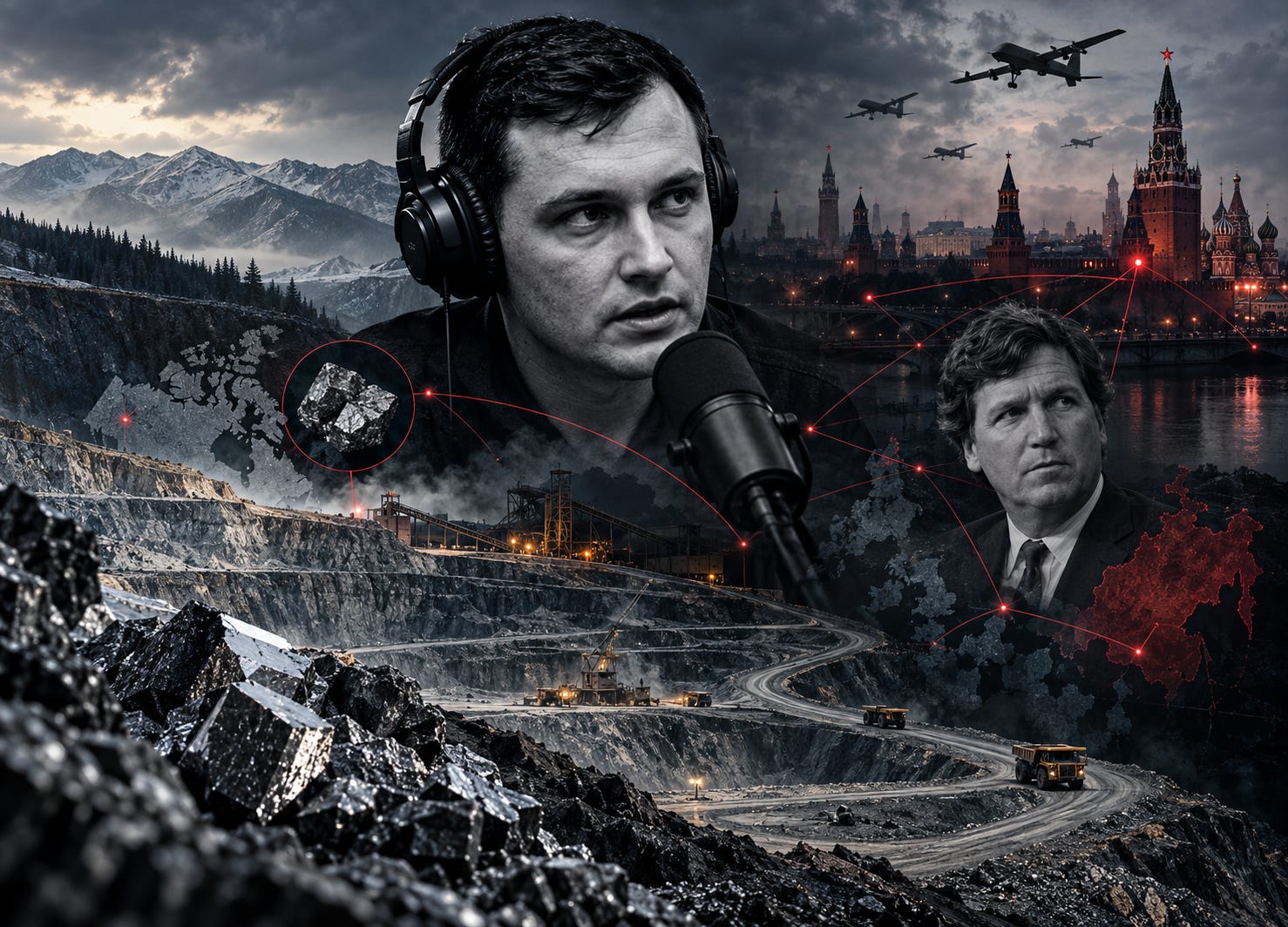
A publicly traded Canadian mining company developing strategically important tungsten projects in the United States has been linked to sponsorships of pro-Russian media personalities, including a member of a Moscow-based influence organization who has raised funds and supplied equipment for Russian military drone production.
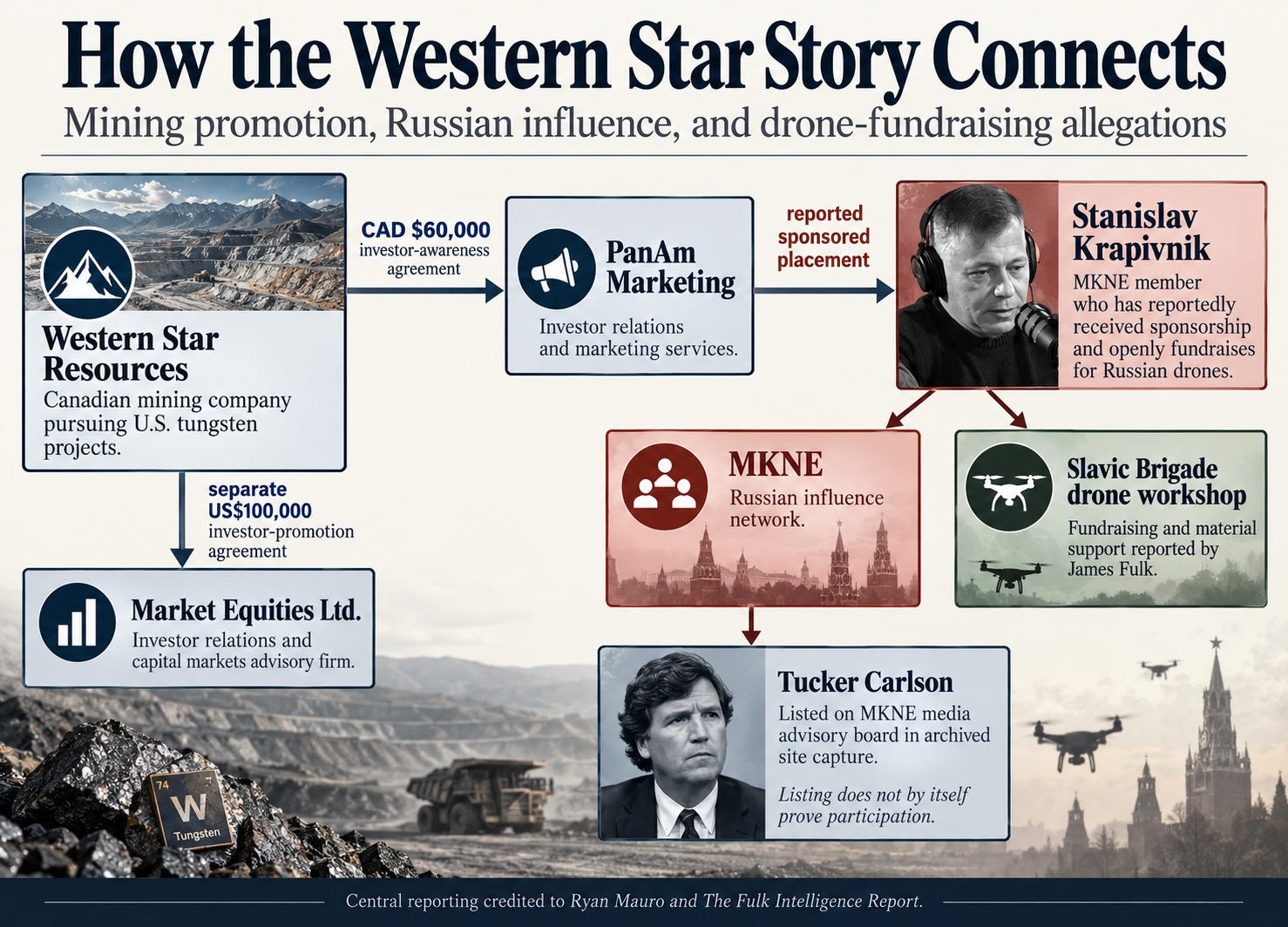
The findings published by the Fulk Intelligence Report and highlighted by counter-extremism researcher Ryan Mauro concern Vancouver-based Western Star Resources Inc. and its sponsorship of Stanislav Krapivnik, a former U.S. Army officer affiliated with the International Club of National Unity, known by its Russian abbreviation MKNE.
The Russian organization, established in January 2025, has also drawn scrutiny for its connections to Russian intelligence-linked operatives and prominent Western commentators. Earlier research by Mauro, James Fulk and an investigator known as Restitutor revealed that Tucker Carlson had been listed on MKNE’s media advisory board, alongside other American personalities.
Western Star’s sponsorship relationships raise questions about how a Canadian company pursuing American critical-mineral resources selects the political commentators and media outlets it pays to promote its business.


A Canadian Mining Company With American Strategic Interests
Western Star Resources, which trades on the Canadian Securities Exchange under WSR and the U.S. over-the-counter market under WSRIF, is developing tungsten exploration properties in Nevada and New Mexico.
Tungsten is a strategically important mineral used in aerospace manufacturing, industrial machinery, military equipment and armor-piercing ammunition. Securing domestic production has become increasingly important to American efforts to reduce dependence on foreign-controlled critical-mineral supply chains.
Western Star’s projects include the Rowland Tungsten Property in Nevada and the Eagle Point Tungsten Project in New Mexico.
On October 13, the company announced plans for a six-hole drilling program at Rowland, a formerly producing tungsten property. The announcement also disclosed an agreement with PanAm Marketing Inc. to provide investor-awareness and promotional services.
Under the September 30 agreement, Western Star allocated CAD $60,000 for a marketing campaign scheduled to run approximately from October 15 through November 15.
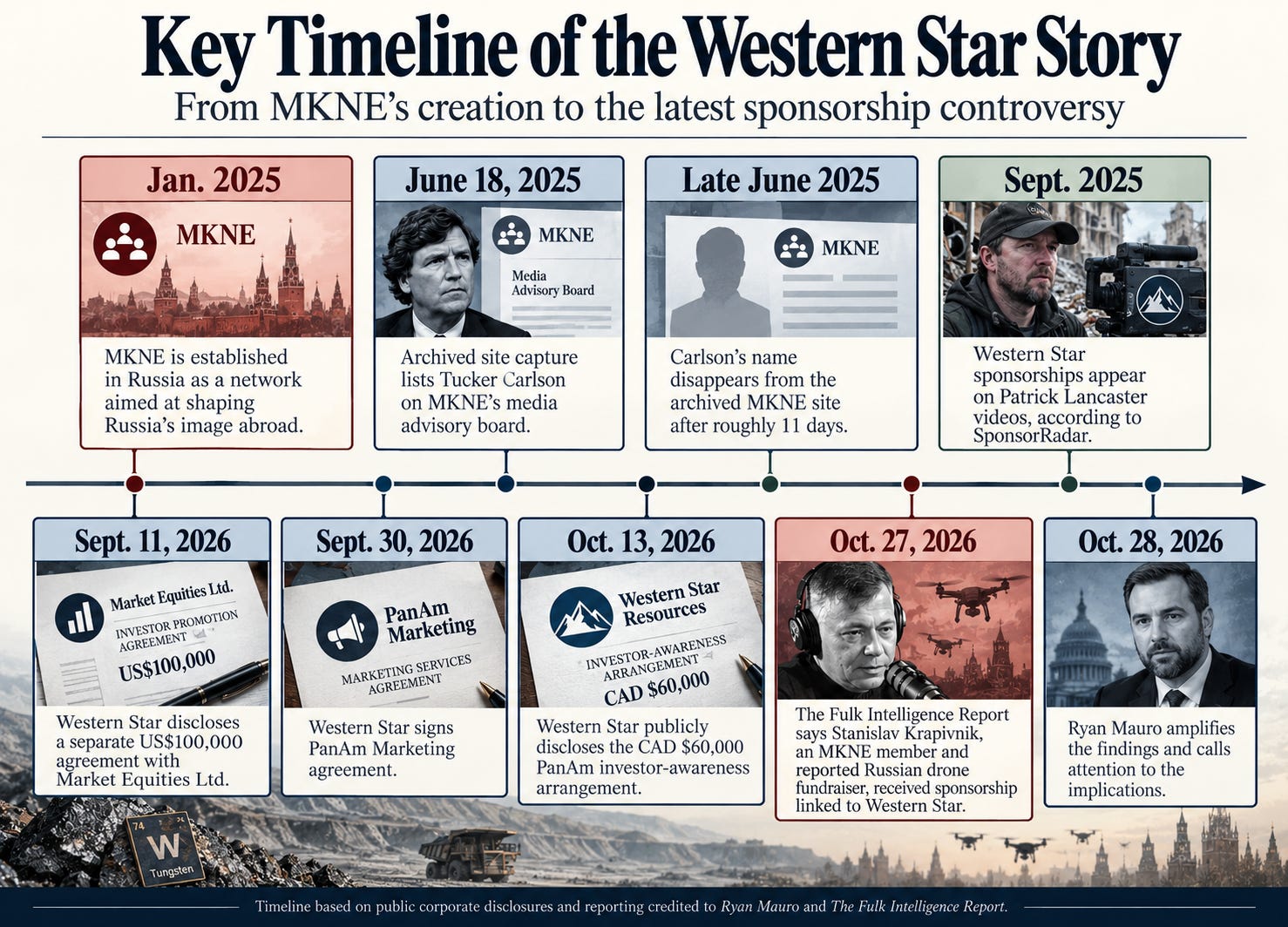
The agreement specifically authorized advertising on social media, financial websites, newsletters and third-party content-creator channels. The money was designated for PanAm’s services and payments to publishers, platforms and content creators.
The Russian Drone Fundraising Connection
Krapivnik’s involvement is particularly significant because of his membership in MKNE and his separate activities supporting Russia’s military operations in Ukraine.
In an earlier investigation into MKNE, Fulk documented Krapivnik’s association with the organization and his material support for a drone-manufacturing workshop serving Russia’s Slavic Brigade.
According to Fulk’s research, Krapivnik has used YouTube and Telegram to solicit support and has helped provide equipment and components to the Russian military workshop.
The October findings connected Krapivnik’s media activities to Western Star’s sponsorship campaign, bringing a Canadian mining company’s promotional spending into an investigation of Russian influence and military-support networks.
Mauro subsequently drew attention to the relationship and its implications, given Krapivnik’s fundraising for Russian drone production.
Tucker Carlson Listed on Russian Network’s Media Advisory Board
The Russian influence organization at the center of the investigation has also been linked to some of America’s most recognizable media personalities.
In September, Mauro, working with Fulk and Restitutor, revealed that Tucker Carlson had appeared on MKNE’s Independent Supervisory Council of Media Experts, an advisory body associated with the Moscow-based organization.
An archived version of MKNE’s Russian-language website, captured on June 18, 2025, identified Carlson as a council member. His name remained on the website for approximately 11 days before being removed, according to Tablet Magazine’s September 23 reporting.
Other American personalities identified on MKNE’s media-expert or membership lists included Columbia University economist Jeffrey Sachs, former Fox News personality Andrew Napolitano, former CNN anchor Rick Sanchez and former CIA analyst Larry Johnson. Former United Nations weapons inspector Scott Ritter also appeared on the organization’s website.
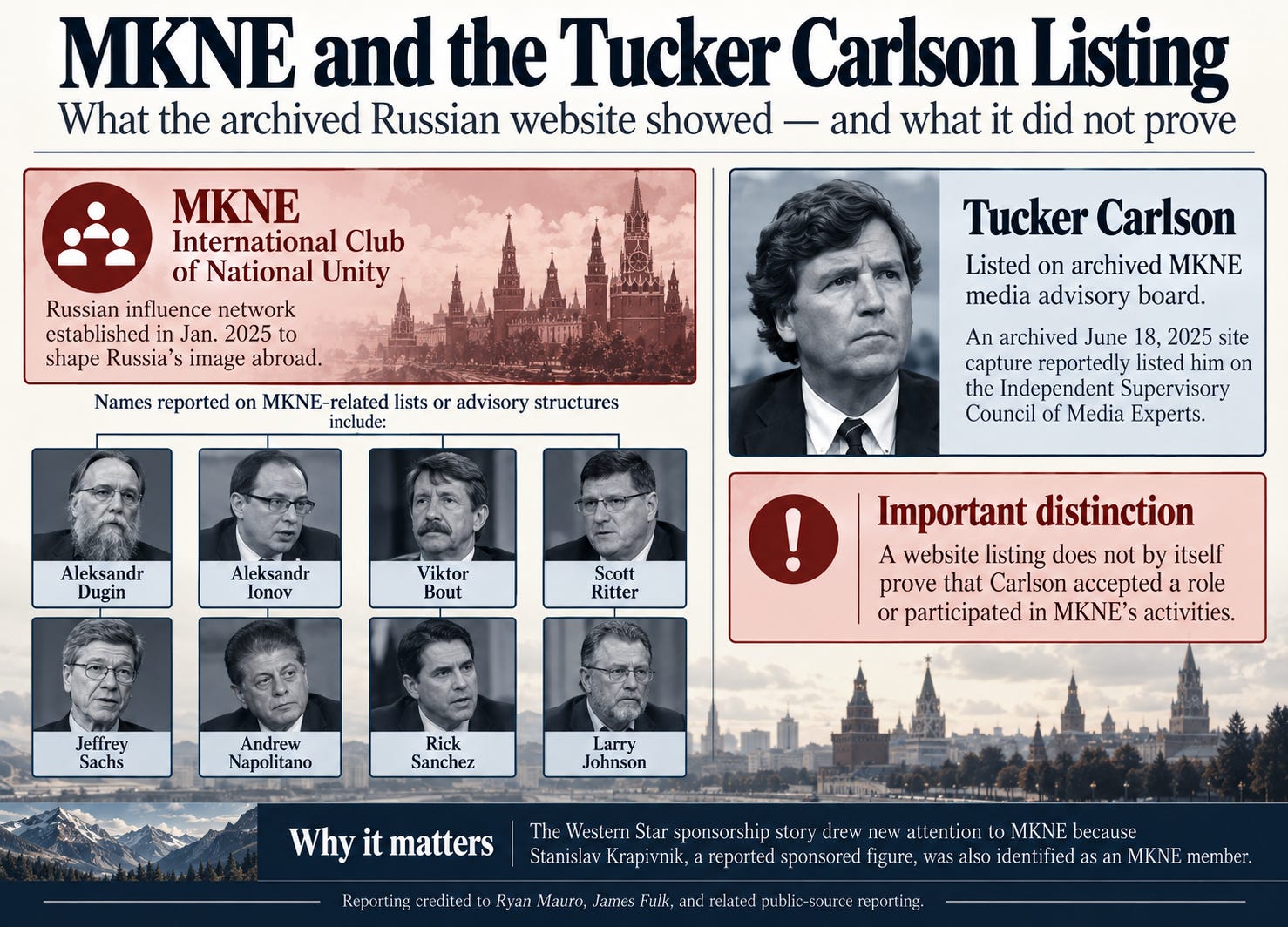
The Russian side of MKNE’s network included nationalist ideologue Aleksandr Dugin, former arms trafficker Viktor Bout and Aleksandr Ionov, who has been accused by U.S. authorities of participating in foreign influence operations targeting American political groups.
Fulk’s research also identified Sergey Panteleev, associated with Russian military psychological operations, among the organization’s members.
MKNE’s stated objectives include improving Russia’s international image and conducting information campaigns targeting foreign audiences. Its membership and advisory listings brought together political figures, military personalities and Western media commentators.
The Western Star investigation adds a financial dimension to this broader network through Krapivnik, whose separate activities included raising support for Russian military drone production.
Other Pro-Russian Media Sponsorships
Western Star’s promotional relationships extend beyond Krapivnik.
According to SponsorRadar, a database tracking YouTube sponsorships, Western Star appeared as a sponsor in at least eight videos across three channels.
Six of those placements involved Patrick Lancaster, an American video journalist known for reporting from Russian-controlled areas of Ukraine and producing content favorable to Moscow’s account of the war.
One sponsored video, published in September 2025, covered Russian artillery operations near Kharkiv. Its description explicitly thanked Western Star Resources for sponsoring the video.
SponsorRadar also identified placements involving the channels Geopolitics & Money and Max Afterburner.
Separately, an X account operating as Restore Canada identified a reported Western Star sponsorship involving Jackson Hinkle, the American Communist Party co-founder and political commentator who has publicly supported Russia’s positions. Mauro subsequently amplified the finding.

Unlike the Lancaster sponsorships, the reported Hinkle placement has not been independently verified through an underlying payment record. The Lancaster advertisements date to 2025, before Western Star’s September 2026 agreement with PanAm, meaning they cannot automatically be attributed to the newer marketing contract. They nevertheless show that Western Star’s use of geopolitical commentary channels preceded the latest controversy.
A Larger Investor-Promotion Operation
Western Star’s promotional spending also extends beyond its arrangement with PanAm. A September 11 corporate announcement disclosed a separate agreement with Ireland-incorporated Market Equities Limited for branding, communications, digital media campaigns and investor-awareness services.
That agreement carried a fee of US$100,000 for an initial two-month period, with provisions for additional promotional services. A subsequent paid promotional article disclosed Market Equities’ compensation and stated that Western Star had reviewed and approved the published material. The existence of the two marketing arrangements was previously reported by Mining Markets Report on October 13.
Questions Over Corporate Oversight
The findings raise questions about how Western Star and its marketing contractors select and vet the media personalities they pay to promote the company’s securities.
Western Star’s PanAm agreement states that promotional materials must disclose compensation and comply with applicable Canadian securities requirements. The available evidence does not establish that the company knowingly funded Russian military operations or violated sanctions.
The unresolved questions include who authorized the sponsorships, whether Western Star reviewed the recipients’ activities, and whether its contractors exercised oversight over the content creators they engaged. Those questions carry added significance because Western Star is pursuing American tungsten projects at a time when Washington is seeking to strengthen domestic critical-mineral supply chains.
The investigations by Mauro and The Fulk Intelligence Report expose an unusual intersection between a Canadian mining company’s investor-promotion spending, pro-Russian media personalities and a Moscow-based influence organization that publicly listed prominent American commentators among its advisers.
The central question is how money intended to promote North American mineral exploration came to be associated with a member of a Russian influence network who also helps support military drone production for Russia’s war in Ukraine.