


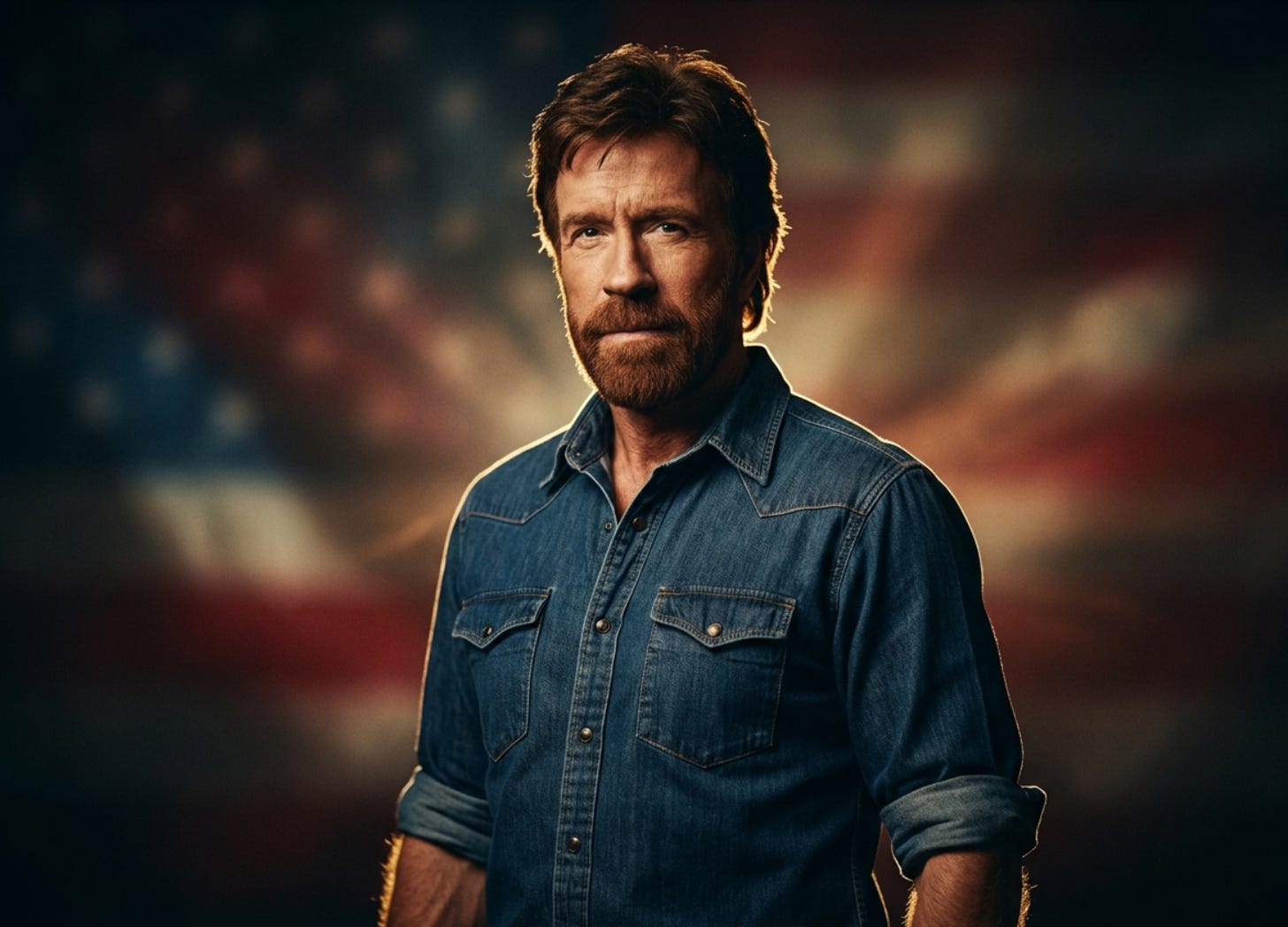
The passing of Chuck Norris on March 19, 2026, at the age of 86, has triggered a predictable wave of digital nostalgia, from viral “fact” memes to retrospectives of his 1980s filmography. Yet the reported death of the martial artist and actor marks more than the end of a Hollywood career; it signals the final closing of a specific American archetype: the analog hero.
Norris, alongside peers like Sylvester Stallone and Arnold Schwarzenegger, defined a “Golden Age” of American action cinema that thrived on a foundation of moral and physical certainty. In films like Missing in Action and Lone Wolf McQuade, the conflict was rarely structural or systemic. It was personal, physical, and resolved through individual competence. Unlike the protagonists of contemporary cinema, Norris’s characters didn’t rely on multiversal resets or high-tech exoskeletons. The resolution to any given crisis was located entirely within the hero’s physical discipline.
This “pre-ambiguity” era of heroism reflected a world where threats were understood as external and legible. In the 1980s, the “bad guy” was a recognizable silhouette—often a Cold War proxy or a cartoonish criminal syndicate. Norris represented a stabilizing myth: the idea that a single, disciplined individual could restore order to a chaotic map through sheer force of will and a roundhouse kick.
This onscreen persona eventually merged with a distinct political identity that positioned Norris as a Hollywood outsider. Though he began his career as a Democrat, he famously argued that the party had strayed “off the trail” of American values, leading him to become a foundational figure in a burgeoning conservative movement.
His close personal friendships with leaders like Ronald Reagan were an extension of his personal “Code of Ethics,” which emphasized loyalty to country and respect for authority. For Norris, these values weren’t just for the screen; they were essential for a republic he believed was built on the “God of our Founding Fathers” and the preservation of individual liberties.
The shift in American storytelling over the last two decades reveals a deepening discomfort with this model. Today’s cinematic heroes are increasingly specialized, tech-reliant, or burdened by “deconstruction.” From the Marvel Cinematic Universe’s reliance on nanotech and magic to the tortured interiority of modern “prestige” action, the hero has moved from being a pillar of certainty to a node in a complex system. We no longer trust the lone individual to fix the world; we expect the hero to be as confused by the system as we are.
This transition mirrors a broader institutional shift. The 1980s action star was a proxy for an era of high institutional confidence, where the “rules” of reality felt fixed. As that confidence has eroded, replaced by the fragmented information environment of the 2020s, the “analog” hero has become an impossibility. A hero who is “always right” now feels to many audiences like a relic—or worse, a provocation.
What we are mourning in the wake of Norris’s death is not just a celebrity, but the legibility he represented. He was a symbol of a time when the path from problem to solution was a straight line, and the tools required were ones a human being could actually master.
I grew up watching Chuck Norris films and 'Walker.' The 80s breed of action movie was the best: black and white good vs. evil and plenty of thrills with no convoluted story lines, character development, and CGI. They were all great 90 minute escapes from reality. Maybe if Hollywood went back to offering fun escapes from reality rather than getting preachy about it (and alienating the 50% of the country that shares Chuck's values), they may start doing well again.