



American political activist group CODEPINK is promoting China’s economic achievements and Communist-led development model during an October visit by co-founder Medea Benjamin, amid continuing scrutiny of the organization’s financial connections to a businessman whose international network has been allegedly linked to Chinese state propaganda operations.
In a series of social media videos, Benjamin appears at Chinese infrastructure projects, villages, and commercial centers, praising China’s high-speed rail system, poverty reduction initiatives, and technological development while criticizing American military spending and President Donald Trump’s trade policies.
One video, titled “Bullet Trains, Not Bombs!,” contrasts China’s extensive high-speed railway network with American transportation infrastructure and calls for redirecting military expenditures toward domestic projects.
Another, titled “What China Can Teach the U.S. About Ending Poverty,” presents China’s poverty reduction programs as a model for the United States, contrasting Beijing’s investments in infrastructure, housing, and healthcare with Washington’s military expenditures.
In a separate post on X, CODEPINK highlights Ganzhou, a major Chinese rare-earth processing center, and criticizes Trump’s trade policies, arguing that American and Chinese economic interdependence makes confrontation counterproductive.
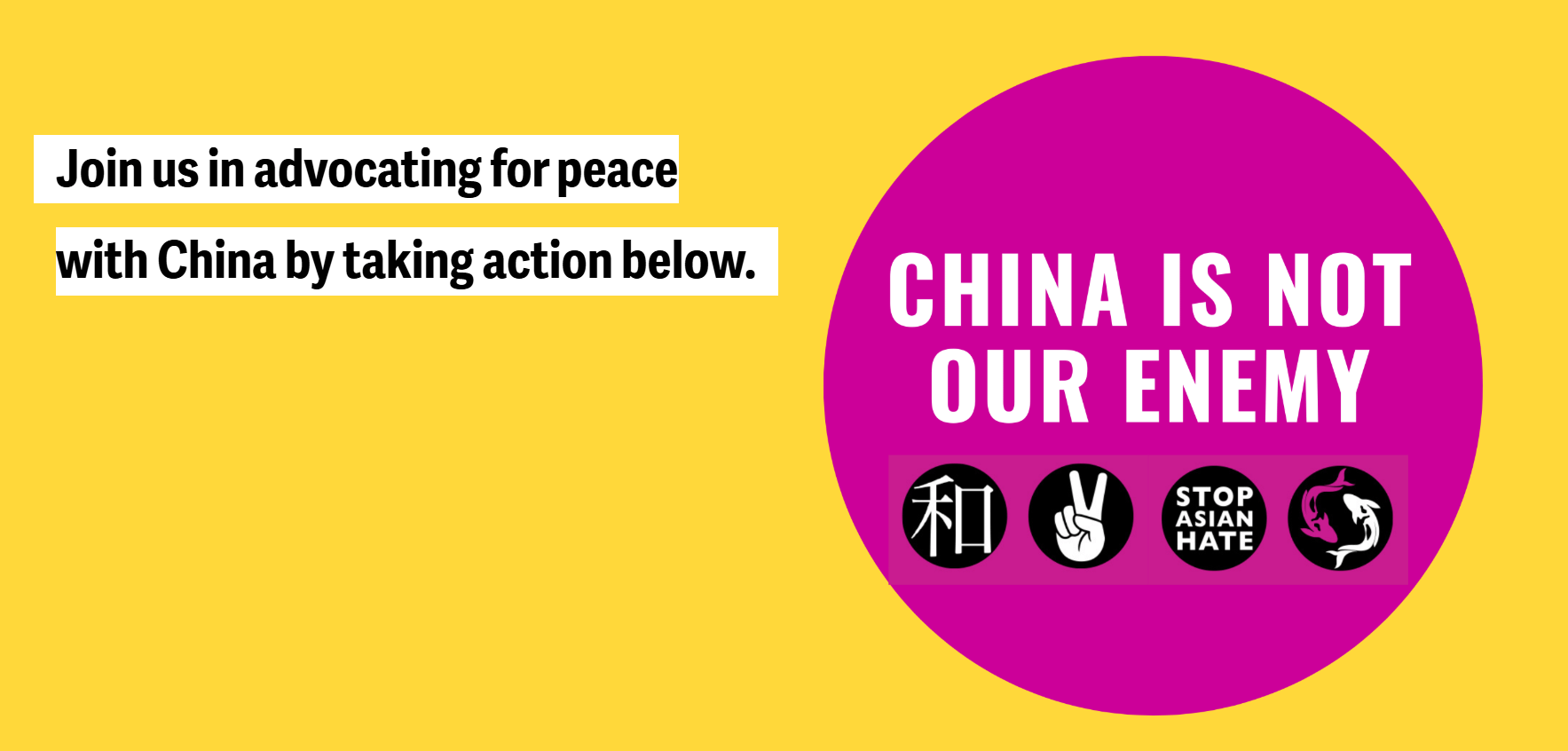
The visit is part of CODEPINK’s longstanding “China Is Not Our Enemy” campaign, which promotes closer relations with Beijing and opposes American efforts to counter China’s geopolitical influence.
From Antiwar Protests to China Advocacy
CODEPINK was established in 2002 by Medea Benjamin, Jodie Evans, and other political activists opposing the American invasion of Iraq. The organization, registered as a tax-exempt American nonprofit, has since developed into a prominent activist network campaigning against American military interventions, sanctions, and foreign-policy initiatives.
Its activities include disruptive demonstrations, protests at congressional hearings, and international political campaigns. CODEPINK has also been active in pro-Palestinian organizing and opposition to U.S. military assistance to Israel.
In recent years, the organization has increasingly devoted attention to China, criticizing American tariffs, military deployments in the Pacific, and Washington’s broader strategic competition with Beijing. Its China advocacy has developed into a dedicated organizational campaign with its own staff, programming, social media channels, and international delegations.
The “China Is Not Our Enemy” Campaign
In 2019, CODEPINK co-founder Jodie Evans launched an initiative called “China Is Not Our Enemy,” aimed at challenging American perceptions of China as a geopolitical threat.
The campaign promotes closer U.S.-China relations and opposes tariffs, sanctions, and American military expansion in the Pacific.
According to CODEPINK, the initiative seeks to counter what it considers escalating anti-China rhetoric and encourage cooperation between Washington and Beijing.
The organization has also arranged multiple trips to China, including delegations in 2024 and May 2026.
Its October 2026 itinerary advertises a 12-day visit covering Shanghai, Chongqing, Zunyi, Loushanguan, Maotai Village, and Guiyang, combining tours of modern infrastructure with visits to sites associated with the Chinese Communist revolution.
The program identifies Benjamin and Evans as participants and lists an estimated budget of $3,000 to $4,000 per traveler.
The itinerary demonstrates that Benjamin’s current visit is part of a recurring organizational initiative rather than an isolated personal trip.
The Financial Network Behind CODEPINK
CODEPINK’s advocacy concerning China has attracted scrutiny because of its relationship with Neville Roy Singham, an American technology entrepreneur based in Shanghai who married CODEPINK co-founder Jodie Evans in 2017.
An extensive August 2023 investigation by The New York Times documented Singham’s financing of an international network of organizations promoting narratives favorable to Beijing, including entities with relationships to Chinese state media and propaganda institutions.
According to the newspaper, more than $1.4 million, approximately one-quarter of CODEPINK’s donations since 2017 at the time of publication, had come through two organizations linked to Singham.
The investigation also highlighted changes in Evans’s public statements about China, including her defense of Beijing’s treatment of Uyghurs.
CODEPINK’s China campaign receives dedicated organizational funding. According to its IRS Form 990 for the fiscal year ending March 2025, CODEPINK reported $123,031 in expenditures specifically associated with its “China Is Not Our Enemy” campaign.
The tax filing does not identify the donors responsible for financing those particular expenditures. Nor do publicly available records establish whether Singham, Chinese government institutions, or other outside organizations financed Benjamin’s October 2026 visit.
The organization’s broader financial relationships have nevertheless attracted congressional scrutiny. In February 2026, the House Ways and Means Committee examined concerns about foreign influence through American nonprofit organizations, including allegations involving Singham’s funding network.
CODEPINK rejected suggestions that it was acting on behalf of foreign interests, declaring in a February 10 statement that it receives no money from China, foreign governments, or political parties.
Singham has separately denied acting at the direction of the Chinese government.


Promoting China’s Model to American Audiences
Benjamin’s latest videos illustrate how CODEPINK is using travel content to advance its China campaign. Rather than concentrating exclusively on opposition to military confrontation, the organization is actively presenting Chinese infrastructure, economic development, and poverty reduction as examples for the United States to follow.
Its videos contrast China’s high-speed rail network with America’s aging transportation systems, Beijing’s poverty reduction efforts with American economic inequality, and Chinese industrial development with Washington’s trade restrictions.
The consistent message portrays China as a model of public investment and economic progress while depicting American foreign policy as excessively militarized and confrontational. These arguments closely align with the objectives of CODEPINK’s dedicated China campaign, which has operated for seven years and receives identifiable organizational funding.
The campaign’s expansion comes amid continuing questions about CODEPINK’s historical financial connections to the Singham network and the wider debate over Chinese influence activities in the United States.
While the organization’s China advocacy and funding relationships are documented, the financial arrangements behind Benjamin’s latest visit remain unclear, including whether Chinese institutions provided assistance in organizing or hosting the delegation. For CODEPINK, an organization originally established to oppose the Iraq War, promoting China’s political and economic achievements has become an increasingly visible component of its activities.