


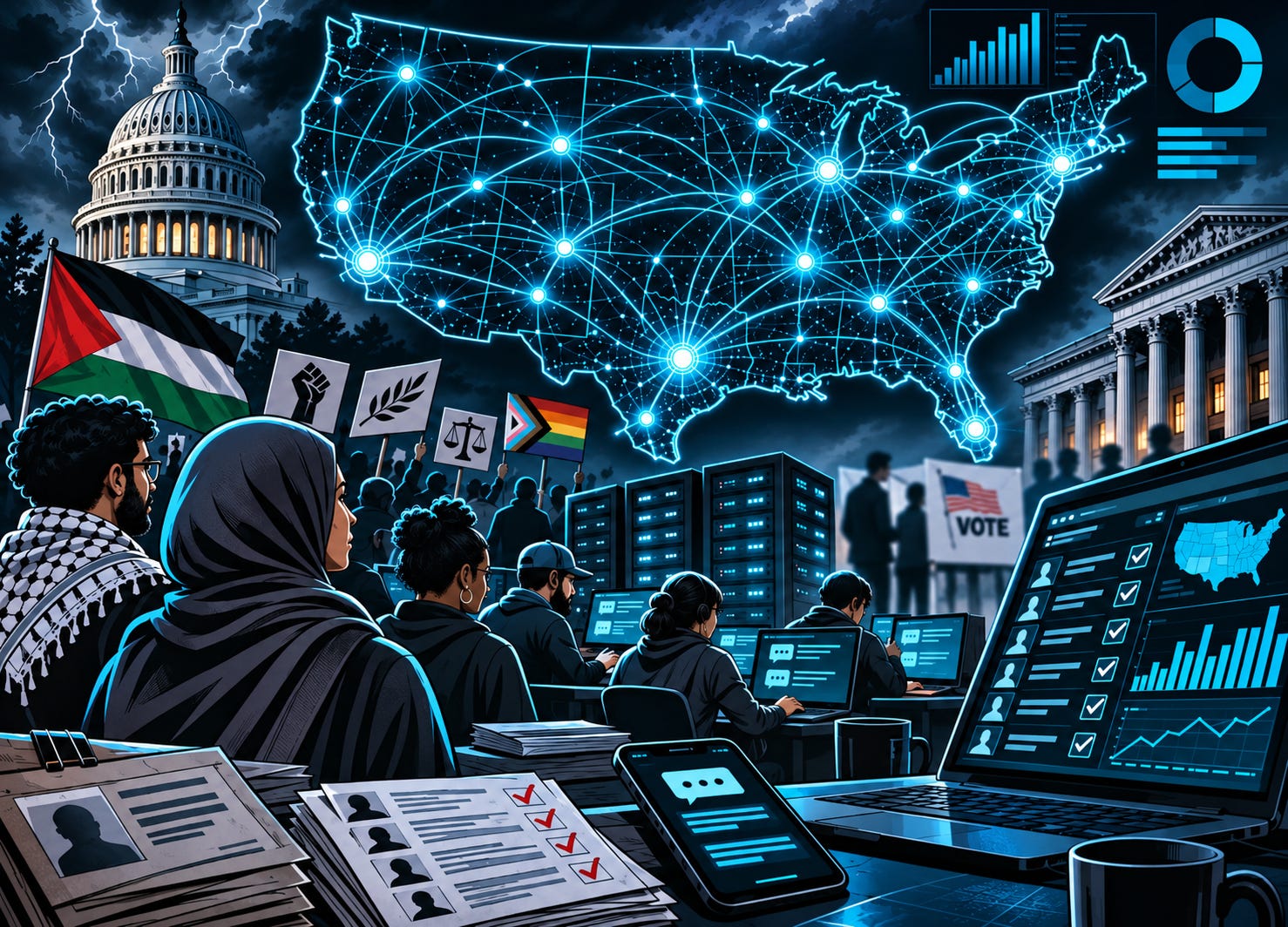
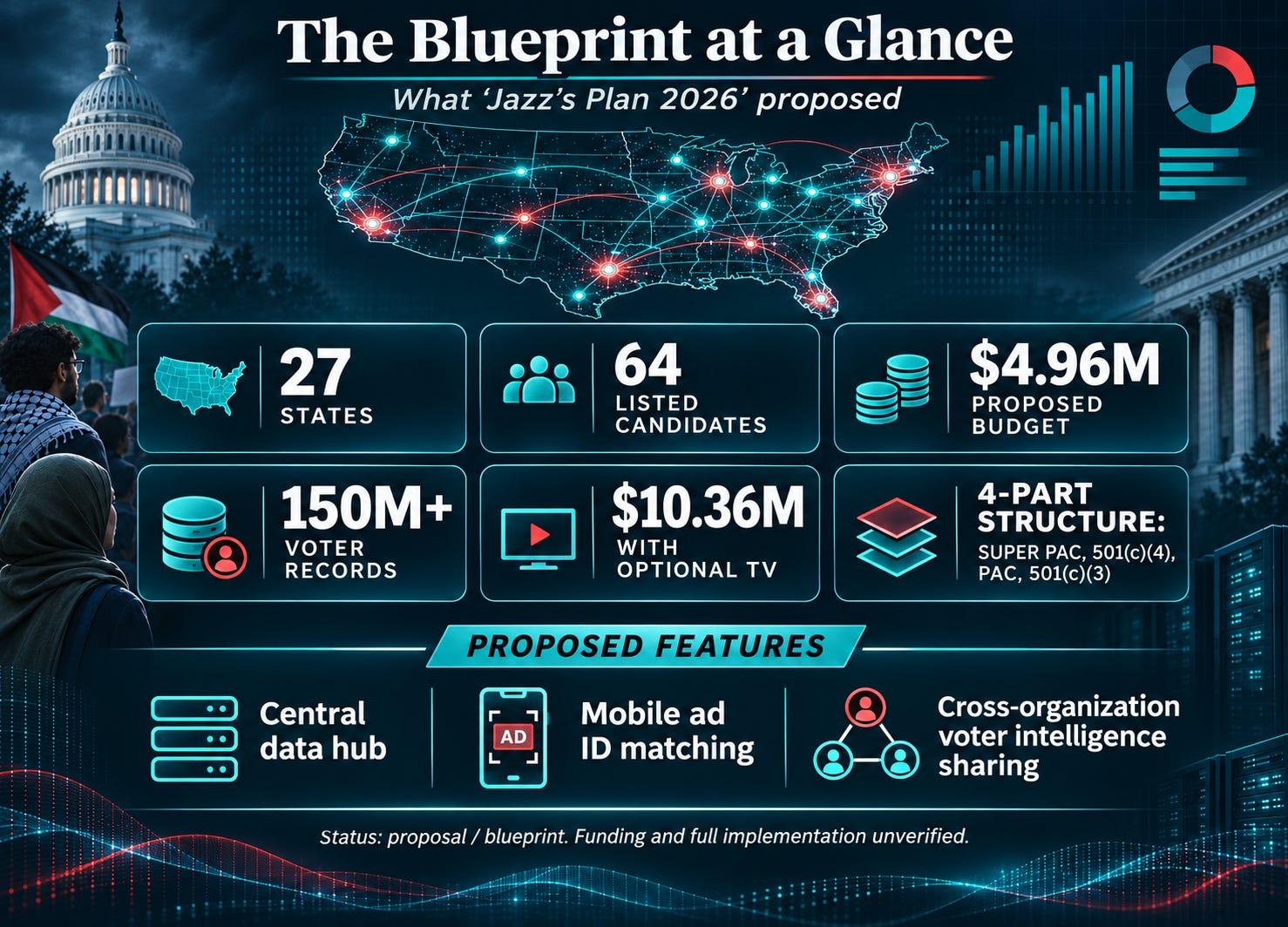
A previously unreported political blueprint proposes a database of more than 150 million voter records, and a nearly $5 million operation targeting 27 states and listing 64 candidates in the 2026 elections, Crosscurrents has found.
The website, titled Jazz’s Plan 2026, describes using commercial voter files, mobile advertising identifiers and information gathered by allied organizations to build political targeting tools outside traditional Democratic Party infrastructure. It names Muslims United PAC, A New Policy, Organize for Peace, Counter Coalition Action and Justice Democrats among six “allied organizations.”
The plan has strong connections to Mohammad Usman “Jazz” Aijaz, a Texas Democratic Party official and founder of Muslims United PAC. His earlier organizing background includes the University of Houston Muslim Students Association (MSA), whose national organization was established with the involvement of Muslim Brotherhood members and subsequently appeared in a 1991 Brotherhood memorandum outlining a strategy of “civilization jihad” in North America.
Inside the Proposed 150-Million-Voter System
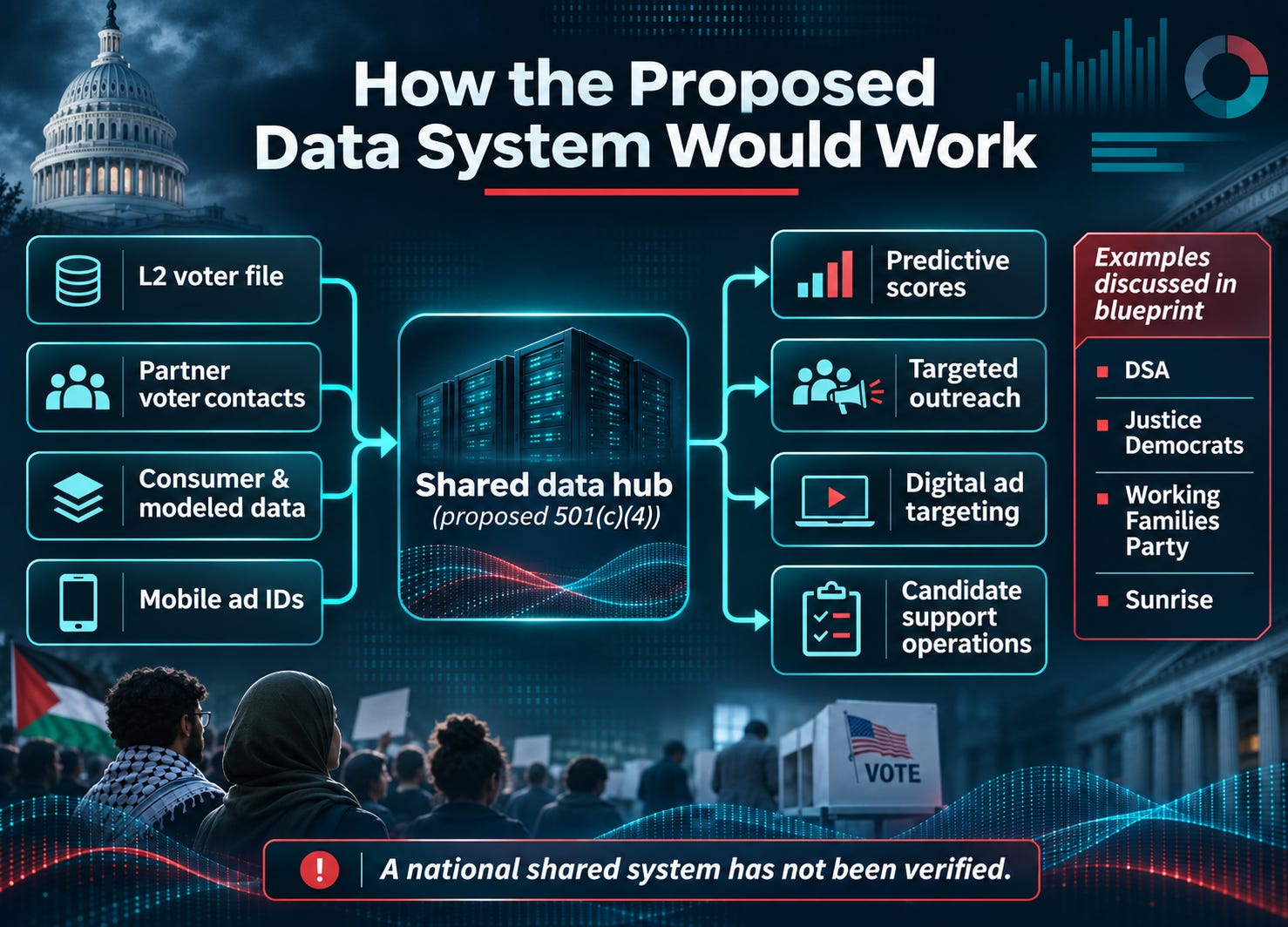
The blueprint calls a unified, modeled voter file “the single greatest asset for the progressive movement.” Its architects propose licensing voter records from L2, matching them with mobile advertising IDs and consumer data, and creating scores predicting turnout, persuasion and issue alignment.
A central 501(c)(4) would administer the information, with shared voter-contact histories, application programming interfaces and access for participating groups. The site argues that Democratic Party institutions control data unavailable to progressive challengers.
It illustrates the proposed exchange with explicit examples of Democratic Socialists of America voter contacts benefiting Justice Democrats and Working Families Party canvassing data improving models for Sunrise-supported candidates. These are scenarios outlined by the website, not confirmed data-sharing agreements.
The strategy also budgets $574,881 annually for multimedia texts reaching approximately 4.36 million primary voters. One program is labeled “Attack & Pressure,” with messaging designed to pressure representatives who do not adopt the organizers’ preferred positions.
Its proposed financing assigns $3.32 million to a super PAC for independent election expenditures and $1.63 million to a 501(c)(4) for organizing and advocacy. Optional television spending would raise the plan’s stated potential budget to $10.36 million.
The Texas Democratic Official and His Political Network
Aijaz identifies himself as an elected member of the Texas Democratic Party State Democratic Executive Committee and vice chair of its Finance Committee. He also says he served on the Rules and Bylaws Committee for the 2024 Democratic National Convention.
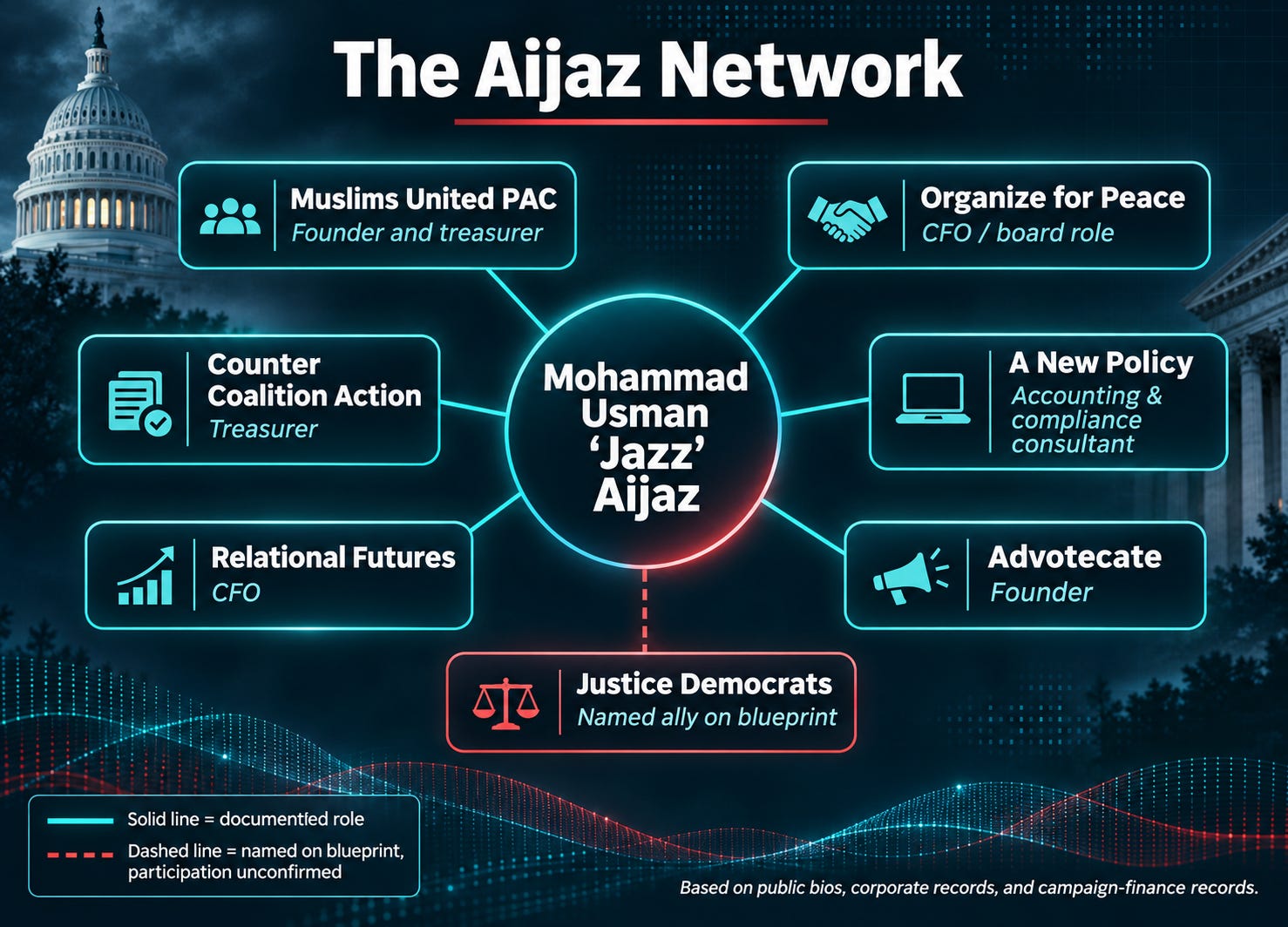
His political roles overlap with several entities named on the blueprint. He founded and serves as treasurer of Muslims United PAC, sits on Organize for Peace’s board, and says he provides accounting and compliance services to the nonprofit and PAC entities of A New Policy, established by former Biden administration officials Josh Paul and Tariq Habash.
He also serves as CFO of Relational Futures, a political organizing technology business, and founded Advotecate, which he describes as a political-tech venture. His own website advertises a donation calculator using the same distinctive “Jazz” branding as a tool incorporated in the blueprint.
Federal expenditure records also show Muslims United PAC paid $3,000 to Advotecate LLC, an entity sharing the name of Aijaz’s technology venture.
Earlier Involvement With the Muslim Students Association
Aijaz’s professional profile lists involvement with the University of Houston MSA from 2010 to 2018, including serving as a volunteer coordinator. He also held an outreach and MSA-coordinator position with Crescent Youth between 2011 and 2014.
The national Muslim Students Association was established in 1963 at the University of Illinois, with founders including Ahmed Totonji and Jamal Barzinji, whom historical research identifies as Muslim Brotherhood members.
The organization was subsequently listed as number two among the organizations and friends named in a 1991 Muslim Brotherhood memorandum written by Mohamed Akram, a member of the Brotherhood’s North American Shura Council.
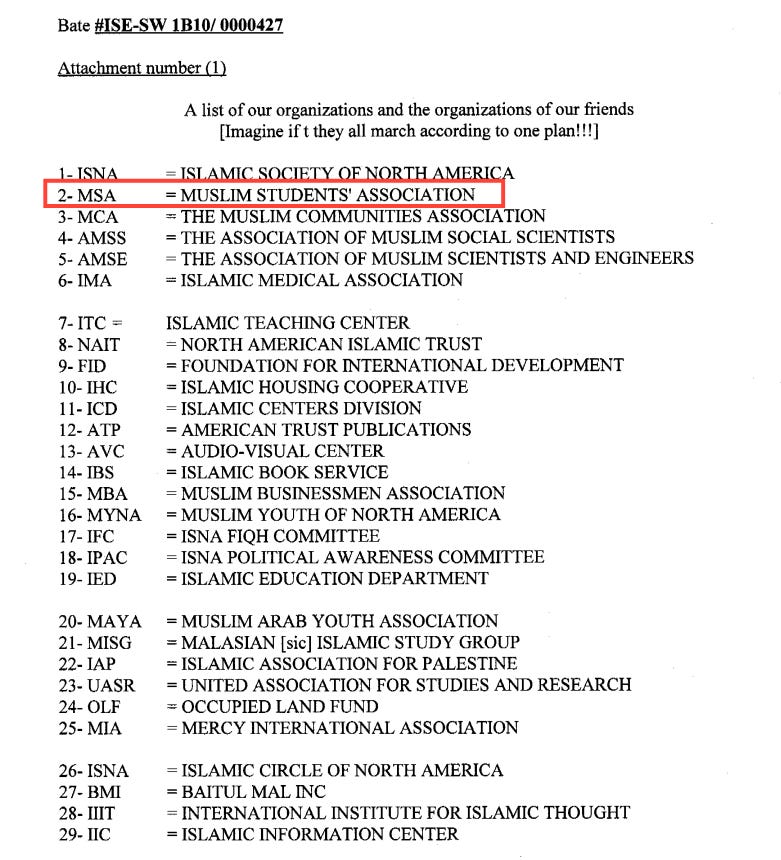
The memorandum describes Brotherhood activity in America as a “Civilization-Jihadist Process,” envisioning the establishment of institutions and expansion of influence throughout American society. It characterizes the Brotherhood’s mission as eliminating and destroying Western civilization from within.
The historical connection concerns the national MSA. Available records do not establish that Aijaz or his University of Houston chapter was directed by the Muslim Brotherhood.
Aijaz’s subsequent political activities include more direct involvement in Democratic Party policy. Muslims United PAC credits itself with helping advance seven resolutions at the 2026 Texas Democratic convention, including recognition of Palestinian statehood, an embargo on military assistance to Israel and scrutiny of foreign-aligned lobbying.
Existing Election Activity
Several organizations in Aijaz’s political network already operate voter-mobilization programs resembling elements of the proposed strategy. Among them is Organize for Peace, a California nonprofit incorporated in June 2025, whose corporate records identify Sarah Mostafa as CEO and Aijaz as CFO.
The organization operates Vote for Peace, a platform providing candidate information to voters, and has participated in electoral outreach across multiple states. Its activities include a documented $188.20 payment to L2 in November 2025 for voter-contact data, establishing that it has used the same commercial supplier identified in the blueprint.
Organize for Peace also jointly sponsors a voter-recruitment initiative with the anti-AIPAC committee Citizens Against AIPAC Corruption, collecting contact information, registration details and volunteering preferences. These activities demonstrate existing voter-data collection and cooperation within the broader network, although they do not establish that the proposed national database was implemented.
Beyond the Midterms
The website additionally outlines recruiting delegates to influence Democratic Party platforms and leadership, extending its political objectives beyond the November elections.
The plan’s $4.96 million remains a proposed budget, and there is no verified evidence that its 150-million-record database was built. The website still labels early 2026 as its current planning period.