


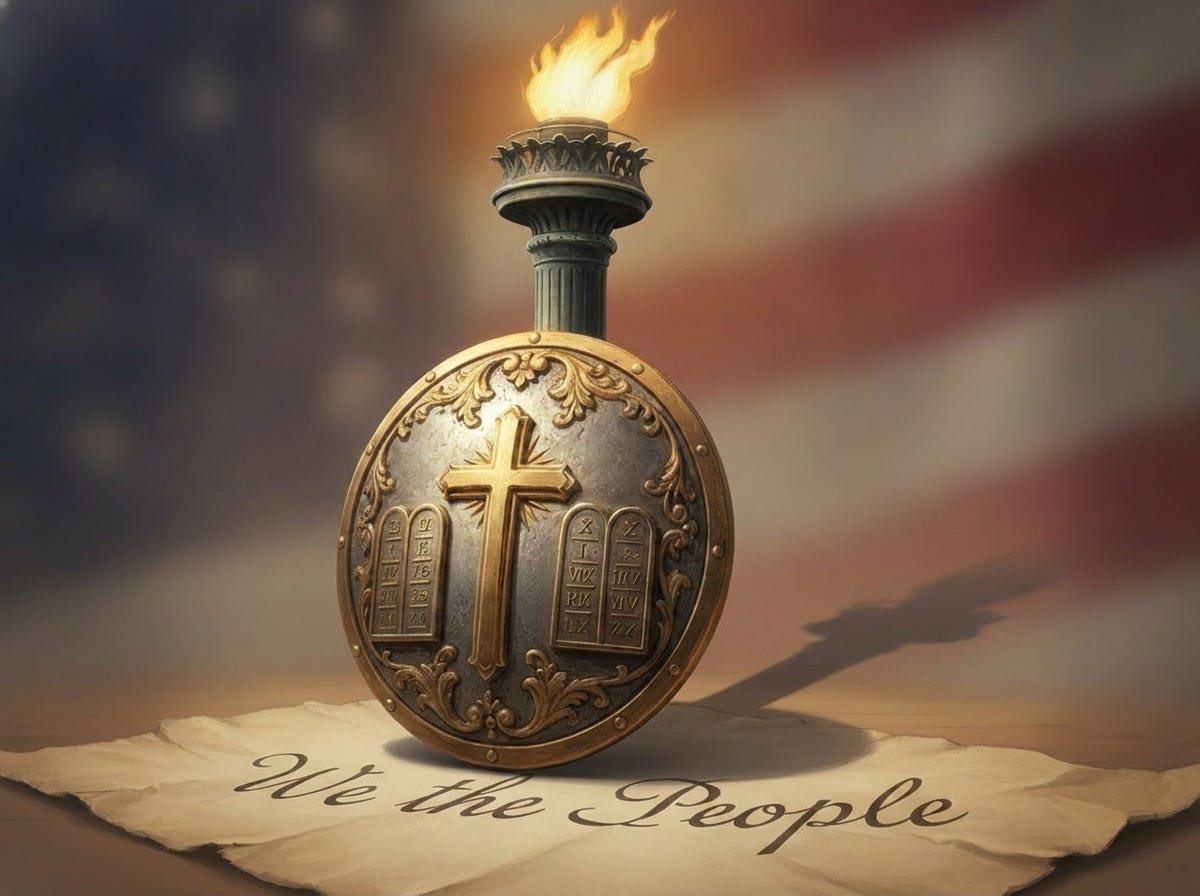
The Department of Justice released the draft version of the Religious Liberty Commission report on June 26 on the premise that American society has wrongly treated religion “not as a protected and valued contribution to public life, but as a problem or annoyance to be managed, restricted, or sidelined.”
The 224-page report, based on testimony from over 100 witnesses, calls for the Department of Justice to issue guidance “clarifying the proper understanding of the Establishment Clause and separation of church and state,” repeal the Johnson Amendment restricting political speech by religious leaders, and guarantee faith-based institutions equal access to federal funding without requiring them to “renounce their religious identity.”
The central argument, religious liberty erosion stems from a fundamental misunderstanding that the Constitution requires religious voices to be silenced, when in fact, the Founders established protections precisely because “religion itself is indispensable to a flourishing society.”
“Building Bridges Between Church and State”
The report’s Chapter 2 traces how courts built “walls of separation between church and state” in the mid-20th century, wrongly claiming the Establishment Clause requires erasure of religious perspectives from public life. The commission argues this interpretation contradicts the Founders’ intent, the Declaration of Independence grounded rights in being “endowed by our Creator,” and early state constitutions explicitly referenced “the duty we owe our Creator.”


The report frames current doctrine as “building bridges between church and state” rather than enforcing separation, citing recent Supreme Court decisions that have expanded religious expression rights in public settings and protected faith-based institutions from discrimination in government programs.
“When government authorities prevent religious individuals and perspectives from contributing to public life, they diminish the quality of freedom for all citizens,” the report states. The commission asserts that “the Constitution neither requires nor permits religious voices to be silenced.”


Faith-Based Institutions Under Pressure
Witnesses testified that faith-based organizations increasingly face pressure to modify missions or redefine beliefs to participate in public life. A women’s homeless shelter in Alaska was nearly forced to close when it refused to house a biological male, a Vermont couple was denied foster care approval because they would not support “harmful gender transitions for children,” and Christian and Jewish schools face laws that “require them to compromise the mission of the schools.”
The report’s Chapter 3 emphasizes that faith-based institutions “contribute precisely because they are faithful to their religious convictions, not despite them.” Consulting executive Oriel Ekşi, a human trafficking survivor, testified “Faith-based organizations are often among the first to show up, the last to leave, and the most trusted by the people they serve.”
The commission recommends guaranteeing faith-based institutions “an equal opportunity to participate on an equal basis in funding opportunities” and clarifying through litigation that state and local authorities cannot discriminate on the basis of religion.
Students, Parents, and Military Service Members
The report dedicates separate chapters to religious liberty violations in K-12 schools, colleges, the military, and healthcare. Elementary student Shea Encinas was bullied for his Christian faith after being forced to read a peer a book saying he could choose his gender, the school “refused to help and doubled down on pushing gender ideology.” Teacher Marisol Arroyo-Castro was told to remove a cross near her desk or lose her job.
Navy SEAL Blake Martin lost his pension three years before retirement eligibility because he objected to the COVID-19 vaccine on religious grounds. The report recommends the Department of Defense “streamline and improve the religious accommodation process” and continue efforts to restore retirement eligibility for service members who lost benefits over vaccine mandates.
12 Key Recommendations
The commission’s top recommendations include, instructing DOJ to issue Establishment Clause guidance, requiring public officials who allege improper religious expression to provide written explanations within 30 days, creating religious liberty violation hotlines for students, parents, teachers, and healthcare workers, establishing a DOJ religious liberty task force to prioritize litigation, repealing the Johnson Amendment to allow political speech by tax-exempt religious organizations, and creating a Presidential Medal of Religious Liberty to “honor the courage of religious liberty heroes.”
The report is open for public comment through July 12 prior to the release of the final version of the report.