


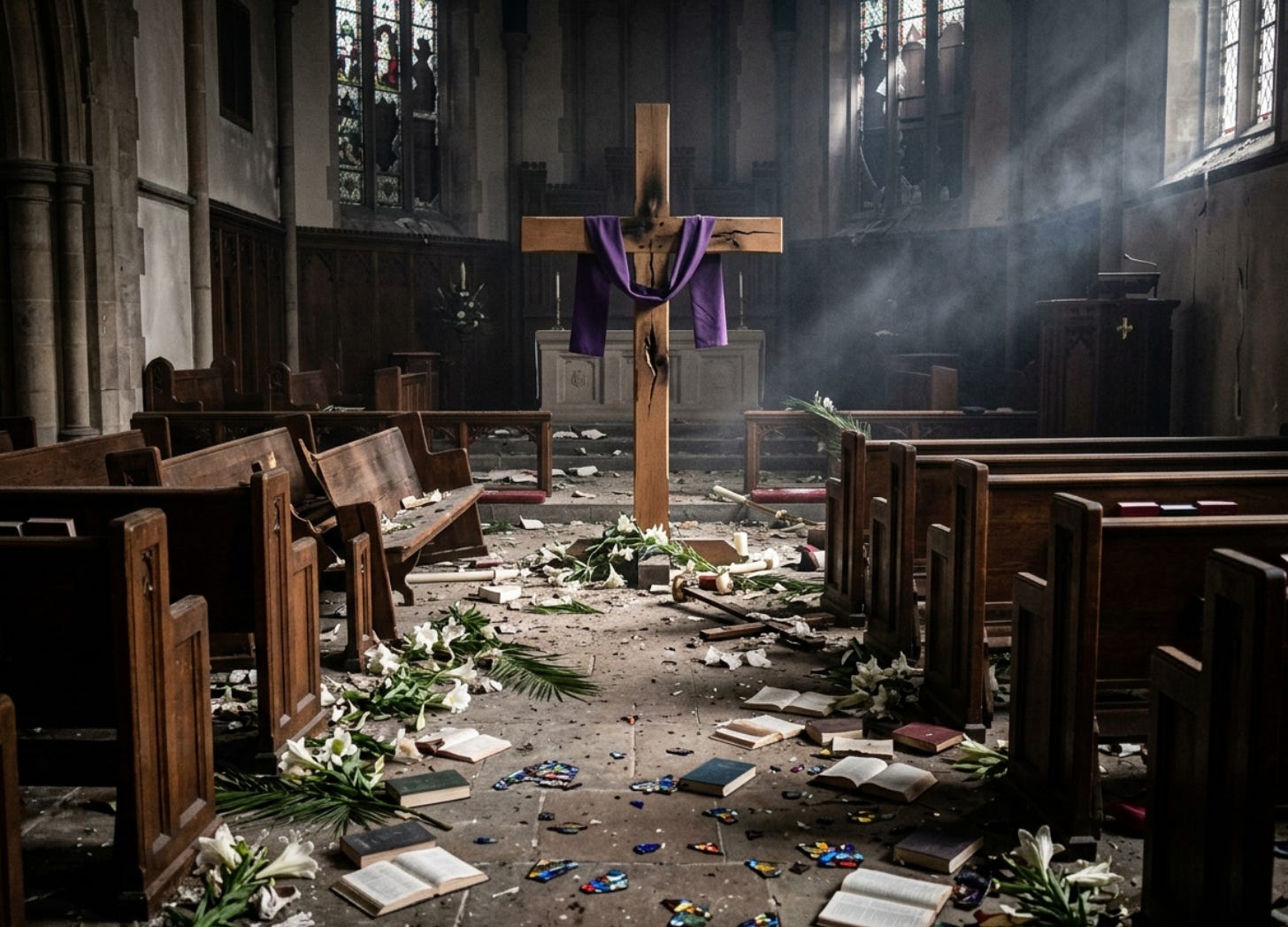
On March 29, 2026—Palm Sunday—gunmen opened fire on a crowded street in Angwan Rukuba, a community in Jos, Plateau State, Nigeria. It was 8:00 PM. Families were returning from Palm Sunday services, walking home through streets they knew, carrying palm branches blessed hours earlier.
The attackers fired into the crowd for several minutes. People ran. Some fell. When it was over, 27 bodies were recovered—14 who died where they fell, 13 who died later in hospitals. The Plateau State government imposed a curfew. The University of Jos postponed exams. Families prepared for funerals instead of Easter celebrations.
Eight days later, on Easter Sunday—the most sacred day in the Christian calendar—it happened again. This time in multiple communities simultaneously.
Easter Across the Middle Belt
In Benue State, at least 17 Christians were killed in the Mbalom community during an early morning raid. Gunmen entered before dawn while people slept. They opened fire on civilians and set homes ablaze. Survivors fled into the bush. The same village had buried 19 Catholic worshippers in 2018—including two priests—killed during a church attack. Now they were burying more.
In Kaduna State, armed men struck Ariko village during Easter services. They surrounded the community first, cutting off escape routes. Then they opened fire on worshippers gathered at an Evangelical Church Winning All congregation, before moving to a nearby Catholic church. At least 12 people died. Dozens were taken. The Nigerian military claimed they rescued 31 captives, but locals say those people are still missing.
In separate attacks across Kaduna, at least 15 worshippers were killed during Easter services. In Nasarawa State, 10 more were killed across multiple villages.
The same week in Syria, armed assailants attacked the predominantly Christian town of Al-Suqaylabiyah, firing guns, smashing cars, and destroying a statue of the Virgin Mary. Syrian churches cancelled all public Easter celebrations—scout parades, street processions, the festivities that normally mark Holy Week—confining observances to prayers inside church walls.
Five Years Running
This keeps happening. Nigeria’s Middle Belt has experienced coordinated attacks during major Christian holidays for five consecutive years—2025, 2024, 2023, 2022, 2021. Each time, the same pattern: attacks during services, in remote areas where help is hours away.
Open Doors reports that Nigeria accounts for 72% of Christian killings worldwide. The U.S. government has designated Nigeria a “Country of Particular Concern” for religious freedom violations. Yet when Easter 2026 came and went with dozens dead, international media coverage was minimal.
Most Americans never heard the names of the villages. Never saw the photographs of the grieving families. Never learned that children lost parents, that congregations lost pastors, that entire communities spent Easter week burying their dead.
The Silence
The Nigerian families burying Easter dead deserved witness. So did the Syrian Christians praying behind locked church doors, afraid to hold public processions after armed groups attacked their town. But their suffering went largely unreported.
When Christians are killed during worship on the holiest days of the year and it barely registers in international coverage, something has failed. Not just in Nigeria or Syria, but in how the international community responds to religious persecution when it targets certain communities.
The absence of coverage carries its own message. To the communities under attack, silence suggests their lives matter less. To the perpetrators, it suggests the world isn’t watching. To governments with the power to provide security, it removes international pressure that might compel action. And to Christians elsewhere—particularly in the West—it means they remain unaware that brothers and sisters are being killed for gathering to worship, year after year, during the same holy days.
The pattern of attention reveals something uncomfortable: international concern doesn’t necessarily flow to the most severe persecution. It flows to stories that fit comfortably into existing frameworks of international concern.
Next Easter
The Easter 2026 attacks weren’t an aberration. They were a continuation of a five-year pattern. Next Easter will mark Holy Week 2027. If nothing changes—if security forces remain under-resourced, if international attention remains elsewhere, if the institutional failures persist—then next year, more families will bury their dead during resurrection week.
The question is whether anyone beyond their own communities will know their names.
If this situation was reversed, this would be all over the news.