


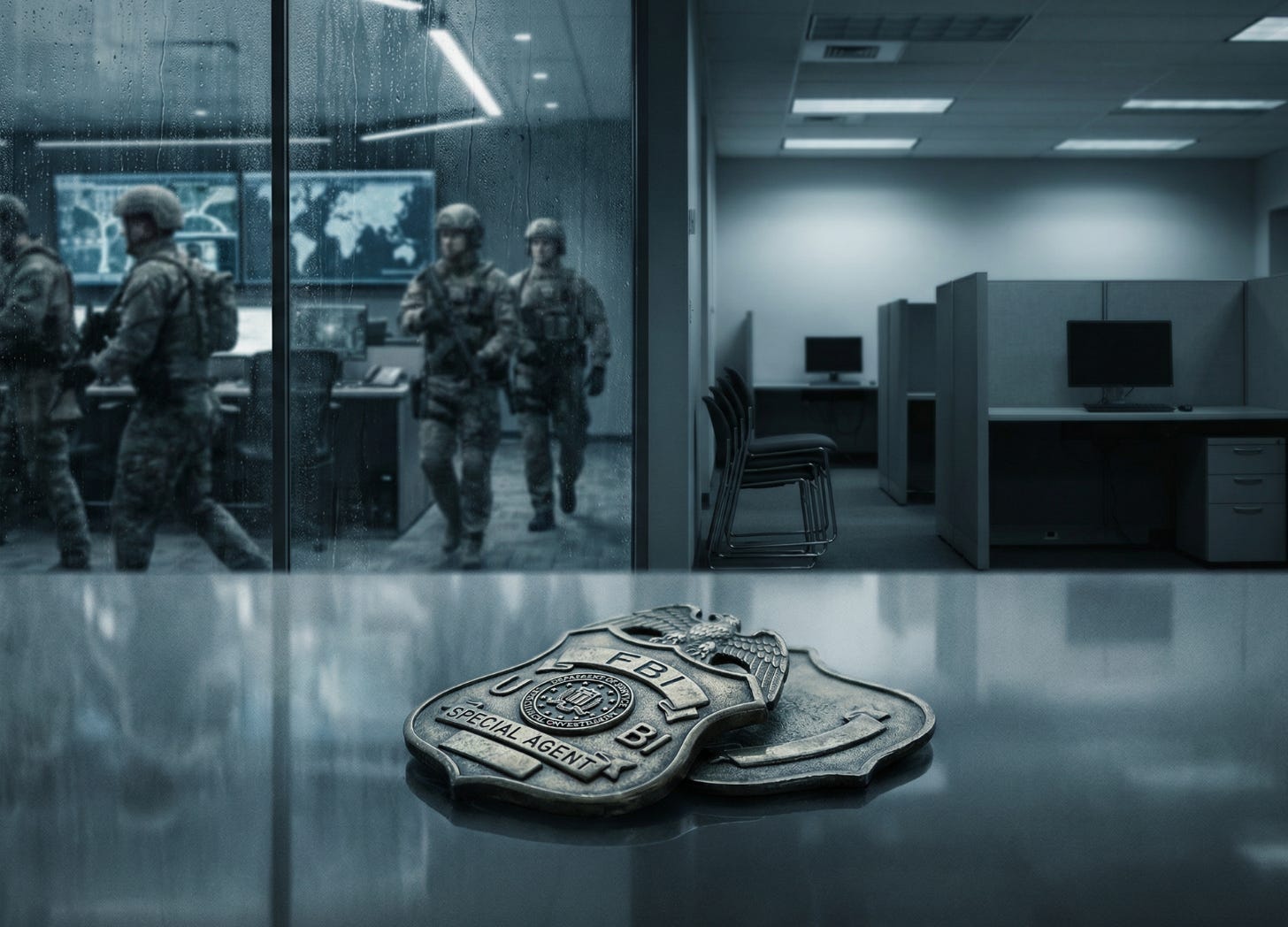
The FBI placed counterterrorism teams on high alert last week after three violent incidents unfolded within days: a vehicle-ramming attack on a Michigan synagogue that left the building in flames, a mass shooting at a bar near Old Dominion University, and another incident authorities are still investigating. FBI Director Kash Patel said the Bureau elevated its terrorism posture following the start of U.S. military operations against Iran on February 28.
The warning came through joint security bulletins issued by the FBI, Department of Homeland Security, and National Counterterrorism Center to state and local law enforcement. Officials cited concern about both lone actors inspired by the Iran conflict and potential organized plots by those sympathetic to Tehran.
But the alerts arrive as the FBI itself is undergoing significant internal reorganization. Since January, the Bureau has reassigned personnel, consolidated field office functions, and reduced staff in several divisions—changes administration officials describe as necessary to refocus priorities and eliminate inefficiencies. The precise scale of cuts to counterterrorism units remains unclear, though officials have confirmed reductions are underway.
The timing creates a coordination problem. When the FBI warns state and local agencies of heightened threats, those agencies typically lean on Bureau resources for intelligence, analysis, and investigative support. If federal capacity is genuinely reduced—even temporarily during reorganization—local departments face a choice: scale up their own capabilities, accept higher risk, or hope the threat warnings prove overstated.
Cynthia Miller-Idriss, who directs the Polarization and Extremism Research Institute, told CNN the current moment represents “elevated risk across multiple threat categories”—domestic ideological extremism, foreign-directed plots, and violence inspired by overseas conflicts.
Federal officials have emphasized that no credible, specific threats against major infrastructure or gatherings have been identified. But the March incidents suggest the threat isn’t hypothetical. Someone bought fireworks, loaded a vehicle, and drove it into a house of worship. Someone else opened fire in a crowded bar. Both happened while the machinery designed to detect and disrupt such plots was being reconfigured.
Whether additional attacks occur in the coming weeks, and whether state and local law enforcement—already managing their own budget and staffing pressures—can fill gaps if federal support genuinely diminishes. The other question: whether the White House halts or adjusts the security bulletin process, as it briefly did on March 7 before reversing course.