


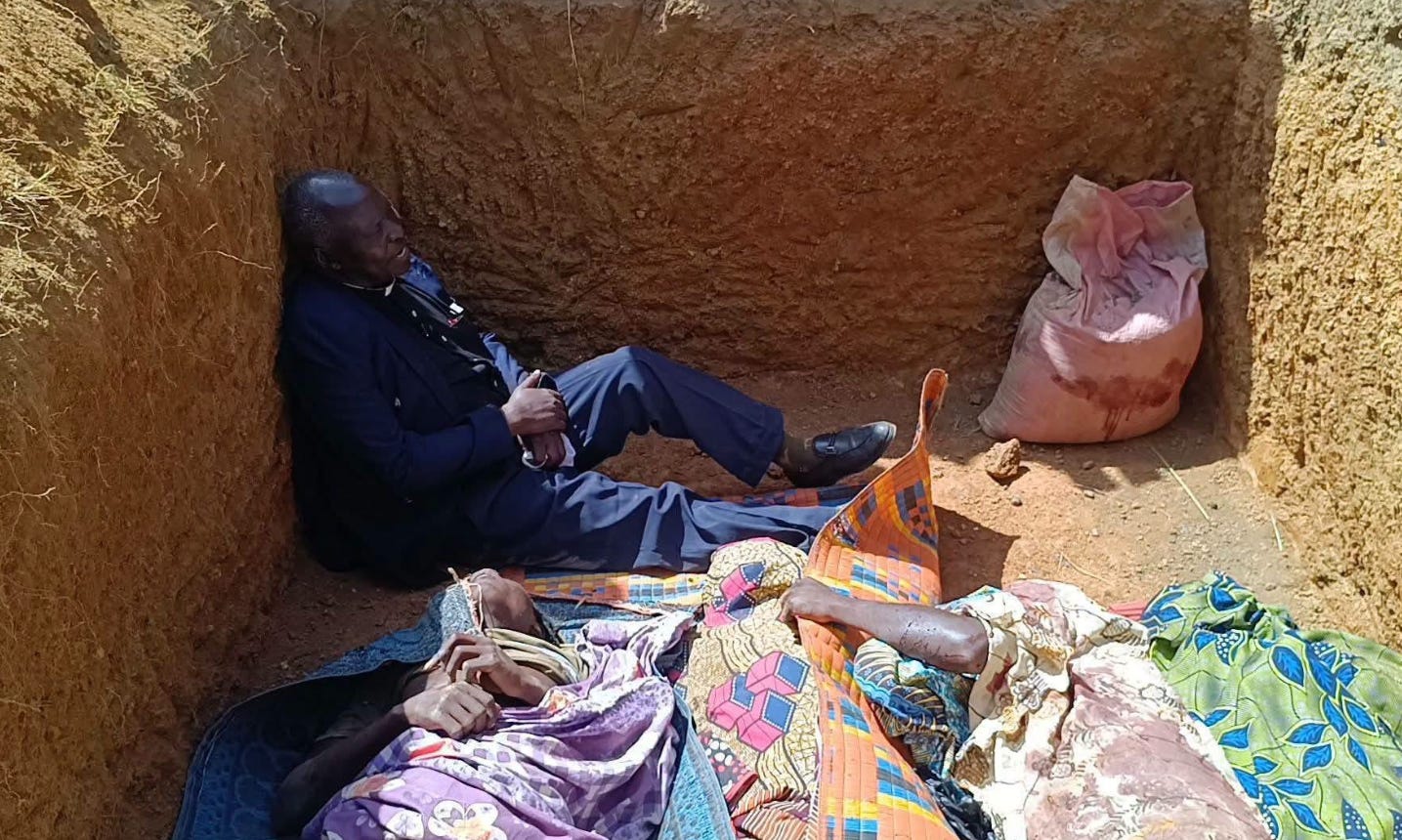
Four community vigilantes were killed in Nigeria’s Plateau State on Friday night, just days before a prominent Christian pastor issued a desperate appeal accusing the government of failing to protect Christians from continuing violence and expressing fears that he himself could be the next victim.
Rev. Ezekiel Dachomo, a regional leader of the Church of Christ in Nations (COCIN) in Barkin Ladi, published an emotional statement on Sunday, October 18, describing the suffering of Christian communities facing repeated attacks, displacement, and killings.
“My fellow brothers and sisters in Christ, I am deeply broken and overwhelmed with pain,” Dachomo wrote. “Sometimes, I feel as though I may be the next person to follow my brothers who have been taken away from us and buried in their graves.”
The pastor’s appeal came shortly after gunmen killed four local vigilantes in Shurum village, in the Dorowa Babuje District of Barkin Ladi Local Government Area, late on October 16.
According to Premium Times, the victims were guarding their community when unidentified attackers struck shortly before midnight. A resident, Bulus Bature, said the men had volunteered to protect the village from attacks. The Berom Youth Moulders Association, a local community organization, independently confirmed the four deaths and called for an investigation.
Dachomo referred to four additional reported killings in his Sunday statement, although it has not been independently confirmed that he was referring to the Shurum attack.
“Today, four more people have reportedly been killed,” he wrote. “How many more lives must be lost before the world pays attention to our cries?”
The appeal comes amid continuing attacks on Christian communities across Nigeria's Middle Belt, where religious freedom advocates and investigators have documented widespread killings, displacement, and what some describe as an ongoing genocide.


A Pastor Fearing for His Life
Dachomo’s latest warning follows months of threats and personal tragedy. In July, the pastor publicly alleged that suspected armed Fulani herdsmen had sent death threats to him and members of his congregation, warning that he would be killed. According to a July 17 report by Punch, Dachomo said the threatening message was written in Hausa and English and that copies had been submitted to security agencies.
The alleged threats followed an attack in Plateau State’s Riyom area in which nine people were killed. Dachomo identified the victims as members of his extended family. The Christian Association of Nigerian America subsequently appealed directly to Nigerian President Bola Tinubu in July, urging the government to protect the pastor and investigate the threats against him.
Three months later, Dachomo’s latest statement indicates that his fears have not subsided.
“Sometimes, I wonder whether we will live to see tomorrow,” he wrote. “If we do, we thank God for His mercy. If we do not, we pray that we will meet again in His heavenly kingdom.”
He also described the consequences of repeated attacks on rural communities, saying farms had been taken over, villages devastated, and families forced to live in fear. “Our people are living in fear,” Dachomo said, demanding that security forces protect vulnerable communities and arrest those responsible for the violence.
A Wider Campaign of Violence Against Christians
Dachomo’s appeal comes amid mounting allegations of a systematic campaign of violence against Nigeria’s Christian population, which investigators and religious freedom advocates have described as genocide.
As previously reported by Crosscurrents, two attacks in late July underscored the scale of the violence. Catholic priest Rev. Fr. Samuel Opeyemi Oyetoro was found hacked to death in Kogi State, while gunmen killed at least 30 Christians, including eight children, during a nighttime assault on Naridon village in Kaduna State.
According to the Observatory for Religious Freedom in Africa, Fulani militants were responsible for 42 percent of civilian deaths in community attacks between 2020 and 2023. Christian advocacy organization Intersociety has separately estimated that more than 125,000 Christians have been killed in Nigeria since 2009.
The genocide allegations were also examined by former Texas mayor Mike Arnold, whose investigation was previously documented by Crosscurrents. In October 2025, Arnold traveled to Abuja at the invitation of Reno Omokri, a Nigerian political figure, following discussions involving National Security Adviser Nuhu Ribadu. According to Arnold, the visit was arranged with the expectation that his findings would challenge claims of a Christian genocide.
Instead, Arnold publicly concluded after years of field investigations and interviews with displaced Christians that the violence constituted “a calculated, current and long-running genocide against Christian communities and other religious minorities without any reasonable doubt.”

His findings contradicted the Nigerian government’s repeated denials that Christians are being systematically targeted for destruction. Authorities maintain that the country’s security crisis involves terrorism, criminal violence, and communal conflicts affecting Nigerians of multiple religious backgrounds.
In September, Plateau authorities imposed a dusk-to-dawn curfew across Barkin Ladi, Bokkos, and Mangu following renewed attacks. Yet further killings continued, including attacks on community vigilantes and civilians.
Nigerian authorities insist they are taking action. On October 14, Plateau State Police Commissioner Ayodeji Faniyan announced arrests and weapons recoveries during security operations, citing efforts to strengthen intelligence gathering and community policing. For Dachomo, however, the continuing violence raises a more immediate question of survival.
“We cannot continue to bury our loved ones while those responsible escape accountability,” he wrote. “We need protection, justice, and leaders who will value every Nigerian life.”
“Sometimes, I wonder whether we will live to see tomorrow,” the pastor said. “If we do, we thank God for His mercy. If we do not, we pray that we will meet again in His heavenly kingdom.”