


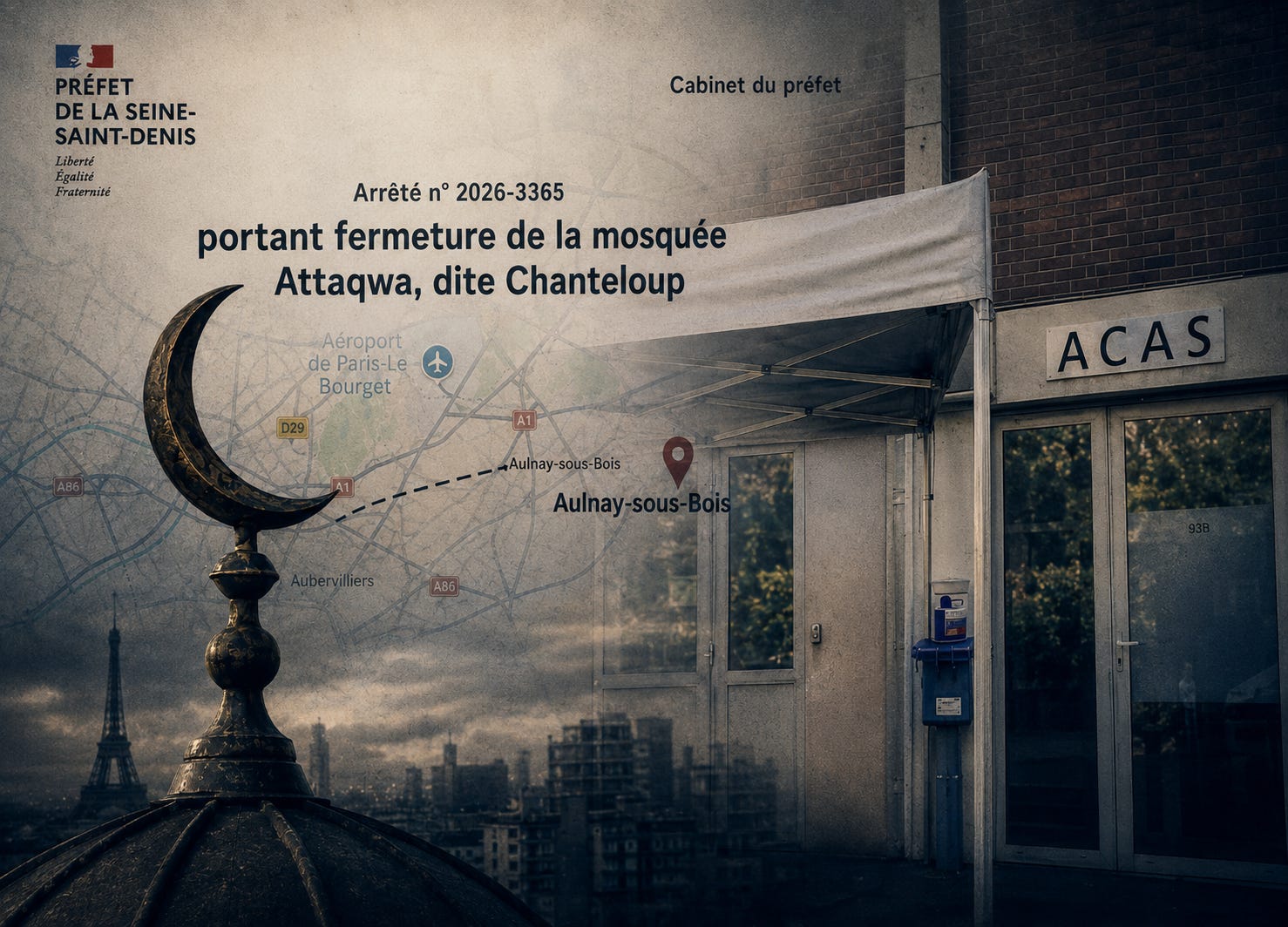
French authorities ordered the six-month administrative closure of the Attaqwa Mosque, known locally as “Chanteloup,” in the Paris suburb of Aulnay-sous-Bois on July 27, 2026. The Seine-Saint-Denis prefecture, led by prefect Julien Charles, accused the mosque of disseminating “a radical Islamist ideology that adopts the rhetoric of terrorist organizations, legitimizes jihad, and valorizes death as a martyr.”
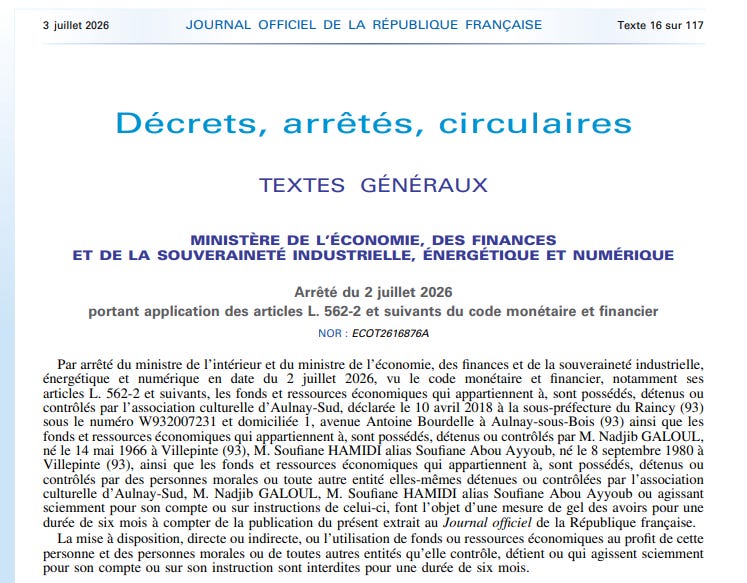
The closure caps a coordinated administrative campaign. Three weeks earlier, on July 2, 2026, an order published in the Journal officiel froze the assets of the Association culturelle d’Aulnay-Sud (ACAS) — the mosque’s managing organization — along with its representative Nadjib Galoul and imam Soufiane Hamidi, identified in the order as Soufiane Abou Ayyoub, born September 8, 1980 in Villepinte.
The prefecture’s closure order detailed a years-long pattern of sermons and social media posts by the mosque’s regular imams that authorities say celebrated the October 7, 2023 Hamas attacks, dehumanized non-Muslims as “animals,” and promoted armed jihad — evidence illustrating how French authorities are building documented cases against institutions accused of fostering extremism.


Asset Freeze Targets Mosque Leadership
The Ministry of Interior and Ministry of Economy jointly issued the July 2, 2026 order targeting all “funds and economic resources” belonging to or controlled by ACAS, Galoul, and Hamidi.
The order followed an earlier freeze. On June 11, 2025, authorities froze the assets of Hamid Brighat, known as Hamid Senhaji, born June 20, 1984 in Azrou, Morocco — another regular imam at the mosque and an influencer who runs the webmedia “Comprends ton dine,” which Le Monde reports counts nearly 800,000 subscribers. According to the administrative record, Brighat posted content on December 15, 2023 that “valued death in martyrdom,” using rhetoric authorities described as resembling jihadi propaganda.
Soufiane Hamidi has served as an imam at the facility since 2020. The closure order documented multiple sermons and social media posts by Hamidi, including a November 17, 2023 YouTube video titled “La morale dans l’histoire des gens des tranchées” (The morality in the history of the people of the trenches) that authorities say legitimized the October 7 Hamas attacks.
“Do not think that these people die for nothing. Allah Ta’ala chooses whomever He wills from among His creation, and He wants some of them to attain the rank of martyr…” — attributed to Hamidi in the prefecture’s closure order.
Salafist Curriculum Built on Classical Texts
The administrative order noted that the mosque’s teachings drew heavily on classical Salafist theologians including Ibn Taymiyyah, Ibn al-Qayyim, and Muhammad Ibn ‘Abd al-Wahhab, as well as works like Imam an-Nawawi’s “Le jardin des vertueux” (The Gardens of the Righteous). The document states these texts were used to promote a Salafist ideology emphasizing “al-Wala’ wal-Bara’” (loyalty and disavowal) — the doctrine that Muslims must maintain distance and hostility toward non-believers.
The prefecture’s order catalogued specific incidents spanning 2020 to 2026. In a May 2020 YouTube livestream, Hamidi stated that “Muslims are not made to live among the disbelievers.” On December 29, 2025, he preached that Muslims “have been forbidden from resembling” non-believers. In a January 15, 2026 recorded course at the mosque, Hamidi warned that non-believers “will not cease to fight you until they turn you back from your religion if they can. This means they will spare no means.”
According to the order, sermons regularly labeled non-Salafist Muslims and non-believers as “animals” destined for “hell” and subjected to “punishments of the grave.” On May 2, 2025, Hamidi declared that Allah “causes the disbelievers to perish” while speaking of martyrdom in glowing terms.
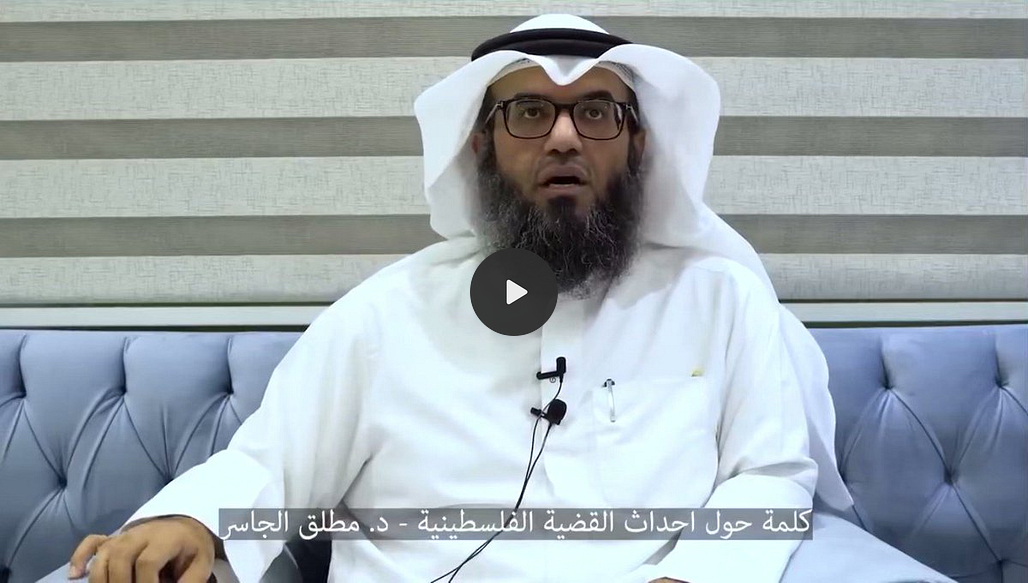
The mosque also hosted Kuwaiti Salafist preacher Mutlaq Aljasser on December 4, 5, and 6, 2024, and again on December 23 and 24, 2025. On October 9, 2023, per the administrative record, Aljasser posted on X that the October 7 Hamas attacks make all Muslims happy and constitute part of the jihad in the cause of God, the defense of the land, and the victory for the Al-Aqsa Mosque.

Coordinated Administrative and Financial Tools
France’s ability to administratively close mosques stems from Article L. 227-1 of the Internal Security Code, part of the 2017 Strengthening Internal Security and the Fight Against Terrorism Act, which codified emergency powers used during the state of emergency following the November 2015 Paris attacks. The asset freeze mechanism, governed by Articles L. 562-2 and following of the Monetary and Financial Code, provides a complementary tool. Both measures operate administratively, allowing swift execution without criminal trial standards.
The Chanteloup mosque, located on avenue Antoine Bourdelle, was previously closed briefly by the prefecture in 2019 over public safety code violations. The current case is part of a wider French counterterrorism strategy — the U.S. State Department’s 2021 Country Reports on Terrorism noted that “since 2020, the government had shuttered 21 mosques for ties to radical Islam.”
The staggered approach — freezing Brighat/Senhaji’s assets in June 2025, freezing ACAS and Hamidi’s assets in July 2026, then closing the mosque weeks later — demonstrates how French authorities are building comprehensive administrative cases that combine financial pressure with physical closure. The detailed documentation of specific sermons, social media posts, and guest speakers creates a public record of the radicalization the state alleges took root inside the mosque’s walls.