


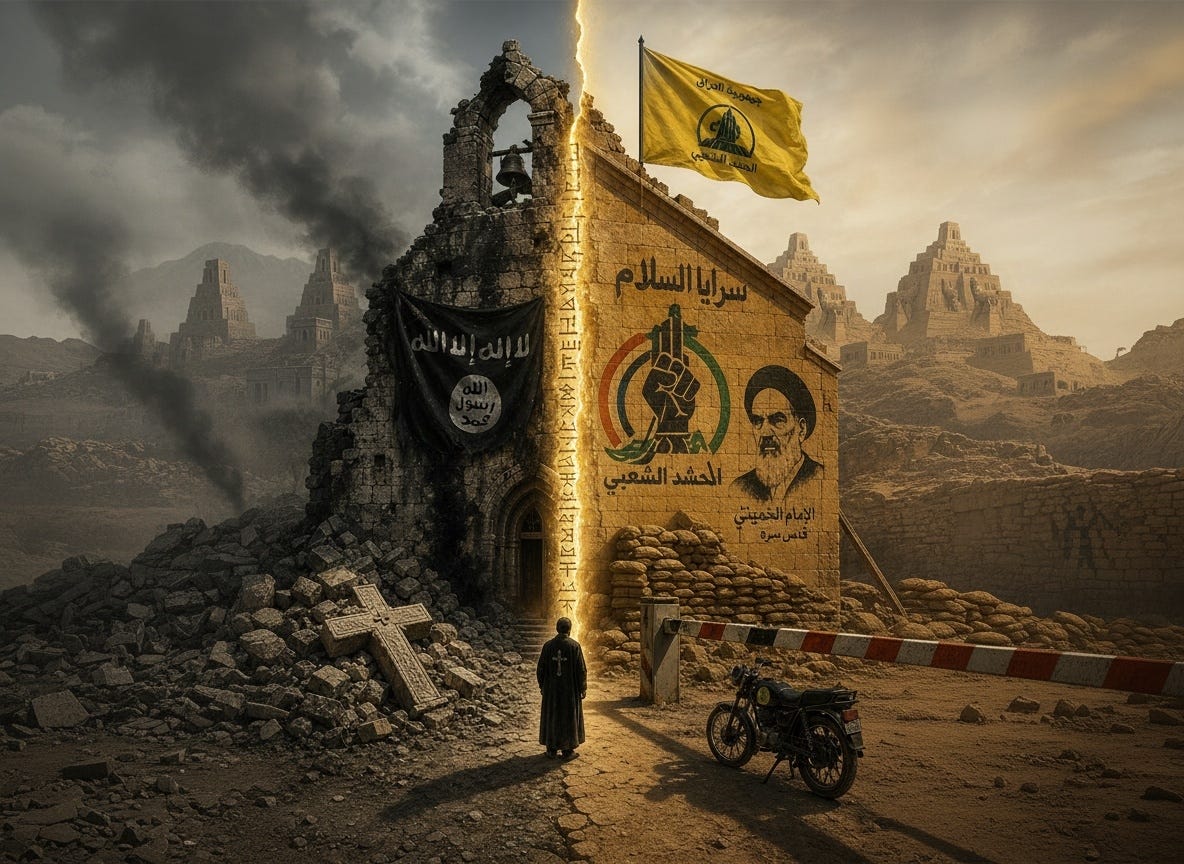
When the black flags of the Islamic State came down over the Nineveh Plain in 2017, the world assumed the Christian catastrophe was over. Instead, a second Islamist force moved into the emptied churches and looted homes: the Islamic Revolutionary Guard Corps and its Iraqi Shia proxies. ISIS destroyed 85 churches, opened graves, and drove more than 120,000 Assyrian, Chaldean, and Syriac Christians from their ancestral towns. The Iran-backed militias that followed did not need to blow up what remained — they seized it. Twelve years after the genocide, one of the oldest Christian communities on earth is being erased in slow motion by two flavors of Islamist power operating on the same terrain, back to back.
A solution exists on paper — an autonomous Nineveh Plain province Baghdad approved in January 2014 — and Assyrian Christians are calling on Washington to spend the political capital needed to force its implementation.
The Sunni Wave
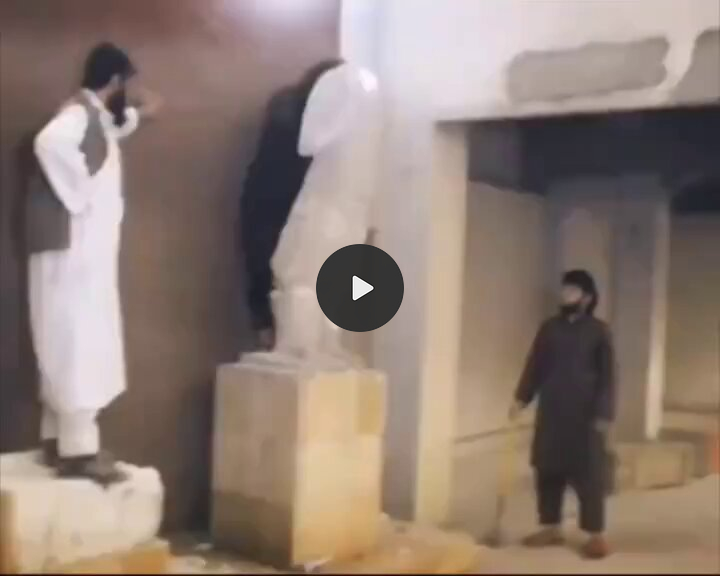
On August 4, 2014, one day after ISIS turned on the Yazidis of Sinjar, the caliphate’s fighters entered the Nineveh Plain. Christians were offered the historic ultimatum: convert, pay jizya, or leave. Local Peshmerga forces had already ordered villagers to hand over their weapons, leaving them defenseless. Within days, hundreds of thousands fled on foot. ISIS then destroyed 85 churches, burned cemeteries, pried open coffins, and looted relics from monasteries that had stood since the earliest centuries of Christianity.

Six months earlier, on January 21, 2014, Iraq’s Council of Ministers had approved the creation of a Nineveh Plain province as a safe haven for Assyrians under Article 125 of the Iraqi Constitution. The ISIS invasion buried the decision. It has never been implemented.


The Shia Wave
By 2017, ISIS was defeated militarily. The Christian towns of Bakhdida (Qaraqosh), Bartella, Tel Kayf, and Batnaya were physical ruins with a governance vacuum. Iran filled it.
Two Popular Mobilization Forces brigades embedded themselves in the Christian heartland. The 30th Brigade, or Liwa al-Shabak, installed itself around Bartella. The 50th Brigade — Kataib Babiliyoun, the “Babylon Brigade” — took Bakhdida and Tel Kayf. Despite branding itself as a Christian force, Kataib Babiliyoun is manned almost entirely by Shia Muslim recruits from southern Iraq and funded by Tehran, according to the Washington Institute for Near East Policy.
On July 18, 2019, the U.S. Treasury sanctioned both militia commanders under the Global Magnitsky Act. Treasury named Rayan al-Kildani’s 50th Brigade “the primary impediment to the return of internally displaced persons to the Ninewa Plain” and documented a video circulated among Iraqi human rights organizations in which Kildani cut off the ear of a handcuffed detainee. Waad Qado’s 30th Brigade was cited for “extortion, illegal arrests, and kidnappings” around Bartella, with Treasury stating that members of the local population alleged offenses “including physical intimidation, extortion, robbery, kidnapping, and rape.”
The Property Seizure
The occupation is measured in deeds, not just checkpoints. Iran-backed terrorist proxy groups have illegally taken over roughly 57,000 Christian-owned properties in Nineveh Province in a four-year window, according to Iraqi officials cited by the Kurdish outlet Rudaw. Bartella, once a Syriac Orthodox town whose Christian community dates back more than a millennium, has flipped to a Shia Muslim majority. In September 2017, an Imam Khomeini School opened on Bartella’s outskirts — a monument to Iran’s supreme leader planted at the edge of a Christian village that predates Islam itself.
Christian shopkeepers in Qaraqosh describe routine shakedowns at militia checkpoints. Aid recipients returning with materials to rebuild are extorted for cash. “The Nineveh Plains used to be protected by its own people,” one displaced Christian told International Christian Concern. “Now, a lot of armed militia from the south, supported by Iran, have a presence in our area.”
Capturing the Christian Vote
Iran’s proxies did not stop at land. They took the political representation too. Using what the Washington Institute described as Iranian financing and vote-buying, Kildani’s Babylon Movement doubled its parliamentary seats in the 2021 elections and now controls four of the five seats reserved for Christians in the Iraqi parliament — held by a Shia militia commander the United States has sanctioned for human rights abuse.
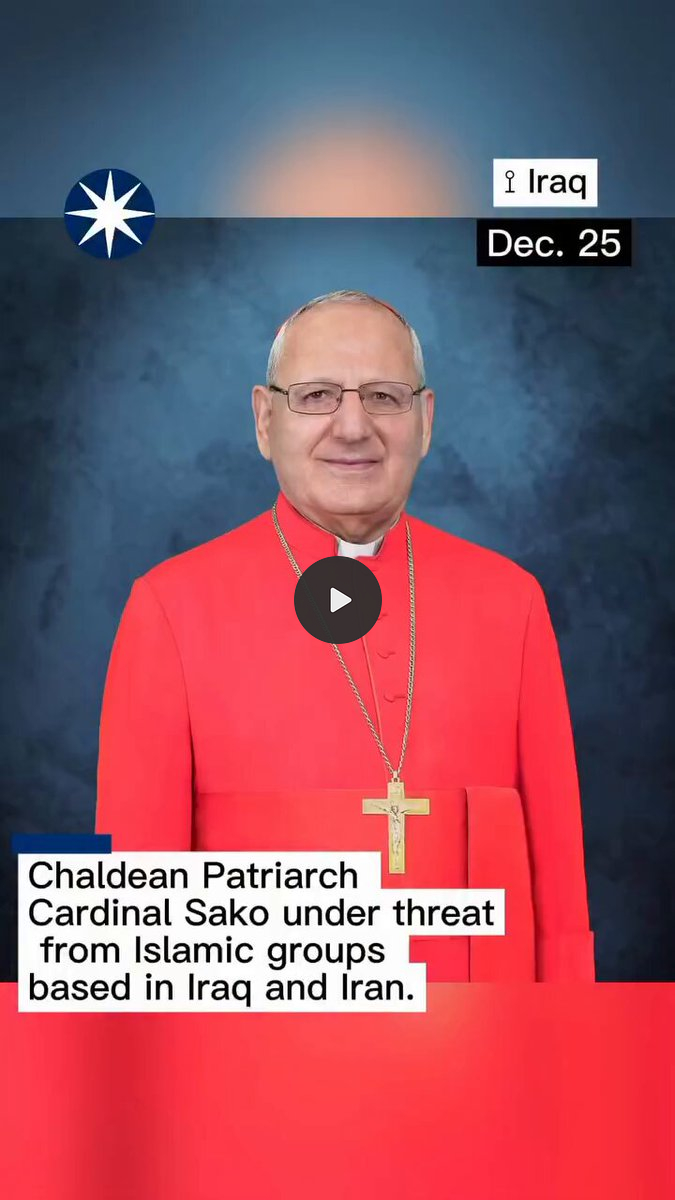
Chaldean Catholic Patriarch Cardinal Louis Raphael Sako has publicly called on Baghdad to prevent Kildani from claiming to represent Iraq’s Christian community. In March 2023, when the Babylon Brigade tried to seize a Nineveh Plain Protection Units base in Bakhdida, residents backed by Archbishop Younan Hanno marched against the convoy and forced it out. Seven NPU delegates were arrested in retaliation. Cardinal Sako is currently living under threats from Islamist groups, seemingly Iran and it’s terror proxies, based in Iraq and Iran.

The Solution Baghdad Already Approved — and Washington Could Deliver
The framework Baghdad approved in January 2014 remains on paper. On April 15, 2025, four Assyrian-Chaldean-Syriac parties — the Bethnahrin Patriotic Union, the Beth Nahrain Democratic Party, the Assyrian Democratic Movement, and the Chaldean Syriac Assyrian Popular Council — issued a joint demand that parliament finally implement it. The legal basis, they noted, lies in Article 125 of the constitution and Law No. 21 of 2008. “This constitutional, political, and historical right is absolute and not subject to negotiation,” the parties stated.
Assyrian Christians in Iraq and across the diaspora are increasingly directing that demand at Washington rather than Baghdad — arguing that only sustained American pressure can force implementation of a decision Baghdad has spent more than a decade ignoring. The leverage exists. The United States is the largest single financial backer of the Iraqi state, holds Iraq’s oil revenues in Federal Reserve accounts, and has more than 2,000 troops still stationed in the country. Baghdad’s political class is acutely responsive to Washington’s pressure when Washington chooses to apply it — as the 2019 Kildani sanctions themselves demonstrated. What is missing is not capacity but priority.
“The US could guarantee a province in Iraq overnight if there was the political will to protect Christians,” the Assyrian news account The Aramaic Wire posted on July 30, 2026. “Unfortunately it is not a priority.”
“If Nineveh is not granted autonomous status with proper protections,” Bethnahrin Patriotic Union President Joseph Sliwa warned, “we fear that what remains of our people will disappear. The ideologies that gave rise to ISIS are still alive in the region.”
They are — and they now wear a different uniform. ISIS destroyed the churches. Iran’s militias took the homes, the land, and the votes. The Nineveh Plain has fewer than 500,000 Christians left. The world already looked away once.