


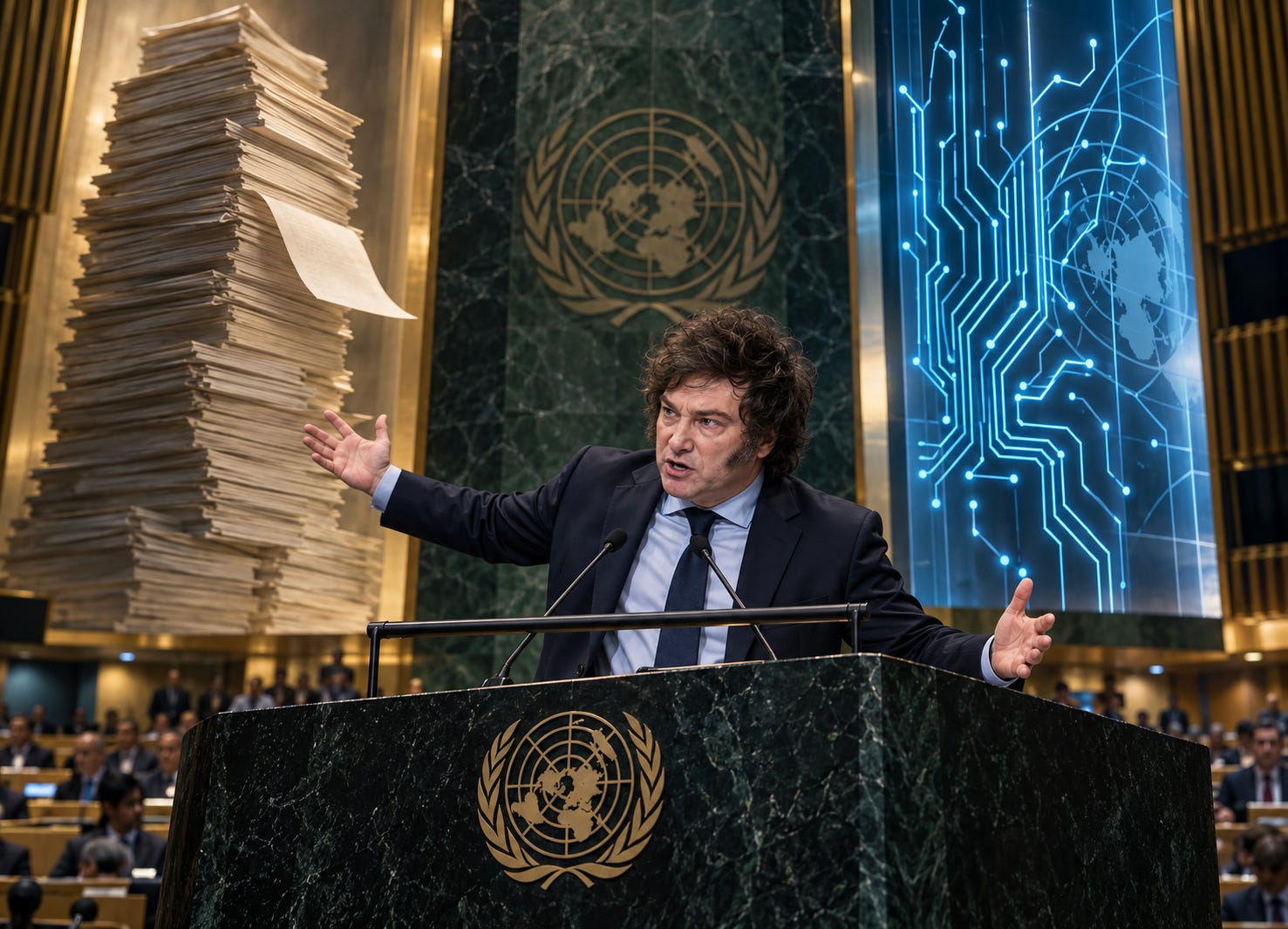
Argentinian President Javier Milei used the United Nations General Assembly on Wednesday to accuse the organization of failing at its founding mission while claiming authority over matters it was never meant to control.
He said the UN had become a “useless organization whose only purpose is to sustain a caste of fatally arrogant parasites masquerading as well-intentioned bureaucrats.” The insult landed from the General Assembly lectern, in a speech Milei had introduced as a constructive assessment of the institution.

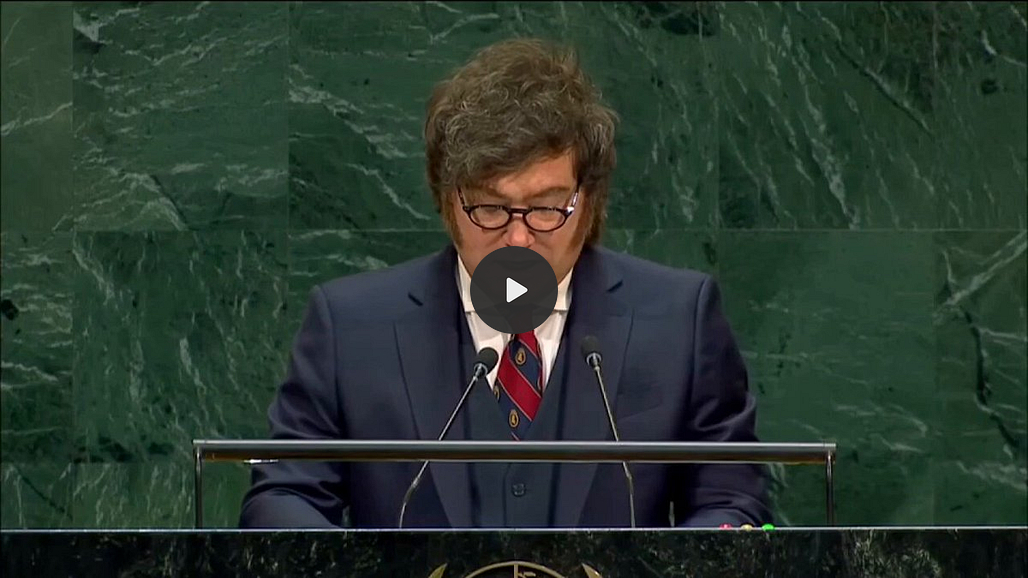
The UN, he said, had failed to uphold international law, protect human rights and provide meaningful collective security. At the same time, it had grown eager to shape economic policy, public health measures and now the governance of artificial intelligence.
The Mission Milei Says the UN Abandoned
Milei accused the UN of failing to protect human rights and collective security. He said it had accommodated dictatorships while allowing violence and terrorism to flourish, then questioned what its resolutions were worth when they had no effect beyond the General Assembly.
He made that complaint concrete through Argentina’s dispute with Britain over the Falkland Islands, known in Argentina as the Malvinas. Milei pointed to a 1976 UN resolution calling for renewed sovereignty negotiations and urging both governments to refrain from unilateral changes while the dispute remained unresolved. He cited the British licensed Sea Lion oil project, which Argentina opposes, as evidence that the UN’s words had failed to influence events.
Milei asked what use a resolution was if the other side could act against it for decades while it remained powerless in the UN’s archives.
Britain maintains its sovereignty claim and says the islanders have the right to determine their political future, including whether to develop the islands’ natural resources. The resolution does not settle the dispute or establish that the oil project is unlawful. Milei used the disagreement to question the UN’s authority when its resolutions fail to change what governments do.
A New Fight Over AI
Milei then turned from what the UN had failed to do to what he said it had taken upon itself to do. He accused the organization of building a “bureaucratic leviathan” concerned with how countries manage their economies, borders and citizens’ lives. He reserved some of his sharpest language for pandemic lockdowns, which he called a global exercise in social control.
Artificial intelligence was his forward-looking example. The UN has already established a dialogue on AI governance and an international scientific panel to assess the technology’s risks and opportunities. Those bodies do not themselves impose binding rules on countries. They do give the UN an organized role in a debate over how the technology should be governed.


Milei wants Argentina to take a different approach. He pledged against regulating AI preemptively and proposed tax benefits and limited liability for companies operating AI agents. He portrayed the technology as an opportunity to raise productivity, attract investment and give Argentina a place in a rapidly changing global economy.
That position raises questions of its own. AI agents can act with limited human supervision, and the UN’s scientific panel has examined the risk of systems behaving contrary to their operators’ intentions. Milei’s speech did not resolve how Argentina would handle such risks under the framework he proposed. He framed the immediate danger as governments restricting innovation before its benefits could emerge.
Milei said Argentina would continue to participate in international forums where cooperation served a purpose. His challenge was to an institution he believes has inverted its priorities: unable to enforce its most basic promises, yet ready to help write the rules for the next technological era.
Milei said Argentina would continue participating in international forums, but would not confuse cooperation with subordination. His speech raised a broader question about the UN’s priorities: whether an institution he sees as ineffective in its original mission should gain a larger voice in governing the next technological era.