


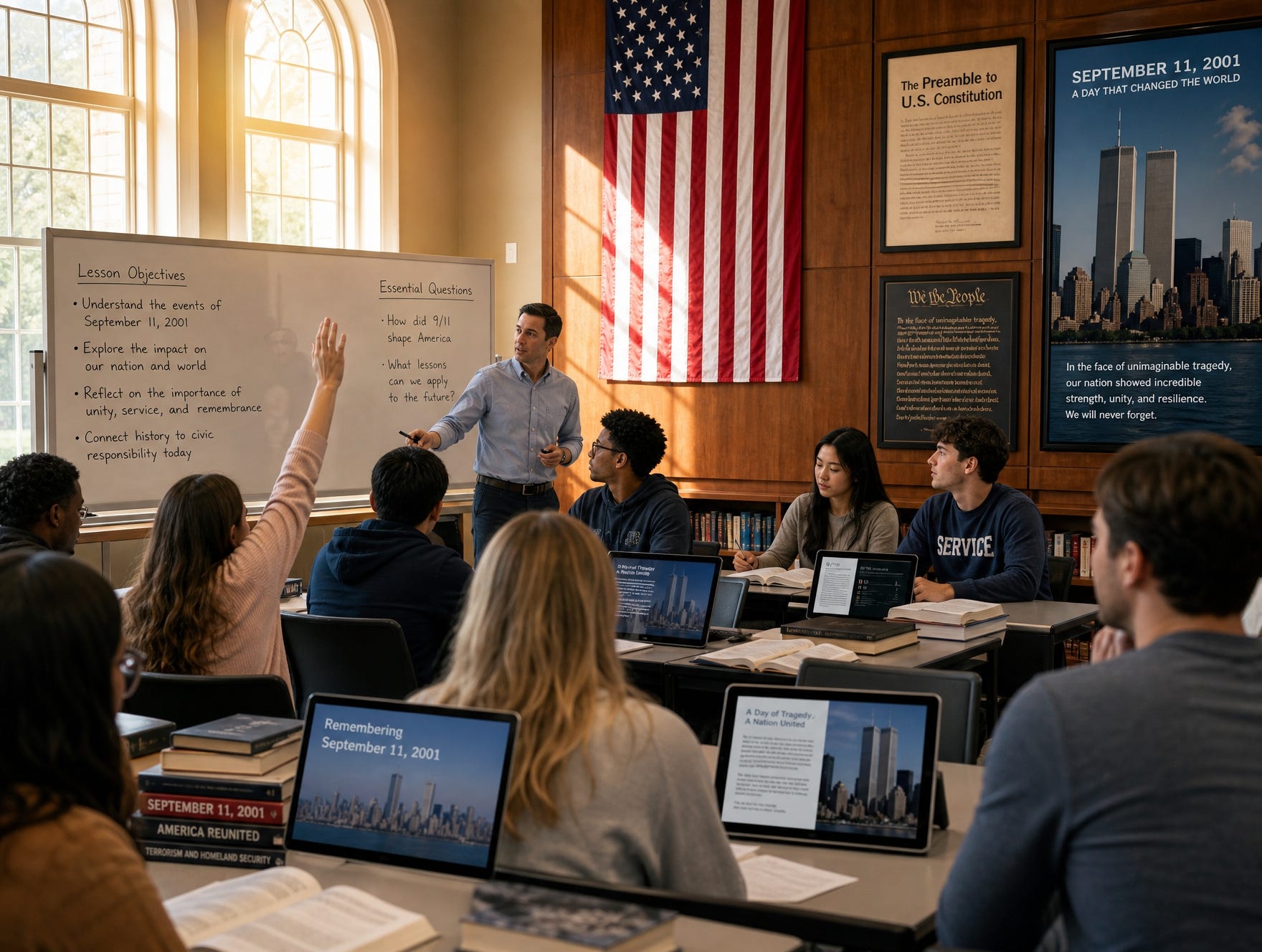
A new national curriculum launching this September will bring the voices of America's post-9/11 security leaders directly into high schools, universities, and civic organizations across the country. The timing coincides with the approaching 25th anniversary of the September 11 attacks. The “America After 9/11: A Living History Curriculum,” produced by Homeland Security Today, features twelve professionally recorded sessions with the officials who responded to the September 11 attacks and built the systems that protect the nation today.
The curriculum addresses a significant gap in American education. Only fourteen states currently require schools to teach about 9/11, meaning most American students born after 2001—now adults themselves—have limited understanding of how the attacks reshaped national security. The program aims to ensure future generations understand not just what happened on September 11, but why America responded as it did and what lessons emerged from that transformative period.
Learning From Those Who Were There
The curriculum’s strength lies in its direct access to decision-makers. Former Department of Homeland Security Secretary Michael Chertoff, who led the department from 2005 to 2009, guides students through intelligence reform and the creation of modern security infrastructure. Former FEMA Administrator Brock Long shares lessons from managing multiple catastrophic disasters. Former TSA Deputy Administrators Patricia Cogswell and Holly Canevari explain how aviation security evolved after the attacks.
“We believe there is no substitute for hearing directly from the people who built America’s homeland security enterprise—why they made the decisions they did, what they learned, and what they want the next generation to understand,” the curriculum states. Rather than learning solely from textbooks, students hear firsthand accounts from the men and women whose leadership transformed tragedy into a new era of preparedness and resilience.
The roster also includes former Arkansas Governor Asa Hutchinson, who served as the first Undersecretary of Homeland Security for Border and Transportation Security, and Dr. Kimberly O’Connor, current Director of Arizona’s Department of Homeland Security. Matthew Fodor, Director of Operations in the FBI’s National Security Division, provides insight into counterterrorism operations. Mubin Shaikh, a counter-extremism specialist who worked undercover infiltrating jihadist networks, offers a unique perspective on terrorism prevention.
Comprehensive Coverage of Post-9/11 America
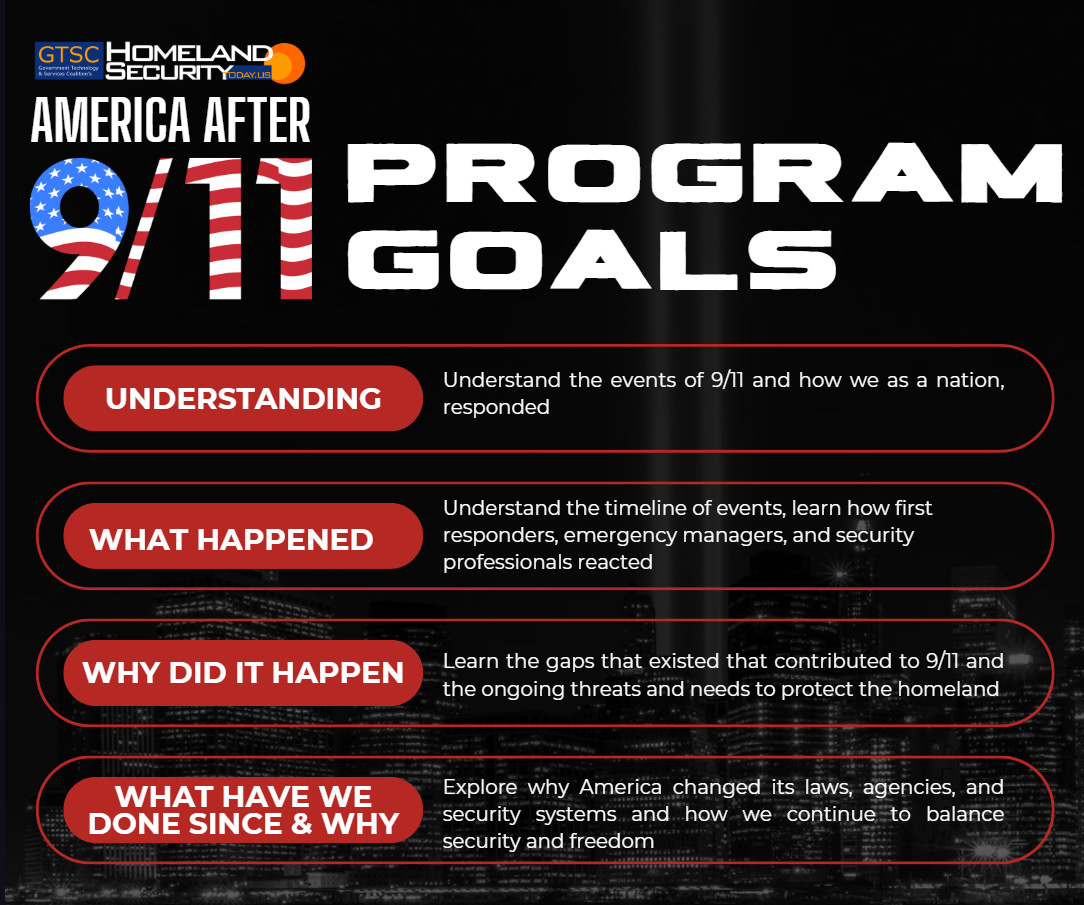
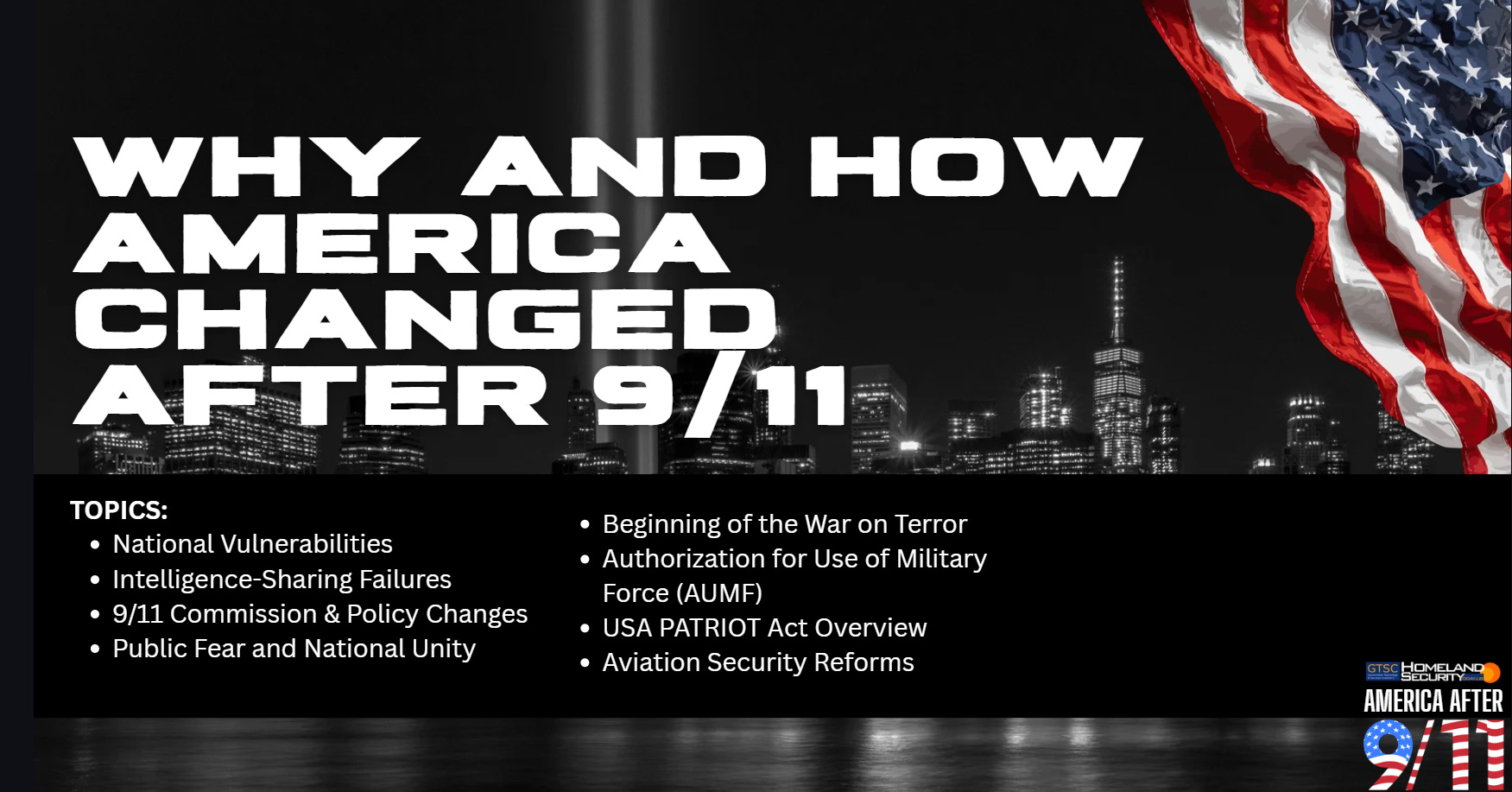
The twelve sessions cover essential topics: the events of September 11 itself, the creation of the Department of Homeland Security, intelligence reform and information sharing, counterterrorism and prevention strategies, aviation and transportation security, emergency management, border security, community resilience, cybersecurity and emerging threats, leadership during national crises, and the importance of public service.
Chief Sal Cassano, former Commissioner of the New York City Fire Department, shares the first responder experience from that day and its aftermath. Former DHS Under Secretaries Francis X. Taylor and Kenneth Wainstein explain how intelligence agencies learned to share information and coordinate responses. Robert Stephan, former Assistant Secretary for Infrastructure Protection, discusses safeguarding critical systems.
Each session is professionally recorded and designed as an “evergreen educational resource” that educators can use in full or in part for years to come. The flexible format allows teachers to integrate the material into history, civics, or current events classes.
Preserving Institutional Memory
The curriculum arrives at a critical moment. The program preserves their insights before that institutional knowledge disappears. Students today increasingly view 9/11 as distant history, similar to how previous generations learned about Pearl Harbor or the Kennedy assassination from those who weren’t there.
The program is free and available to high schools, colleges, universities, civic organizations, libraries, museums, youth leadership programs, and public safety academies. Homeland Security Today, which produces the curriculum, serves as the premier news and information resource for the homeland security community and operates under the Government Technology & Services Coalition, a nonprofit association serving the homeland security sector.
Educating the Next Generation of Leaders
Beyond historical education, the curriculum emphasizes public service and civic responsibility. Many of the featured speakers devoted their entire careers to protecting Americans — some continuing that work today through consulting, advisory roles, and mentoring the next generation of security professionals.
The sessions encourage students to consider careers in public safety, emergency management, intelligence, and homeland security. They demonstrate how individuals can make meaningful contributions during national crises and help build more resilient communities.
As the 25th anniversary of September 11 approaches in 2026, the curriculum ensures that “Never Forget” becomes more than a slogan. It becomes an educational foundation, passed from those who lived through America’s darkest day to students who will inherit responsibility for the nation’s security.
We must never forget. I literally have a 20-something coworker who didn't know who bin Laden was!