


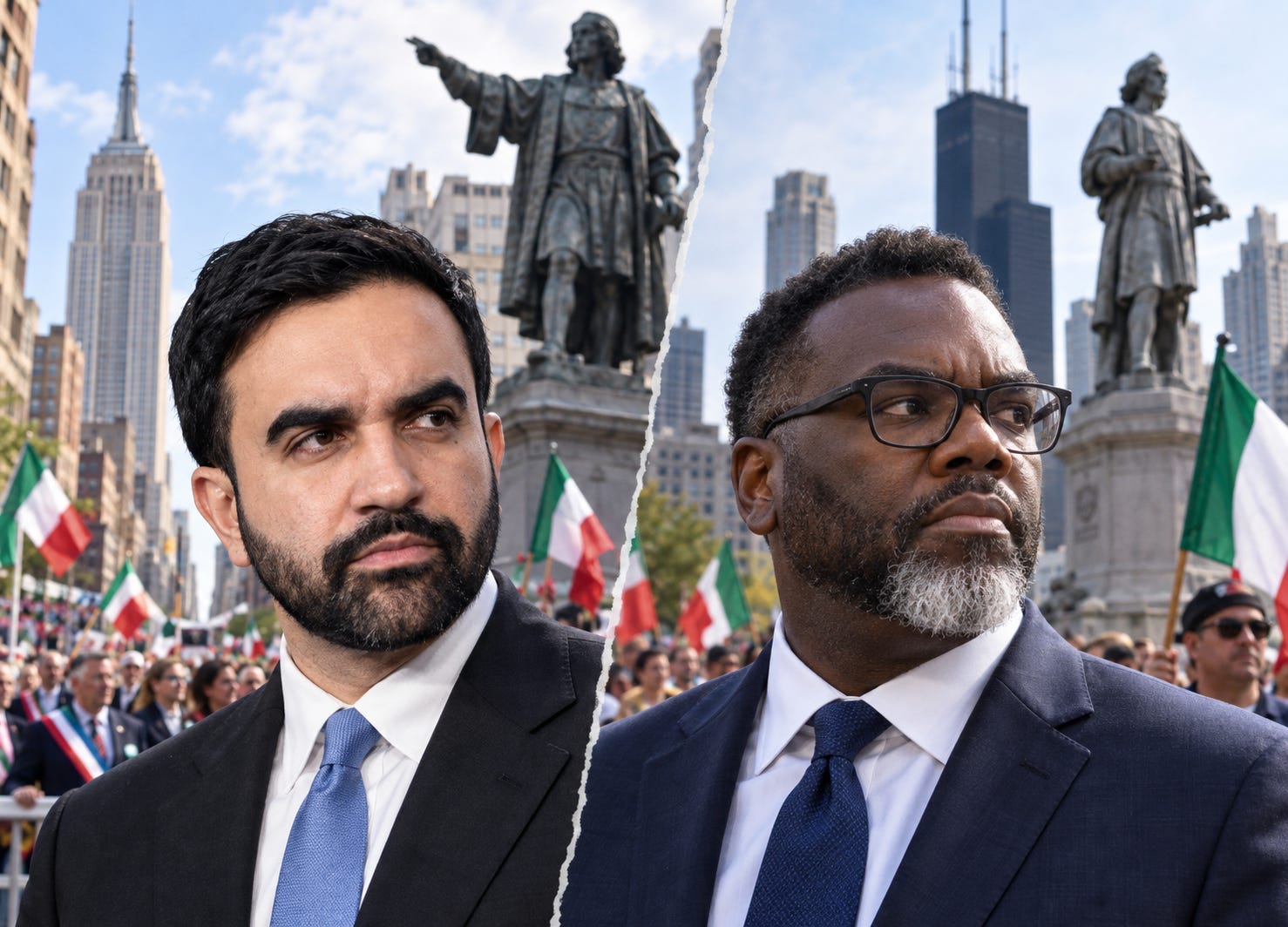
The Democratic mayors of America’s largest and third-largest cities were absent from their respective Columbus Day parades on Monday, October 12, as Italian-American communities gathered in New York and Chicago to celebrate their heritage and contributions to American society.
New York City Mayor Zohran Mamdani skipped the city’s 82nd annual Columbus Day Parade along Fifth Avenue, while Chicago Mayor Brandon Johnson did not participate in his city’s 74th annual celebration. Both absences came against a backdrop of earlier public opposition to Christopher Columbus, whose historical legacy has become a contentious issue in American politics.
According to ABC7 Chicago, Johnson’s office confirmed that he did not participate in the Chicago parade. In New York, CBS News confirmed Mamdani’s absence, which prompted criticism from Italian-American community leaders.
Mamdani’s History of Opposition to Columbus
Mamdani’s absence from New York’s celebration followed years of outspoken criticism of the Italian explorer. In June 2020, Mamdani posted a photograph of himself raising his middle finger toward a Christopher Columbus statue in Queens, accompanied by the words, “Take it down.”


The photograph resurfaced ahead of Monday’s parade, drawing renewed scrutiny of the mayor’s position on a holiday that many Italian Americans regard as a celebration of their community’s history.
Among those criticizing Mamdani was Angelo Vivolo, president of the Columbus Heritage Coalition, who argued that the mayor’s absence demonstrated disrespect toward Italian Americans.
“We know he hates Columbus. But the parade celebrates Italian-American culture,” Vivolo told the New York Post, according to the Italian news agency ANSA.
The parade nevertheless drew prominent elected officials, including Democratic Gov. Kathy Hochul, New York Attorney General Letitia James, and City Council Speaker Julie Menin, alongside Republican gubernatorial candidate Bruce Blakeman.
The event’s theme, “Two Flags, One Home,” highlighted the relationship between Italian and American identity during the United States’ 250th anniversary year.
Rather than participate, Mamdani released a video celebrating Italian-American Heritage Month, highlighting the contributions of Italian immigrants and praising Vito Marcantonio, a former congressman from East Harlem associated with progressive labor politics.
His administration also indicated that it would hold a reception celebrating Italian-American heritage at Gracie Mansion.
The mayor’s absence renewed an earlier controversy involving a city-produced map of immigrant neighborhoods that omitted Manhattan’s Little Italy and the Bronx’s Arthur Avenue neighborhood. The omissions prompted criticism from Italian-American leaders before the map was corrected. The map project, however, originated under the previous administration.
Monday’s absence also followed Mamdani’s decision not to attend New York’s Israel Day Parade in May, another prominent Fifth Avenue event. The mayor has defended his position regarding Israel, while emphasizing his administration’s responsibility to protect Jewish New Yorkers.
Chicago’s Mayor Previously Sought to Replace Columbus Day
In Chicago, Johnson’s absence was notable given his own documented history of opposition to Columbus Day.
The city’s 74th annual parade, organized by the Joint Civic Committee of Italian Americans, proceeded through downtown Chicago on October 12, featuring Italian flags, marching bands, and cultural performances.

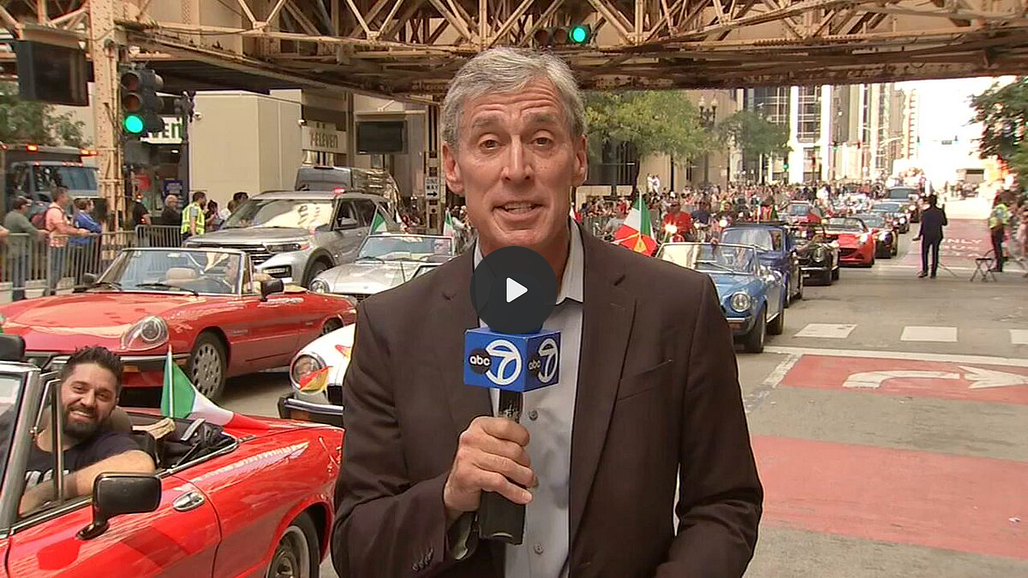
The celebration included actor Tony Danza, singer Lou Gramm, and actress Cristiana Dell’Anna as grand marshals, while Italy’s Campania region was recognized as the event’s region of honor.
Although Johnson did not participate, his opposition to honoring Columbus was publicly established years before he entered City Hall.
In October 2021, while serving as a Cook County commissioner, Johnson participated in an Indigenous Peoples’ Day gathering and described Columbus’s legacy in terms of racism, genocide, and sexual violence against Indigenous communities.
More significantly, official Cook County legislative records show that Johnson sponsored a resolution proposing to replace Columbus Day with Indigenous Peoples’ Day and Reconciliation Day. The proposed resolution recognized the historical suffering of Indigenous peoples under European colonization and called for the second Monday of October to be observed under the new designation.
The measure was deferred by the Cook County Board in October 2021.
Johnson’s absence also follows an earlier precedent in Chicago. In 2021, then-Mayor Lori Lightfoot skipped the city’s Columbus Day Parade amid controversy over Christopher Columbus monuments that had been removed from public spaces.
At the time, Italian-American organizers emphasized that the annual parade represented far more than the historical figure whose name it carried.
Ron Onesti, a representative of the Joint Civic Committee of Italian Americans, explained that the celebration recognized the role Italian Americans played in building the United States.
A Holiday Rooted in the Italian-American Experience
For generations, Columbus Day has served as an important celebration of Italian-American heritage, honoring the immigrants and their descendants who helped build some of America’s greatest cities despite facing widespread prejudice and discrimination.
Yet when Italian Americans gathered to celebrate that legacy, the mayors of New York and Chicago were conspicuously absent.

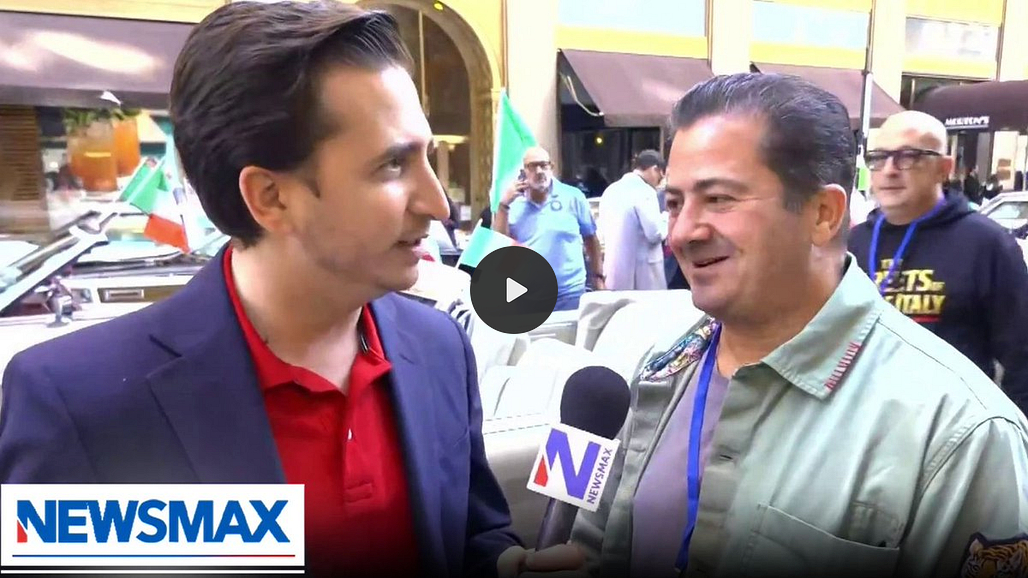
Their absences were particularly striking given their earlier public opposition to Columbus commemorations. Mamdani had openly called for a Columbus statue to be removed, while Johnson had supported legislation seeking to replace the holiday altogether.
The parades were about more than Christopher Columbus. They celebrated generations of Italian Americans whose contributions helped shape New York, Chicago, and the United States. Both mayors had an opportunity to join their constituents in recognizing that history, regardless of their personal views about Columbus.
In New York and Chicago, thousands gathered to celebrate their heritage and their place in American history. Their mayors were nowhere to be seen.