


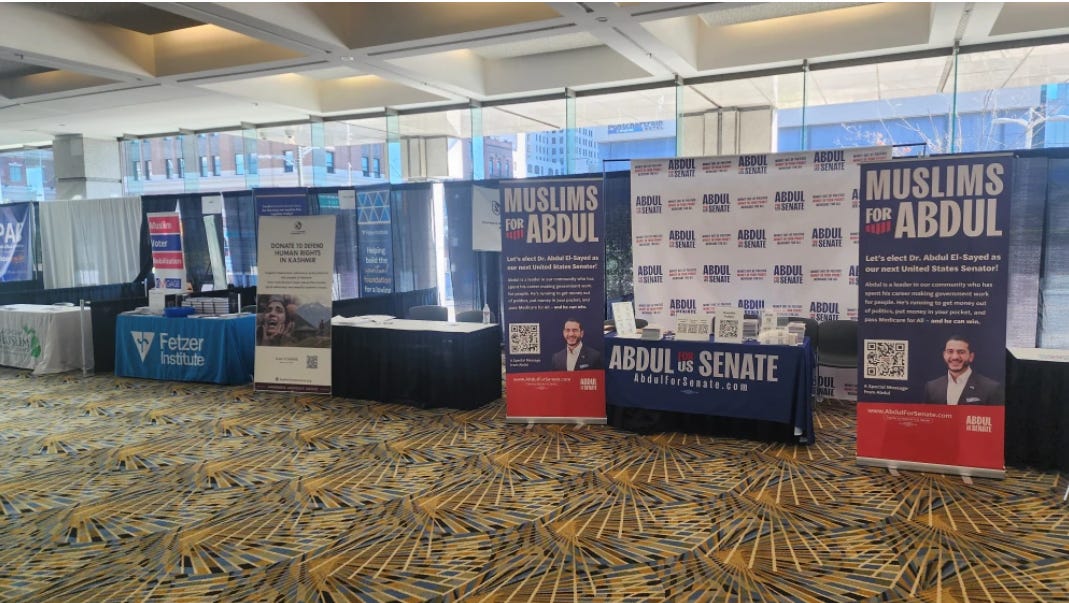
Rep. Keith Self (R-Texas) has asked Treasury Secretary Scott Bessent for an IRS investigation into the Islamic Society of North America. The request follows reports that Abdul El-Sayed’s Senate campaign solicited donations and recruited volunteers at ISNA’s Detroit convention. Self announced the move on September 16, seeking a full review of the nonprofit’s tax-exempt status.
The request adds a new dimension to a gathering Crosscurrents previously examined for its controversial speakers and institutional history. The immediate question is whether ISNA’s September 4–7 convention crossed the line between hosting a candidate and helping elect him in a way which is illegal for an organization with non-profit status.
“These circumstances warrant a thorough examination of whether ISNA participated or intervened in a political campaign,” Self wrote in excerpts published by Blaze News.


A Campaign Operation at the Convention
A September 9 eyewitness report by Focus on Western Islamism, a Middle East Forum publication, described an El-Sayed campaign booth inside Huntington Place, before ISNA’s registration desk. Photographs showed campaign banners, donation and volunteer QR codes, and a free T-shirt offer tied to a $50 contribution. Fundraiser invitations were also displayed.
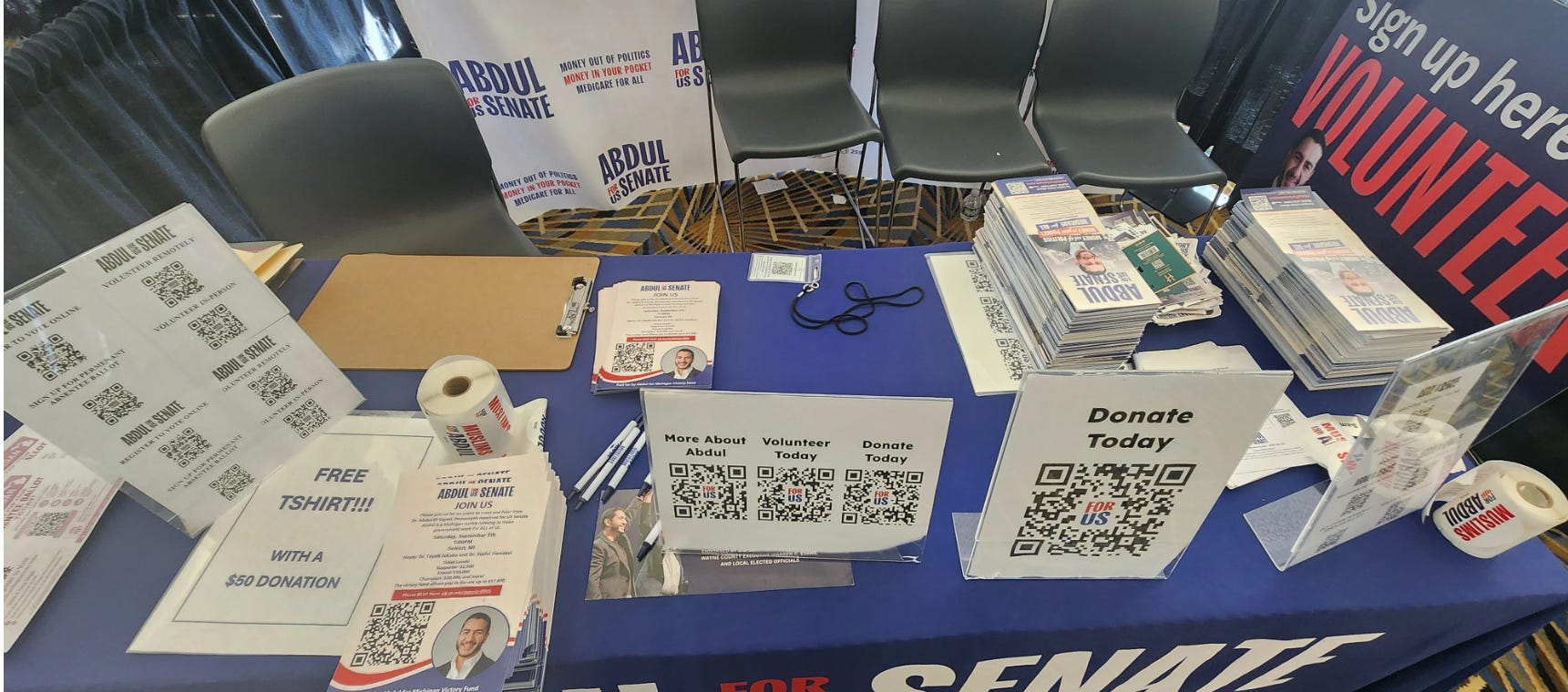
The report described campaign workers distributing literature, placing flyers on seats and waving posters around El-Sayed’s appearance. ISNA CEO Azhar Azeez introduced him as Michigan’s Democratic Senate nominee and praised his concern for ordinary residents over wealthy corporate interests.
The political messaging extended beyond El-Sayed’s appearance. In a separate September 15 report, FWI documented a civic-engagement panel featuring leaders from Emgage USA, the Muslim Public Affairs Council and CAIR’s Los Angeles chapter. Speakers invoked El-Sayed and New York’s Zohran Mamdani as examples of growing Muslim electoral influence. Emgage’s Mohamed Gula credited El-Sayed’s unsuccessful 2018 gubernatorial campaign with inspiring later candidates and campaign workers.
From Speaker Scrutiny to Tax Scrutiny
Crosscurrents’ August preview documented the records of several advertised speakers, including Pakistani cleric Tariq Masood, who admitted forcing his 13-year-old niece into marriage.
A Pattern of Extremism: Inside ISNA's 2026 Speaker Lineup

The Islamic Society of North America will host its 63rd annual convention at Detroit’s Huntington Place Convention Center over Labor Day weekend, September 4-7, 2026. The four-day gathering is expected to draw tens of thousands of attendees and featured keynote speakers. A related ISNA Day conference in Tampa on October 24 will feature additional speake…
ISNA subsequently removed Masood from the program before the convention. El-Sayed’s campaign said his participation did not constitute an endorsement of other speakers and described his planned remarks as focusing on unity and public service.
Self’s letter also invoked ISNA’s inclusion as an unindicted co-conspirator in the Holy Land Foundation terrorism-financing case. A 2009 court order found evidence of associations involving ISNA, the foundation and Hamas. The same order discussed Muslim Brotherhood documents listing ISNA among its organizations or friendly groups.
The Rules Behind the Request
Federal tax rules prohibit 501(c)(3) charities from intervening for or against candidates. They do not categorically prohibit candidate appearances.
IRS guidance permits an organization to invite someone as a candidate when it provides equal opportunity to others seeking the same office, avoids indicating support or opposition, including in introductions, and ensures no political fundraising occurs.
That makes ISNA’s reported invitation to El-Sayed’s opponent relevant, but not conclusive. An invitation alone would not resolve separate questions about fundraising or an introduction favoring one candidate. Nor would a non-endorsement disclaimer, by itself, answer those questions.


The booth’s arrangements also matter. IRS guidance on commercial dealings with candidates considers equal access, customary prices, public availability and whether the activity is part of the organization’s regular business. A campaign’s presence at a venue is not, by itself, proof that the nonprofit supplied an unlawful benefit.
A meaningful review would therefore need the booth agreement, payment records, the terms offered to competing candidates, and communications showing who authorized fundraising and literature distribution. These would help distinguish an ordinary commercial arrangement from organizational support for a campaign.
Blaze News reported that neither ISNA nor El-Sayed’s campaign answered its requests for comment before publication. Self’s letter seeks an investigation; it is not an IRS finding. The question now is whether ISNA merely hosted political discussion or used its tax-exempt resources to advance one Senate campaign.