


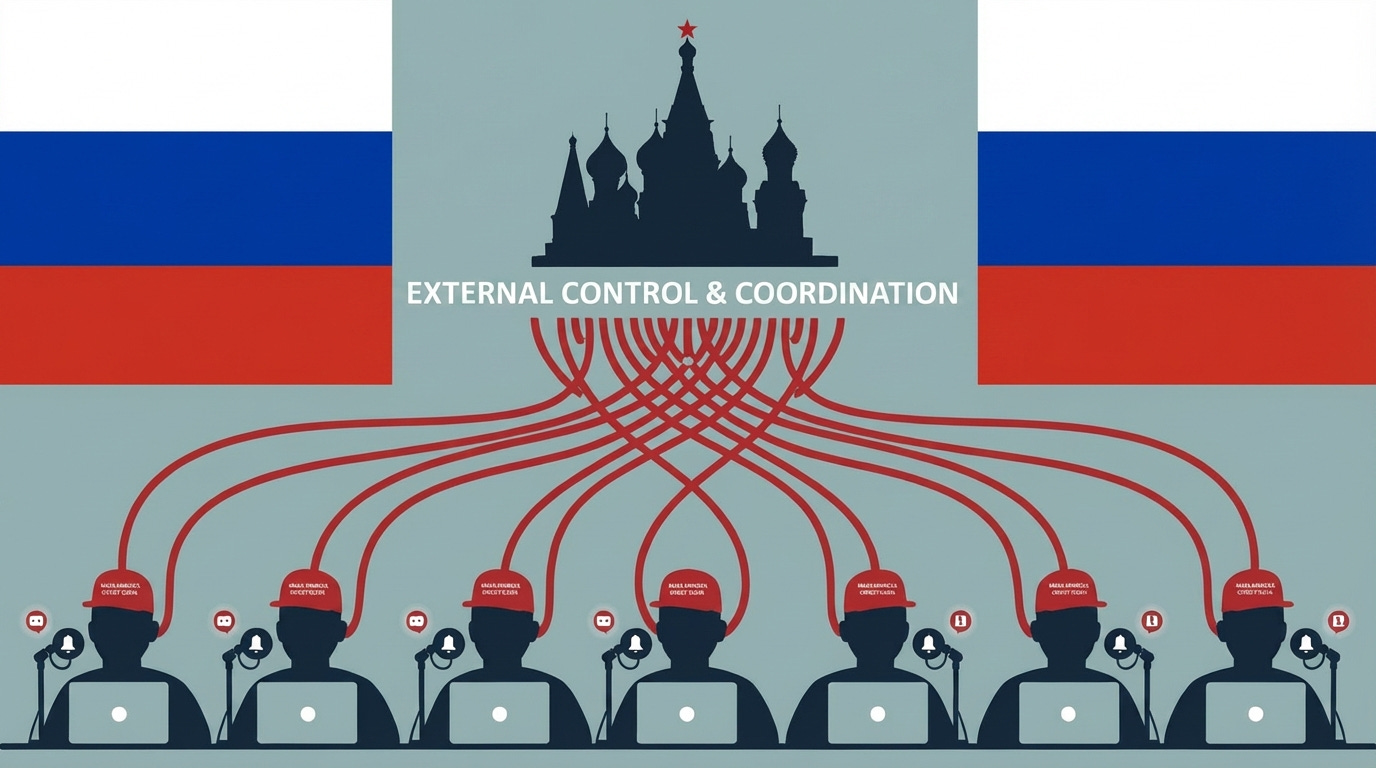
A September 2025 trip by American, British, and Canadian conservative influencers to Moldova and Moscow was absorbed into a Russian information operation targeting Moldova’s parliamentary elections, according to an investigation published this week by Alliance4Europe and VSquare.
The delegation — led by Charles Bausman, founder of the pro-Kremlin outlet Russia Insider — visited Moldova from September 14-16, then traveled to Moscow through September 23. Within days, their statements appeared in “Salt and Light,” a newspaper distributed across Moldova that authorities later identified as part of “Operation Matushka,” a persistent Russian disinformation campaign.
The report does not claim the influencers knowingly participated in election interference. But the timing and amplification pattern raise questions about how religious ultra-conservatives can be instrumentalized, wittingly or not, in foreign influence operations.
The mechanics of amplification
Moldovan police raided an unauthorized printing facility on September 23, confiscating over 200,000 copies of newspapers including Salt and Light’s Romanian and Russian editions. The publications contained “propagandistic content” designed to “destabilize the information space and incite on religious grounds,” according to the Chișinău Police Department’s investigation officer.
Salt and Light newspapers included QR codes linking to Telegram and Facebook accounts that initially shared religious content such as parish activities, quizzes and then shifted toward election messaging. One post described how the foreign bloggers were “shocked by certain reports of violations of believers’ rights and plan to bring them to the attention of a broad international audience.”
The Russian Orthodox Church acknowledged facilitating the Moscow segment through its Department for External Church Relations. A press release on the church’s website confirmed the delegation met with “representatives of the Russian Orthodox Church, state authorities, and public associations” and visited religious sites including the Trinity Lavra of St Sergius.


Who made the trip
The delegation included John-Henry Westen, CEO of LifeSiteNews, which joined the Pentagon press corps in October 2025 after major outlets withdrew over new access restrictions. Westen has appeared on Steve Bannon’s War Room podcast and attended a “Catholic Prayer for Trump” gala at Mar-a-Lago in 2025.
James Delingpole, former editor of Breitbart London and columnist for The Telegraph and The Spectator, also participated. Conrad Franz, co-host of the World War Now podcast who previously worked for religious-right podcaster Steve Turley, discussed the trip on the Counterflow podcast, stating: “The Orthodox Church in Moldova, which is canonically under the Moscow patriarchate, they are being heavily persecuted by the state there.”
Bausman himself fled to Russia after attending the January 6, 2021 Capitol riot, leaving behind nearly $1 million in U.S. property, according to the Southern Poverty Law Center. He has since appeared as a commentator on Tsargrad TV, owned by sanctioned Russian oligarch Konstantin Malofeev.
The sanctions connection
The investigation identified multiple links between delegation members and sanctioned Russian figures. Westen served on the CitizenGo Board of Trustees alongside Alexey Komov, a close associate of Malofeev who represents the World Congress of Families in Russia. Leaked emails suggest Bausman sought funding for Russia Insider from Malofeev through Komov, though Malofeev has denied financial connections.
Westen’s name appeared on a 2014 list of foreign participants in the Moscow Large Families Forum co-sponsored by Malofeev. According to leaked documents, his trip was partially funded by the Andrew the First-Called Foundation, led by sanctioned Russian oligarch Vladimir Yakunin.
The European Commission’s 2024 report on Moldova found that “religious freedom is generally respected” and identified no evidence of violations—contradicting the delegation’s central claim.
What came next
Moldova’s September 28 elections delivered the pro-European Party of Action and Solidarity a single-party majority with 50.2% of the vote. But the election occurred amid extensive interference: Moldovan authorities reported that tens of millions of dollars flowed from Russian bank Promsvyazbank to approximately 138,000 individuals — roughly 10% of the active electorate.
Operation Matushka, identified by EU DisinfoLab as connected to the larger Doppelgänger campaign run by sanctioned Russian companies Struktura and Social Design Agency, specializes in creating fake content that impersonates trusted sources. The operation has targeted 80 organizations across 10 countries and 10 languages, with activity intensifying around European elections.
After the Moscow visit, LifeSiteNews published an article describing Russia as “the leader of an ideological revolution” while “the West is sinking deeper into a spiritual crisis.” Westen gave an interview to SPAS TV, a Russian Orthodox Church-owned station sanctioned for spreading pro-Kremlin propaganda, which LifeSiteNews TV later promoted.
The pattern underneath
The case illustrates a recurring vulnerability: how genuine religious conviction can be channeled into geopolitical messaging without explicit coordination. The delegation members appear to have sincerely believed they were documenting religious persecution. The Russian Orthodox Church provided logistical support and amplification. Local networks then weaponized the resulting content in a coordinated information campaign.
None of the delegation members responded to requests for comment from investigators.
The Foreign Policy Research Institute notes that the Russian Orthodox Church “has become a central pillar of the Kremlin’s political and informational warfare strategy, shaping narratives by fusing spirituality with nationalism.” The Moldova operation demonstrates how this fusion operates across borders—turning American conservative media figures into inadvertent amplifiers of Kremlin messaging, whether or not they understand their role in the mechanism.