

The Four-Year Movie
When The Sound of Music premiered 61 years ago today, it didn’t leave theaters for 1,642 days. That wasn’t a bug, it was the entire business model.

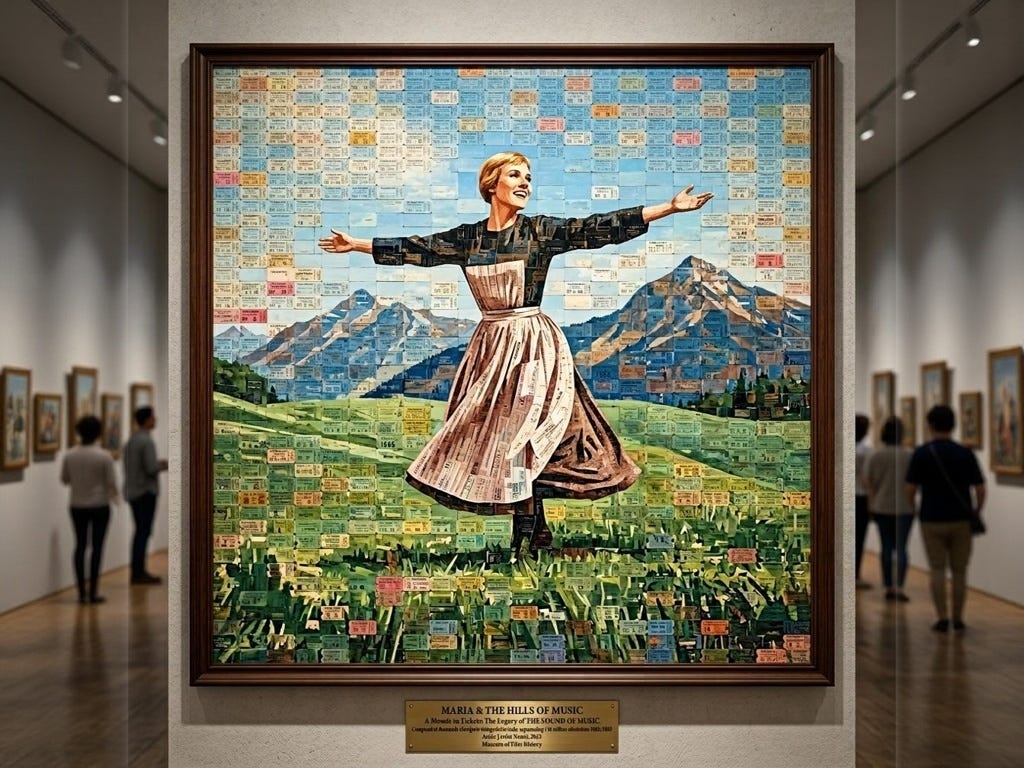
The Sound of Music spent four-and-a-half years in continuous theatrical release before leaving cinemas on Labor Day 1969. Not sporadic re-releases across decades, like Gone With the Wind. Not a limited “classic screening” series. The same movie, in the same theaters, week after week, for longer than an undergraduate degree.
To understand how strange this is: in 2024, the average theatrical window was 32 days. A film that opens in March is streaming, on a platform you already subscribe to, watchable in bed, by April. The Sound of Music opened exactly 61 years ago today, March 2, 1965, and you could still buy a ticket to see it in a theater in September 1969. The movie outlasted the Johnson presidency.
This wasn’t an accident. It was infrastructure.
The Roadshow Model
Fox released The Sound of Music as a roadshow presentation — reserved seats, advance tickets, premium pricing, two performances daily. The 174-minute runtime included an intermission, like a stage production. Theaters installed six-track stereophonic sound systems specifically for 70mm prints. You didn’t “catch” The Sound of Music. You planned for it.
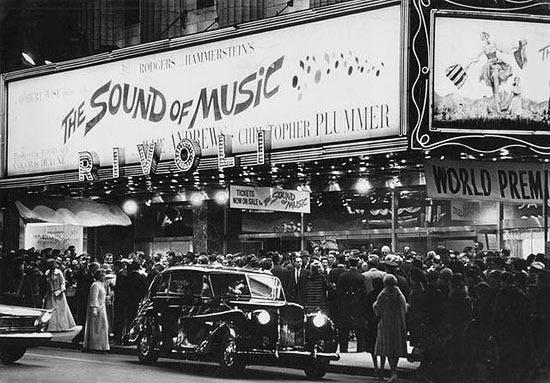
The roadshow format meant fewer daily screenings, but each screening was an event. This sounds inefficient until you realize the film topped the box office for 30 of 43 weeks and sold nearly 142 million tickets when the U.S. population was 194 million. The statistical impossibility suggests extraordinary repeat viewing, audiences returning not for plot twists they’d missed, but for ritual.
In some cities, ticket sales exceeded the entire local population.
What Gets Built When Movies Stay
Here’s what I’ve been trying to understand: What kind of shared culture emerges when the same artistic experience occupies the same physical space for four consecutive years?
Modern distribution optimizes for velocity, maximum revenue extraction before content disappears into the streaming catalog. Films don’t stay anywhere long enough to become destinations. They appear on Netflix, get watched (or added to lists that never get cleared), then sink beneath algorithm-surfaced recommendations for the next thing.
The 1960s roadshow model optimized for presence. A film wasn’t content to consume; it was a destination to revisit. Theaters became pilgrimage sites. This created something streaming architecturally cannot: true cultural commons. When a movie stays visible in physical space for years, it becomes infrastructure itself, a known landmark, a reliable gathering place, a conversation everyone can enter because everyone has had time to arrive. Streaming offers infinite choice and zero shared coordinates.
The Collapse
The roadshow model died with the 1970s multiplex revolution. Why hold one theater hostage to a single film when you could split the building into six screens? The math made sense. Revenue per square foot increased. Consumer choice expanded.
But we traded depth for breadth. The four-year movie became impossible not because audiences lost interest, but because the infrastructure that supported sustained attention — reserved seating, premium formats, event-style exhibition — gave way to throughput optimization.
The Sound of Music didn’t just occupy theaters for four years. It was allowed to, by an exhibition system that believed some things deserved to stay.