


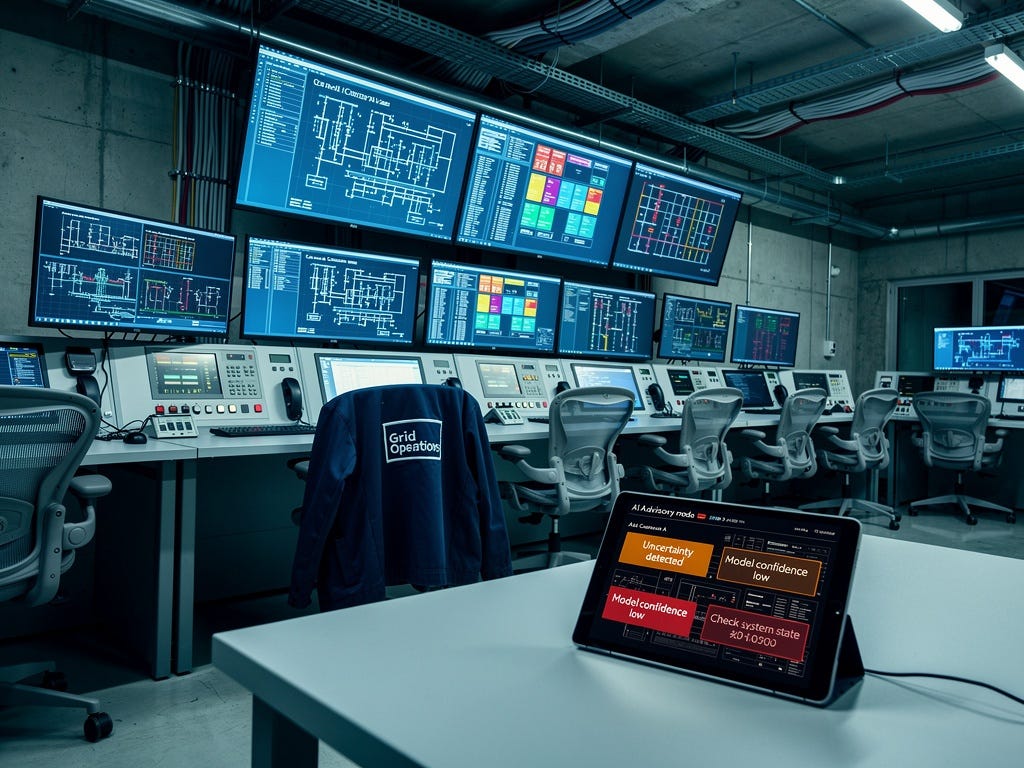
As the Federal Reserve concludes its March 18, 2026, meeting with a widely expected rate hold, the underlying economic data reveals a constraint that interest rates cannot easily fix: a deepening “Brain Trust Cliff.” While financial markets focus on stagflation and oil shocks from the Iran conflict, American institutions are facing the physical exit of their most experienced workers—and finding that their digital replacements are not yet ready to take the wheel.
The Exit of the Experts
The reality of the “Silver Tsunami” has shifted from a demographic forecast to an operational crisis. As of January 2026, the labor force participation rate for workers aged 55 and older has stabilized around 37.9%, but the concentration of these workers in critical infrastructure is perilously high.
In the Utilities sector, for example, 80% of all employment is now at firms where at least a quarter of the workforce is over age 55—up from just 35% in 2006. When these individuals retire, they aren’t just leaving a vacancy; they are taking the “unwritten rules” of the grid with them. This isn’t a simple hiring problem—it is an institutional memory leak that threatens the stability of foundational U.S. services.
The AI Implementation Gap
To bridge this gap, 88% of organizations have deployed AI as of early 2026. The goal is to “capture” expert knowledge into agentic systems that can guide the next generation. However, the 2026 Deloitte Global Human Capital Trends report reveals a stark “readiness gap”: executives are struggling to manage the human-AI interaction effectively.
Instead of a smooth transition, many firms are accumulating “culture debt”—the friction caused when complex, human-centered processes are automated without regard for the social fabric of the workplace. This has led to a “blind flying” period: the experts are gone, the AI is generating errors, and younger workers are spending significant time reworking poor AI-generated content. According to Workday’s 2026 research, while 85% of employees report saving one to seven hours per week using AI, nearly 40% of those time savings are lost to correcting errors, rewriting content, and verifying outputs.
The “Leapfrog” of Generation X
The most significant undercovered detail of this transition is the “leapfrog effect” on Generation X. Often called the “bridge generation” for their comfort with both analog and digital eras, Gen Xers are being overlooked for leadership roles even as they are expected to manage the crisis.
The 2026 Mather Institute Gen Xperience report found that while Gen X now holds a smaller percentage of executive-level positions compared to millennials and even boomers in some cases, they are the most likely to stay with their employers for 10+ years—with 38% intending to remain that long. By “leapfrogging” these stabilizers in favor of younger “AI-native” talent or aging-in-place Boomers, companies are accidentally destroying the very bridge they need to transfer institutional knowledge safely.
In the coming months, the public will be watching for a shift in corporate spending from “AI tools” to “human-in-the-loop” mentorship programs as firms realize that software cannot replace context. Additionally, there may be specialized recruitment drives targeting the “unretired”—Boomers brought back as consultants specifically to train AI agents and Gen X leaders. The success of the 2026 economy may depend less on how much society automates, and more on how well it protects the knowledge transfer.
Companies using AI to try and replace its retiring workers-that's an angle I never considered before. Great outside the box perspective.
PS-keep at this! You have great content and deserve the audience that will eventually appear!