

The Last Time America Tried Permanent Daylight Saving Time
In 1974, we tried year-round daylight saving. By spring, kids were hit by cars in the dark and parents revolted. Now we're trying again and nobody remembers why it failed.


The sun rose at 8:27 AM on January 7, 1974, in Washington, D.C. Florence Bauer of Springfield, Virginia, watched her daughter prepare for school in what she described to the Washington Post as “jet black” darkness. Some children carried flashlights. That same morning, a six-year-old girl was struck by a car on her way to Polk Elementary School in Alexandria. The accident broke her leg.
This was day two of America’s experiment with year-round daylight saving time.
President Richard Nixon had signed the Emergency Daylight Saving Time Energy Conservation Act three weeks earlier, promising it would save 150,000 barrels of oil daily while requiring only “a minimum of inconvenience.” The oil embargo had sent fuel prices soaring 50 percent. A December 1973 Gallup poll showed 79 percent approval.
By February, that number had collapsed to 42 percent.
When Winter Came for the Clocks
The problem revealed itself immediately in the winter darkness. In the weeks following the change, eight children in Florida were tagically killed in traffic accidents. Schools across the Washington area began delaying start times until the sun caught up with the clock. Parents revolted and Florida Governor Reubin Askew called for Congress to repeal the measure.
By August, Senator Bob Dole of Kansas introduced an amendment to end the experiment. On October 5, 1974, eight months into what was supposed to be a two-year trial, President Gerald Ford signed legislation restoring standard time. A House panel’s report captured the epitaph, energy savings “must be balanced against a majority of the public’s distaste for the observance of Daylight Saving Time” in winter.
The experiment was over.

The Amnesia
On March 15, 2022, the United States Senate unanimously passed the Sunshine Protection Act, which would make daylight saving time permanent nationwide.
Nobody really mentioned 1974.
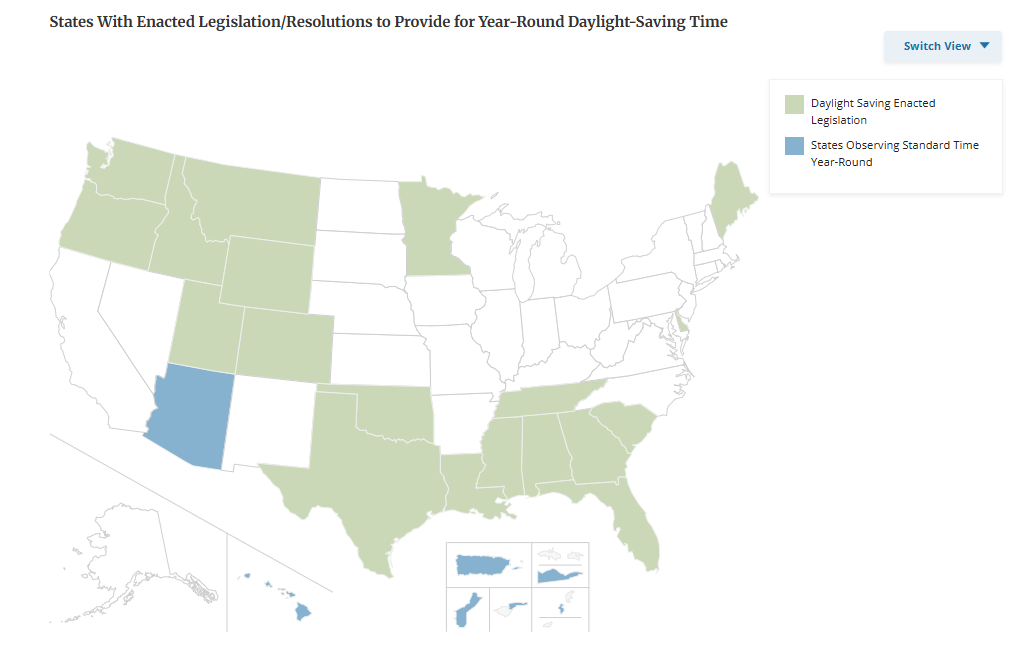
The bill stalled in the House, but the appetite persists. Nineteen states have passed legislation declaring they’ll adopt permanent DST the moment Congress allows it. Florida Representative Greg Steube has introduced the Daylight Act of 2026, proposing to shift clocks forward by 30 minutes permanently.
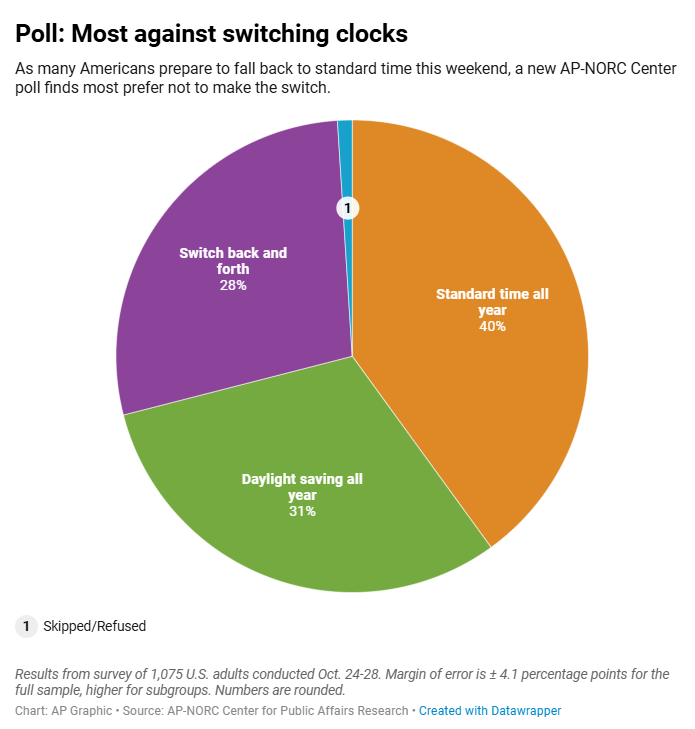
The pattern is eerily familiar. Then as now, the change enjoys broad initial support, a 2019 poll found 70 percent of Americans want to stop changing clocks. The justification centers on energy and efficiency in both eras. Medical experts warned then and warn now, the American Academy of Sleep Medicine published a 2020 position statement noting that the spring shift to DST increases risk of heart attacks, mood disorders, and car crashes, and that permanent standard time—not daylight time—aligns better with human circadian biology.
The problem remains the same, enthusiasm peaks in summer and fall, when people imagine lovely long evenings. The reckoning comes in January, when parents realize what 8:30 AM sunrise actually means.
Why We Keep Forgetting
Part of this is generational, as anyone under 50 has no memory of the experiment. But the deeper issue is that the policy debate resets itself twice annually, driven by the immediate irritation of changing clocks rather than sustained analysis. Every March and November, the question resurfaces, wouldn’t it be better to just pick one? The emotional appeal of that simplicity overwhelms the historical evidence about which choice actually works.
The basic physics hasn’t changed, permanent DST means darker winter mornings, particularly in the western edges of time zones. When the sun rises at 8:27 AM in Washington, D.C., it rises after 9:00 AM in Detroit, after 9:30 AM in western Michigan. The concern that animated Florida’s governor in 1974, children in danger on dark roads, hasn’t been answered, just forgotten.
The historical parallel suggests the current push for permanent DST is likely to follow the 1974 trajectory, initial enthusiasm, broad legislative support, celebration of the end of clock-changing…. followed by a winter of dark mornings, parental complaints, and eventual reversal.
Fifty-two years is apparently long enough for institutional memory to fail completely. The question is whether it’s long enough for the same experiment to yield a different result, or whether we’re simply about to learn the same lesson twice.