



When the 2026 Edelman Trust Barometer landed in January, most commentary focused on the predictable findings about institutional decline. Government trust remains low, media credibility continues eroding, the usual diagnoses for a fractured age. But buried in the data was something more unsettling than another year of disappointing scores for Congress or CNN.
The new crisis isn’t that people distrust the powerful. It’s that they’ve stopped trusting each other.
Seven in ten respondents across 28 countries reported unwillingness or hesitance to trust someone with different values, different approaches to social issues, different backgrounds, or different information sources. In Japan, that figure reached 90 percent. In Germany, 81 percent. In Canada, 73 percent. The insularity cuts across income levels, age groups, and geographies. This isn’t polarization, which at least implies engagement across a divide. This is retreat.
What Insularity Actually Means
The researchers at Edelman are careful with terminology. They’ve tracked trust for 26 years now, and they distinguish between phases. Polarization characterized the 2010s—people on opposite sides shouting at each other. Grievance marked the early 2020s—shouting turned to resentment, a belief that the other side was not just wrong but deliberately destructive.
Insularity is qualitatively different. When people feel aggrieved by those who disagree, they at least acknowledge the other camp’s existence. Insularity means checking out entirely. It’s not “I don’t trust what they say”—it’s “I’m unwilling to engage with them at all.”
You can see it in where trust has migrated. Over the past five years, trust in national government leaders has declined by 16 points, major news organizations by 11 points. Meanwhile, trust in “my neighbors, family and friends” rose by 11 points, “my coworkers” by 11 points, “my CEO” by 9 points.

The pattern is unmistakable: trust is becoming hyper-local, retreating from the abstract and institutional toward the immediate and familiar. People trust those they can see and know personally. Everyone else is suspect.
The Collapse of Optimism
What makes insularity particularly alarming is what accompanies it. Globally, only 32 percent of respondents believe the next generation will be better off than today. But averages obscure the extremes. In France, just 6 percent of people think the future will improve for their children. In Germany, 8 percent. In Canada, 16 percent. In the United States, 21 percent.
These aren’t developing economies wracked by instability. These are wealthy, stable democracies with centuries of institutional continuity, and their citizens have essentially stopped believing in the future. When asked whether tomorrow’s generation will fare better, nine out of ten French respondents essentially said no.
Robert Putnam spent the 1990s documenting the decline of social capital in America—the erosion of civic groups, bowling leagues, church attendance, neighborly interaction. His work in Bowling Alone demonstrated that interpersonal trust had been falling since the 1970s. The share of Americans who believe “most people can be trusted” dropped from 46 percent in 1972 to 34 percent by 2018. What’s happening now is that decline reaching terminal velocity, crossing into a regime where the question isn’t whether you trust strangers but whether you’re willing to interact with anyone outside your immediate circle.

The Forces Driving the Retreat
Four dynamics are fueling insularity, according to the research. Economic anxiety tops the list—two-thirds of employees worry that trade policies and tariffs will harm their employer, while more than half of low-income respondents believe they’ll be left behind by generative AI.
The collapse in optimism is the second force. Third is institutional distrust with a widening class dimension—low-income respondents see institutions as 18 points less competent than high-income respondents rate them. The trust gap between rich and poor has more than doubled since 2012, from six points to 15 points globally.
Fourth is the information crisis. Sixty-five percent of respondents worry that foreign actors are injecting falsehoods into national media to inflame divisions. Only 39 percent seek out news from ideologically different sources even weekly. People aren’t just siloing themselves physically—they’re doing it informationally, constructing epistemological bubbles where existing beliefs never encounter friction.
What the Pattern Suggests
This moment feels different from previous cycles of distrust. The 1960s and 1970s saw massive institutional skepticism—government, corporations, universities all faced legitimacy crises. But that era’s distrust was accompanied by civic engagement, by protests and movements and attempts to build alternative structures. People didn’t trust the establishment, but they trusted each other enough to organize.
What’s distinct now is the passivity of the retreat. Insularity doesn’t generate mass movements because it’s fundamentally individualistic. When you don’t trust people with different values, you don’t build coalitions. You withdraw. The energy goes into curating your immediate environment—your neighborhood, your workplace, your friend group—to minimize exposure to difference.
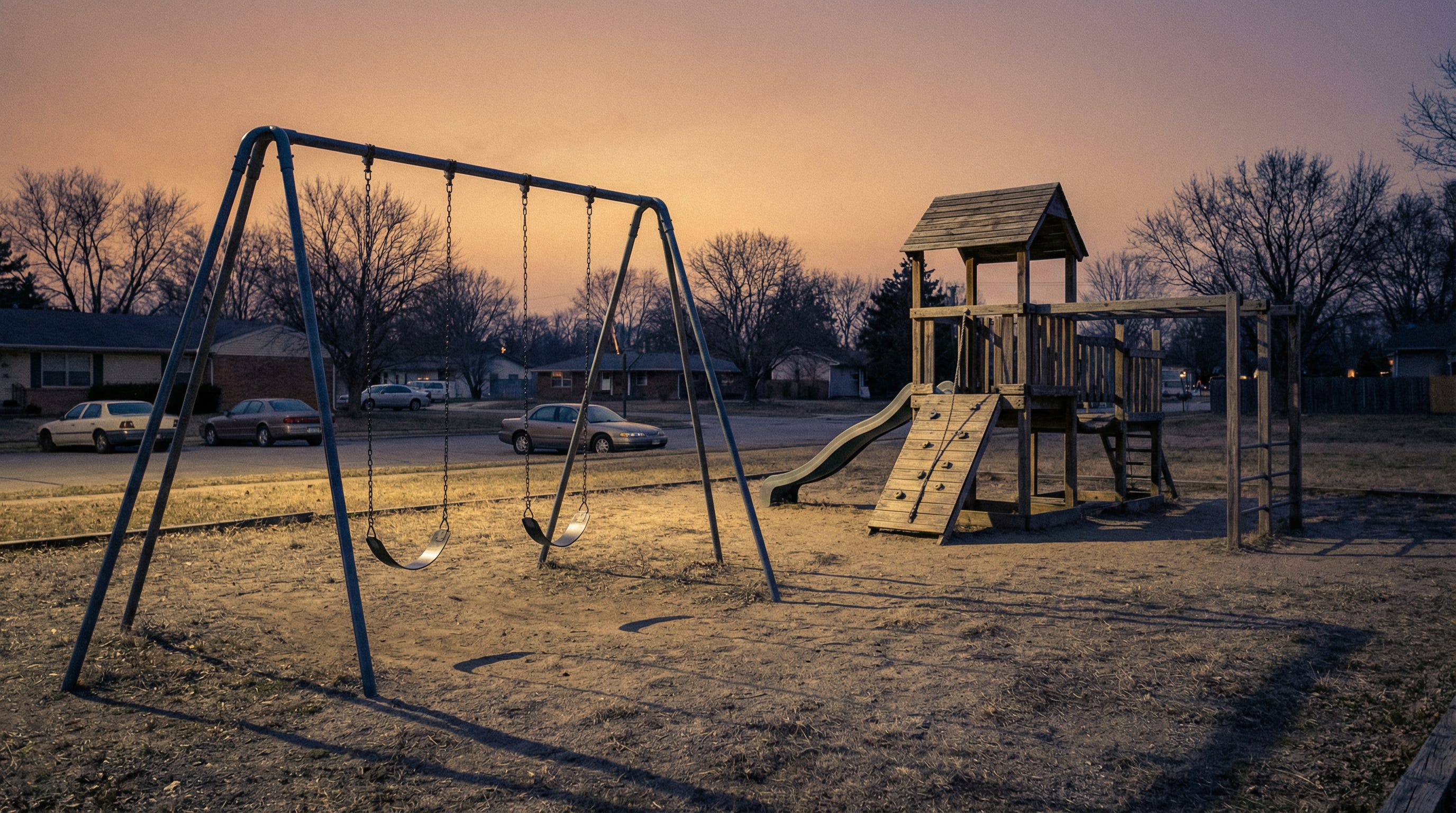
This creates a reinforcing loop. The less you interact with people unlike yourself, the less you trust them. The less you trust them, the less you’re willing to engage. Meanwhile, economic and technological forces driving division—algorithm-sorted information feeds, geographic sorting by education and income, the decline of shared institutions like churches and unions—continue operating, making the next interaction with difference even less likely.
High-trust societies and low-trust societies function differently at a structural level. In high-trust environments, people cooperate with strangers, institutions operate with lighter enforcement mechanisms, economic transactions happen more efficiently. When trust erodes, you get more surveillance, higher transaction costs, less cooperation. But you also get volatility.
Researchers studying civil conflict note that social fragmentation doesn’t cause violence directly, but it removes the buffers that prevent escalation. In a high-trust society, disagreements get mediated by shared institutions, by people who know each other personally, by norms that assume good faith. In an insular society, those mechanisms don’t exist. Conflict has nowhere to go but up.
The Question Worth Sitting With
There is nothing inevitable about where this leads. Patterns are not prophecies. But ignoring the pattern because you don’t like the precedents isn’t a strategy either.
What the data describes is a society—many societies, actually—losing the capacity for dialogue across difference. That capacity isn’t a luxury. It’s infrastructure. The question worth sitting with is what institutions can actually function when seven in ten people are unwilling to trust anyone with different values. How do democracies make collective decisions? How do markets operate when parties assume bad faith? How do you maintain rule of law when different groups stop recognizing shared rules?
These aren’t rhetorical questions. They’re practical ones that societies throughout history have had to answer, usually under worse conditions than we face now. But the starting point is recognizing what’s actually happening. This isn’t another round of complaints about media bias or government dysfunction. This is a shift in the basic architecture of social trust, from the institutional and abstract toward the local and interpersonal.
And that shift, historically, has tended to precede something rather than resolve it.
I don't know where my fellow readers are from but, as an American who's also a huge history buff, I feel that my country is rapidly reaching a stage akin to the end of the Roman Republic. For non history buffs out there, things didn't end well.