


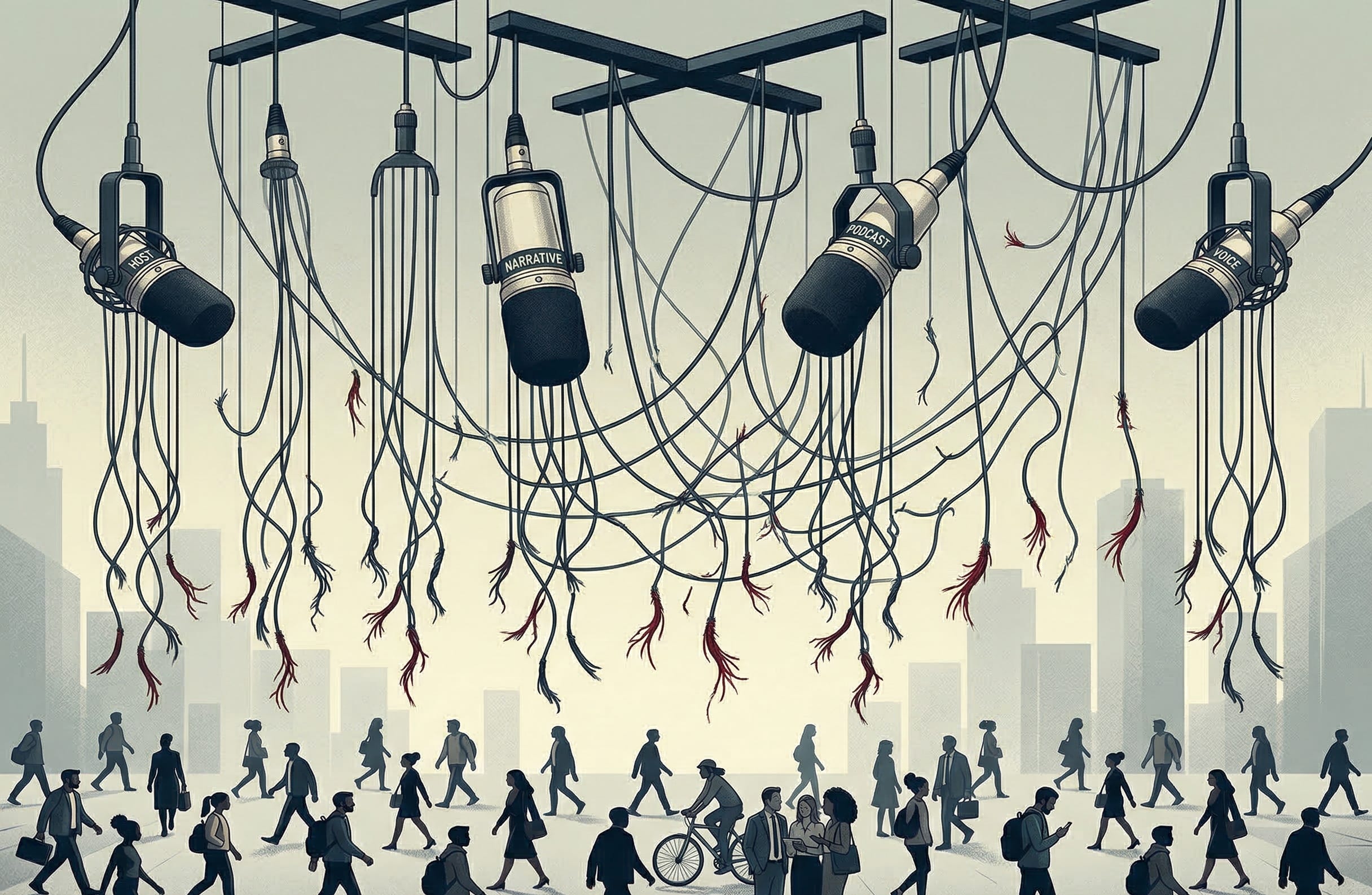
Joe Rogan told his audience that Trump supporters feel “betrayed” by the Iran war. Tucker Carlson called it a catastrophic mistake. Megyn Kelly denounced it. Tim Dillon sounds resigned to watching America stumble into another Middle East quagmire. These are the voices credited with delivering Trump’s 2024 victory, particularly among young men who don’t watch cable news but do listen to three-hour podcast conversations.
Here’s what makes their current moment fascinating: they’re discovering that influence and control are not the same thing.
The Numbers Tell a Different Story
An NBC News poll taken after the Iran strikes found that 77 percent of Republicans support the military action. Among self-described MAGA Republicans, support climbs to 90 percent. Meanwhile, the podcasters who supposedly shaped this coalition are either criticizing the policy or carefully hedging their commentary. The gap between what the influencers are saying and what their audiences believe suggests something worth examining about how political movements actually work.
The conventional narrative about 2024 treated these podcasters as kingmakers. Trump’s three-hour Rogan interview got over 50 million views. The conclusion seemed obvious: these podcasters didn’t just amplify Trump’s message; they translated it into language that resonated with younger audiences skeptical of establishment media.
But translation is not the same as authorship. What we’re seeing now is the difference between helping someone win and determining what they do after winning.
Moods, Not Policies
These podcasters didn’t convert their audiences to a detailed foreign policy platform. They created an emotional and cultural framework around Trump as the anti-establishment outsider who rejected forever wars and Washington consensus. The specific policy content mattered less than the posture. Trump represented skepticism toward institutions, rejection of expert pieties, and a willingness to say things that made coastal elites uncomfortable.
That’s a powerful electoral coalition. It’s a terrible governing blueprint.
The problem emerges when podcast-cultivated sentiment encounters actual governing decisions. Rogan can spend three hours exploring ideas without ever committing to a specific position. Dillon’s appeal is his contempt for everyone involved in every situation. These are entertainment formats optimized for engagement, not policy coherence. They create audiences skilled at recognizing hypocrisy and suspicious of official narratives, but not necessarily equipped with detailed foreign policy frameworks.
When Trump decided to strike Iran, he didn’t violate any specific promise these podcasters had extracted from him. He violated the mood they’d cultivated around him. But moods are interpretable. Strikes can be framed as “decisively ending a threat” rather than “starting a forever war.” The same action reads differently depending on whose editorial voice is narrating it.
Who’s Really Listening?
And here’s where the polling becomes instructive. Most Republicans are apparently comfortable with that alternative framing. They heard the same anti-war rhetoric during the campaign, received the same podcast-mediated messaging, and still support the strikes at overwhelming levels. Either the podcasters failed to actually convince their audiences of the foreign policy views they claimed to hold, or their audiences never tuned in for foreign policy content in the first place.
The more likely explanation is simpler. These audiences developed parasocial relationships with Trump himself, not with any particular ideological framework. The podcasters facilitated the introduction, but once the relationship formed, their mediation became optional. When Trump says Iran posed an imminent threat, his supporters believe Trump, not the podcasters questioning that assessment.
This isn’t unique to the podcast ecosystem. Movement intellectuals regularly discover they don’t control the movements they helped build. What distinguishes the podcast era is the speed and visibility of the divergence. Previous generations of movement intellectuals could maintain illusions of influence longer because their audiences didn’t have real-time polling data. Now we can watch as Rogan expresses concern about Iran while his listeners scroll past to affirm their support for Trump’s decision.
The Limits of Parasocial Power
What’s already clear is what this episode reveals about influence in the podcast age. These creators are extraordinarily good at identifying and articulating what their audiences already feel. They’re skilled at providing vocabulary for inchoate frustrations. But when those audiences form direct relationships with political figures, the mediating voices that introduced them become background noise.
The podcasters helped build the coalition. But coalitions, once built, rarely feel obligated to their architects