


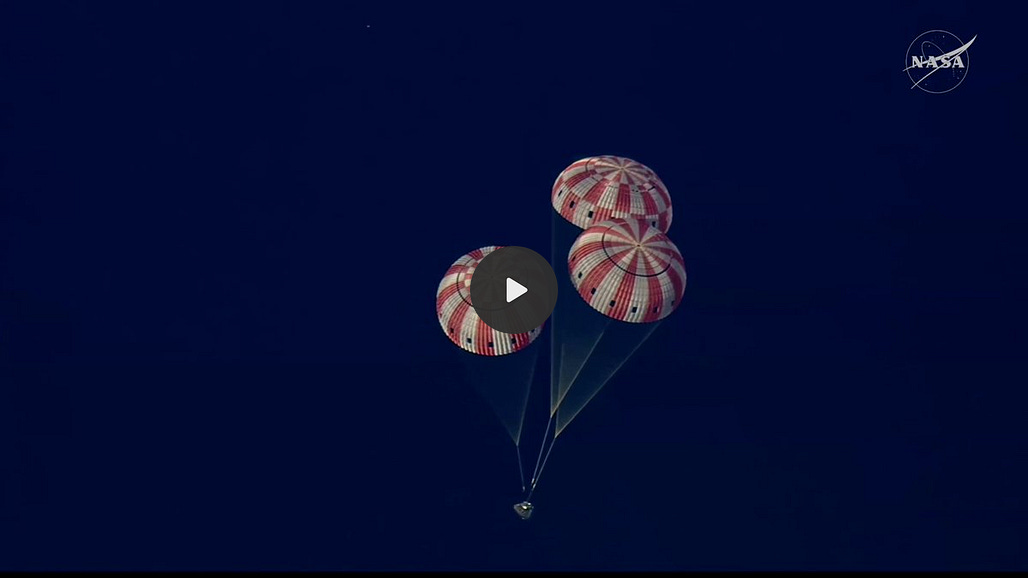
Four astronauts returned to Earth last Friday after traveling farther from home than any humans in history. The Artemis II mission was a nearly 10-day test flight that took Reid Wiseman, Victor Glover, Christina Koch, and Jeremy Hansen 252,756 miles from Earth, breaking Apollo 13’s 1970 distance record. The Space Launch System rocket performed flawlessly. Orion’s life support systems worked in deep space. Reentry at 25,000 miles per hour went exactly as designed.

NASA Administrator Jared Isaacman framed the achievement clearly: “With Artemis II complete, focus now turns confidently toward assembling Artemis III and preparing to return to the lunar surface, build the base, and never give up the Moon again.”
That last part, “never give up the Moon again,” is where the real work begins.
The Difference Between Visiting and Staying
Apollo was flags and footprints, demonstrate capability, collect samples, come home. The entire program from Kennedy’s speech to the last lunar landing spanned eleven years. Artemis is attempting something fundamentally different, permanent infrastructure that requires institutional commitment measured in decades, not presidential terms.
Consider what “permanent” actually means. The International Space Station receives resupply missions roughly every two months. That’s with launch facilities on Earth, established supply chains, and orbital mechanics that allow regular access windows. A lunar base at the South Pole introduces problems an order of magnitude harder, radiation shielding, thermal management across 300-degree temperature swings, toxic dust mitigation, closed-loop life support without regular resupply, and resource extraction from water ice deposits whose abundance remains uncertain.
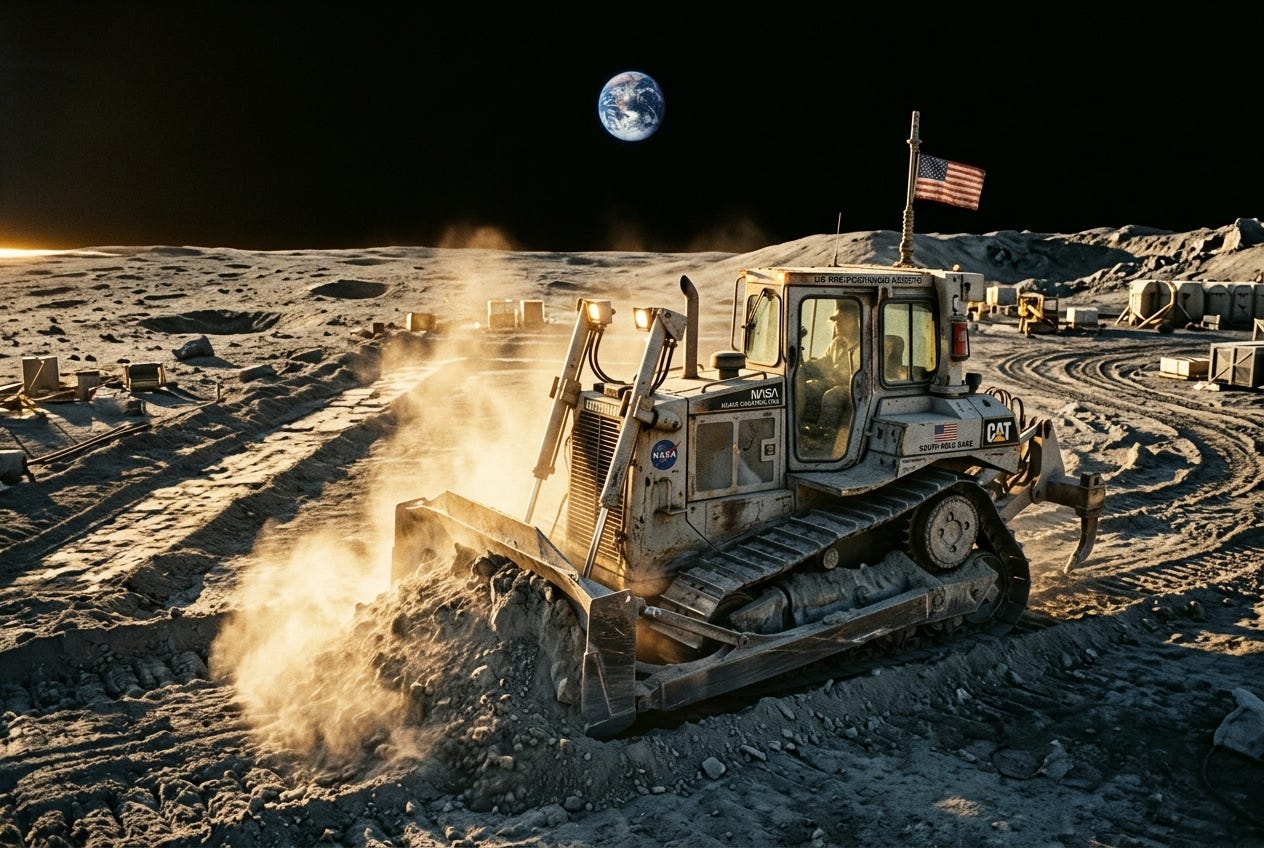
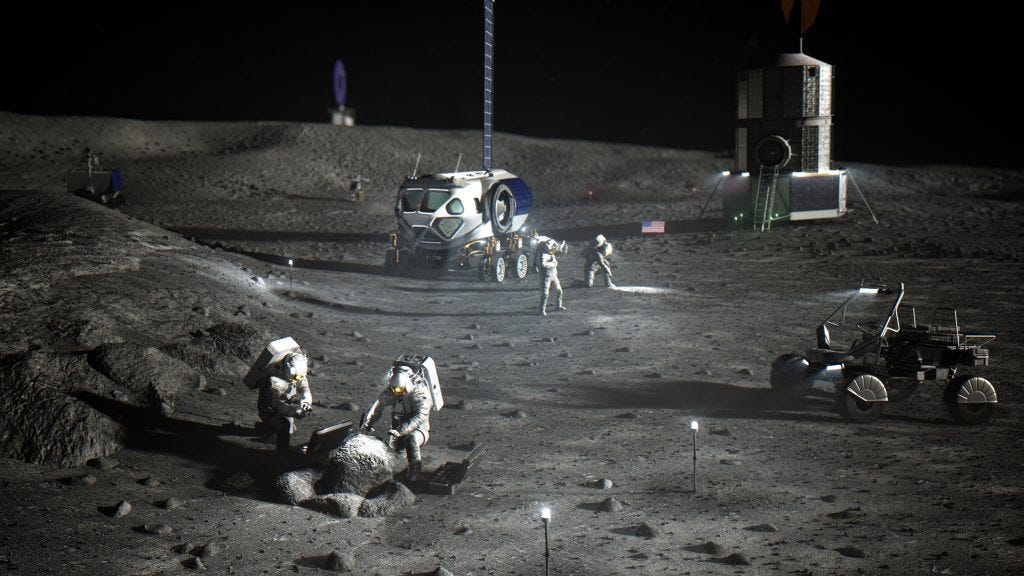
NASA’s base camp plans include surface habitats, pressurized rovers, power generation systems, communication networks, and construction equipment capable of building landing pads and roads in one-sixth gravity. The agency projects spending roughly $20-30 billion over the next seven years on base infrastructure alone, separate from launch costs.
Each SLS launch currently runs between $2-4 billion when including spacecraft and ground operations. The base requires not just crew rotations but cargo missions delivering habitation modules, construction equipment, fuel, spare parts, food, and scientific instruments. The ISS required hundreds of launches over two decades to assemble. Lunar construction operates under harsher constraints with longer supply lines.
How Multi-Decade Programs Actually Survive
Here’s what’s remarkable about Artemis II, it happened at all. The program began in 2004 under President Bush as Constellation, survived Obama’s restructuring in 2010, continued through the Trump and Biden administrations, and delivered under the current government. That represents sustained institutional focus across five presidencies and multiple Congressional compositions, precisely the kind of continuity that contemporary discourse insists American governance can no longer achieve.
This wasn’t inevitable. NASA officials explicitly lobbied for program continuity during each transition, arguing against the pattern where new administrations cancel predecessors’ space initiatives. The fact that Artemis survived repeated budget scrutiny, schedule delays, and cost overruns reveals something about how legacy programs maintain momentum, they create sufficient stakeholder investment, contractors across fourteen countries, Congressional districts with jobs dependent on the program, international partnerships with binding agreements, that cancellation becomes politically costlier than continuation.
This is not inspirational. It’s bureaucratic ballast that prevents course changes. But it’s also the mechanism that allows civilizational-scale projects to outlast election cycles.
The Boring Stuff Nobody Photographs
Artemis III, scheduled for 2028, will attempt the first lunar landing in over fifty years. If it succeeds, astronauts will spend perhaps a week on the surface testing equipment and procedures. Then comes the tedious part nobody makes documentaries about, iterative construction missions, systems integration, redundancy testing, supply chain establishment, emergency protocol development, crew rotation logistics.
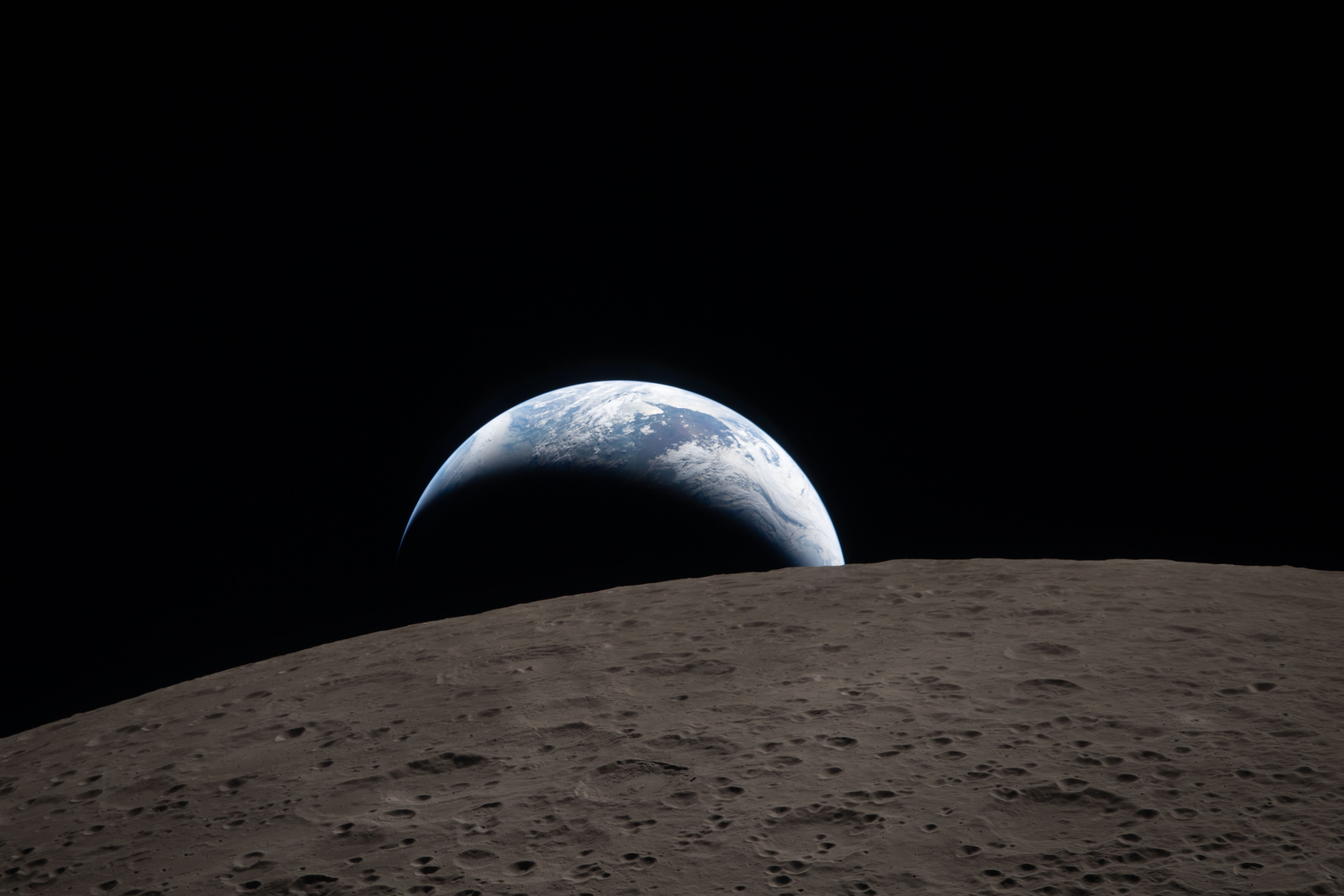
The crew on Artemis II captured striking images of earthrise and documented lunar topography around the South Pole landing zone. Future missions will photograph foundation pours and power cable installations. The difference between visiting the Moon and maintaining permanent presence is the difference between a summit expedition and building a research station in Antarctica, one generates awe, the other requires plumbing.
What made Artemis II notable wasn’t the distance record or the imagery. It was the demonstration that the institutions responsible could deliver on two decades of accumulated promises despite everything working against sustained focus. The harder test is whether those same institutions can maintain attention through the unglamorous phase, the fourteenth cargo mission, the third habitat module, the supply chain for replacement parts nobody thinks about until they fail.
Fifty-three years after we last reached lunar distance, four people traveled farther than anyone before and returned safely. The impressive part wasn’t the flight. It was that the systems existed to attempt it, and that they worked. Whether similar institutional persistence can turn that capability into enduring presence depends entirely on our willingness to fund the boring parts.
I agree that it's amazing the program survived at all with the shifting political winds. As long as China is a threat to beat us there, I see the program continuing regardless of what party is in power. There's simply too much at stake for national security reasons to turn away now.