


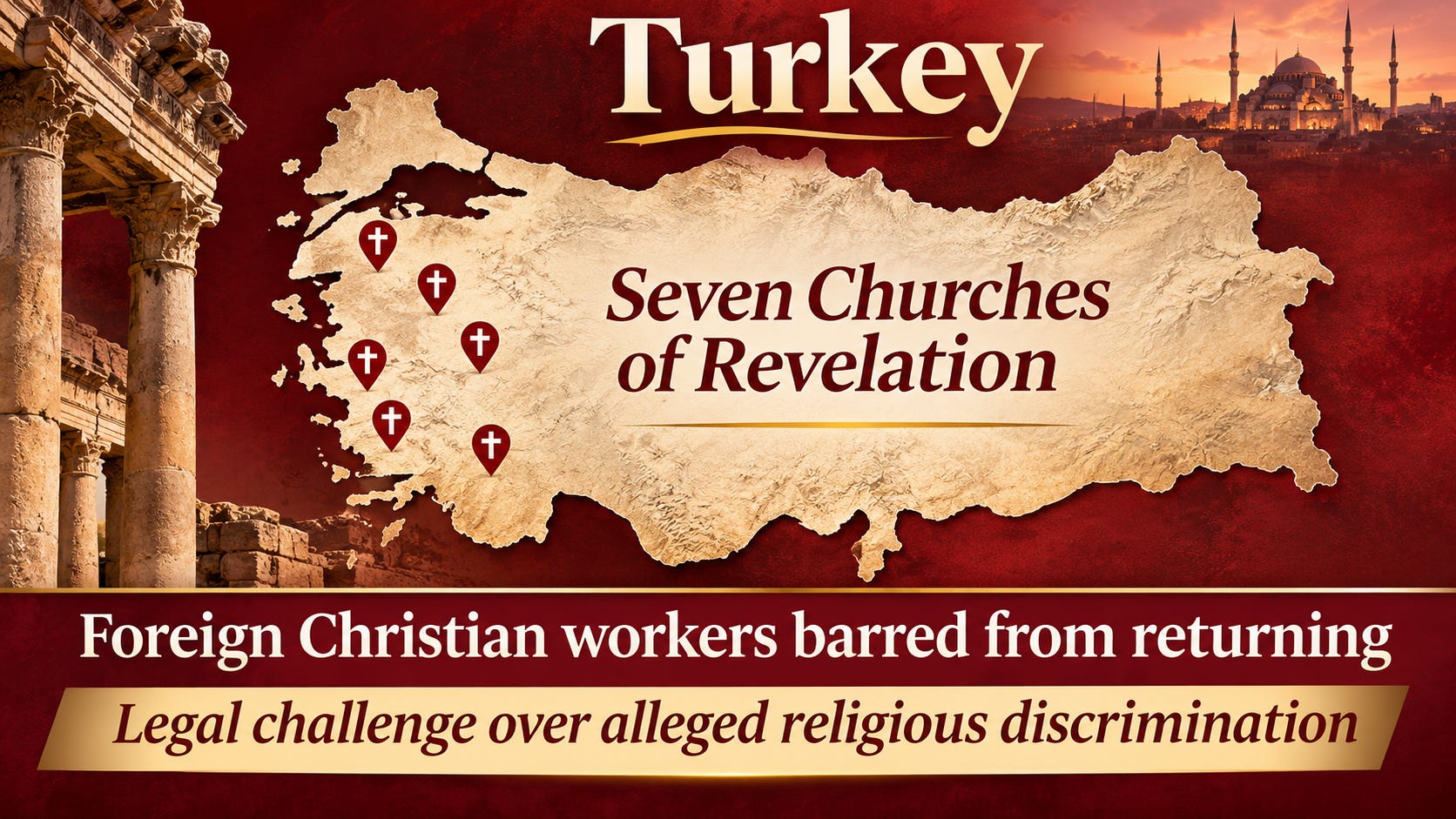
Foreign Christian pastors, missionaries and religious workers, some of whom have lived legally in Turkey for decades, are being prevented from returning to the country under national security restrictions imposed on the basis of undisclosed intelligence information. The measures, which have deprived local Christian congregations of religious leaders, are now facing a legal challenge over allegations of religious discrimination.
On November 25, Alliance Defending Freedom (ADF) International announced that it had submitted a new legal filing before the European Court of Human Rights in Strasbourg on behalf of Christians affected by the restrictions.
The November 18 submission argues that Turkish authorities are using national security classifications to restrict lawful Christian activities without providing affected individuals with sufficient evidence to challenge the allegations against them.
Turkey occupies a foundational place in Christian history. All seven churches addressed in the New Testament’s Book of Revelation were located within its modern borders, and the region played a central role in the spread of early Christianity. Nearly two millennia later, local Christian communities face significant obstacles to training their own clergy, while foreign pastors and missionaries, particularly Americans, face mounting restrictions on entering and residing in the country.
Americans Account for More Than Half of Documented Cases
A report published in March 2026 by Turkey’s Association of Protestant Churches documented 178 foreign individuals subjected to immigration restrictions or otherwise forced to leave the country between 2019 and 2025. Of those, 92 were American citizens.
The practice has accelerated in recent years. The number of directly affected individuals reached a recorded high of 46 in 2025, including 30 Americans, compared with 21 individuals and 12 Americans the previous year.
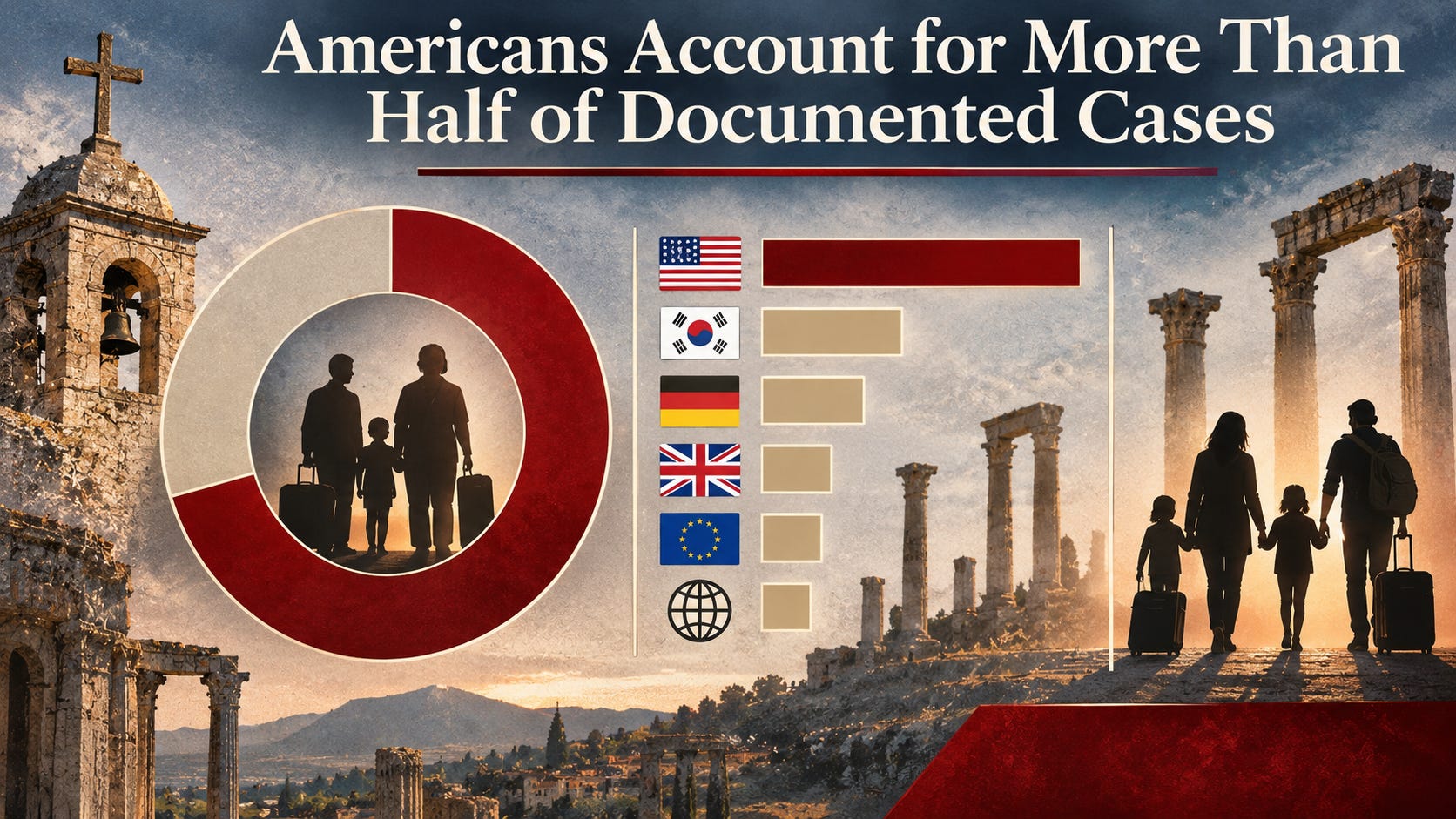
Including spouses and children, the association documented 380 people affected since 2019. It also reported that some foreign Christians had stopped attending church gatherings out of fear of jeopardizing their residency, while others had voluntarily left the country.
How Turkey’s Security Codes Keep Christians Out
At the center of the legal dispute are two Turkish administrative security codes, N-82 and G-87. The former requires individuals to obtain special authorization before entering the country, while the latter is associated with threats to general security.
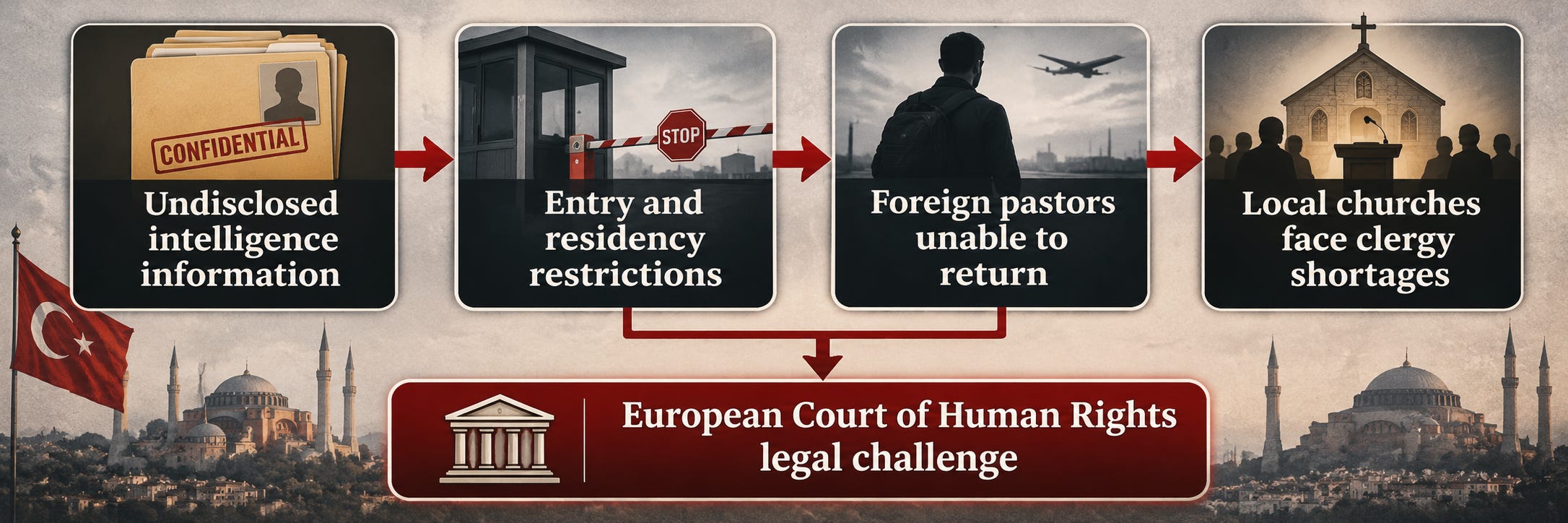
These classifications can effectively prevent foreign residents from returning to Turkey after traveling abroad, even if they have spent decades living and working legally in the country.
Official European Court records confirm that undisclosed intelligence information underpinned restrictions imposed on applicants challenging Turkey’s actions.
Among them are David and Pamela Wilson, who lived in Turkey for nearly four decades before being denied reentry upon arriving in Istanbul in February 2019.
The couple submitted their application to the European Court in July 2021. Their case forms part of a group of 20 applications formally communicated to the Turkish government by the court in January 2026.
ADF maintains that the restrictions target lawful Christian activities and that the applicants have been denied meaningful opportunities to challenge the intelligence evidence used against them.
Local Churches Struggle to Replace Foreign Pastors
The exclusion of foreign Christian workers is particularly consequential because Turkey’s Christian communities already face significant difficulties training religious leaders domestically.
An August 2026 report by the U.S. Commission on International Religious Freedom (USCIRF) documented obstacles facing religious minorities in establishing religious institutions, operating theological schools and training clergy.
Turkey’s Protestant church association has similarly warned that the number of locally trained religious leaders remains insufficient to meet congregations’ needs. Consequently, restrictions on foreign pastors can leave churches struggling to replace experienced religious personnel.
Germany’s government also addressed restrictions affecting Christian clergy and foreign Protestants in its latest global religious freedom report, adopted on November 18.
Mounting International Scrutiny
In February, the European Parliament overwhelmingly adopted a resolution condemning Turkey’s use of security classifications against foreign Christians and journalists. The measure passed with 502 votes in favor and two against, calling on Turkey to discontinue the practice and ensure independent judicial review.
Turkey’s Foreign Ministry rejected the allegations, describing them as unfounded and accusing the European Parliament of interfering in the country’s domestic affairs.
Later that month, USCIRF urged the U.S. State Department to place Turkey, a NATO ally, on its Special Watch List for serious religious freedom violations.
The latest European Court filing brings renewed attention to whether Turkey’s application of national security measures is compatible with its international religious freedom obligations, as foreign Christian workers remain barred from returning to the country and local congregations struggle to meet their religious needs.
The court has yet to issue a judgment in the proceedings.