


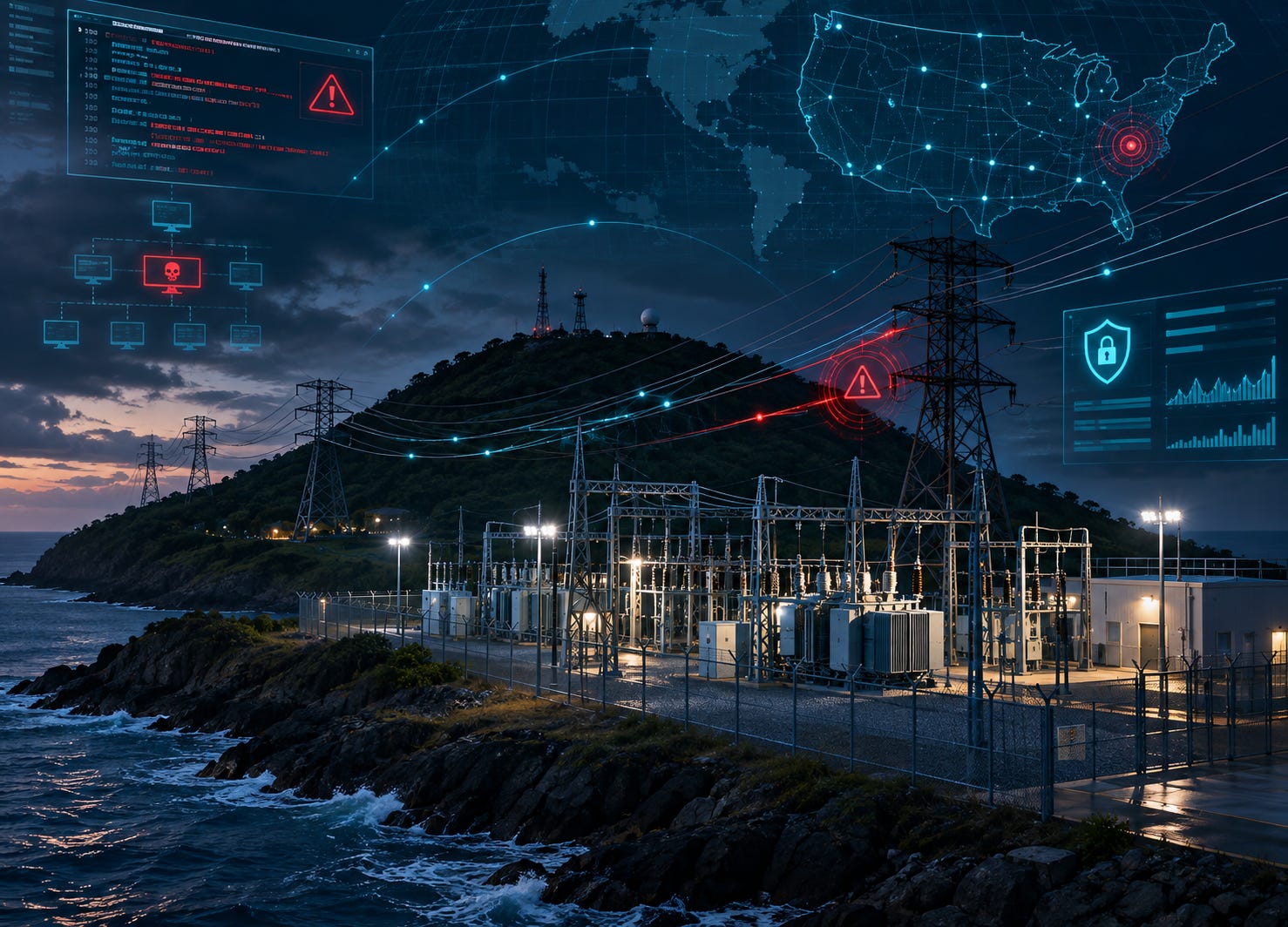
The U.S. Department of Energy has released new details about a large-scale cybersecurity exercise in which American utility operators defended a live electrical grid against simulated cyberattacks, testing their ability to prevent and respond to disruptions affecting critical infrastructure.
The exercise, known as Liberty Eclipse, brought together federal agencies, national laboratories, utility companies and cybersecurity specialists on Plum Island, New York, where an isolated but fully energized power network allowed participants to confront ransomware attacks, compromised electrical equipment and emergency response scenarios under realistic operating conditions.
According to the department’s November 9 announcement, participating utility teams actively managed simulated intrusions involving substations and protective relays, rather than merely discussing possible responses during conventional tabletop exercises.
The annual exercise comes amid heightened federal warnings about cyber threats against American infrastructure, including Iranian-affiliated hacking campaigns targeting industrial control systems used by utilities and other essential services.
“This isn’t a simulation,” said Alexei Bulazel, senior director for cyber at the White House National Security Council, referring to the exercise’s use of actual electrical equipment. “It’s real power, and real consequences.”
Unlike the interconnected mainland power network, the Plum Island facility operates independently, allowing teams to manipulate, shut down and restore electrical systems without disrupting commercial electricity supplies.
The exercise was sponsored by the Department of Energy’s Office of Cybersecurity, Energy Security, and Emergency Response (CESER).
Testing Cyberattacks Against Real Electrical Infrastructure
Liberty Eclipse uses a specialized electrical test environment on Plum Island, an approximately 840-acre island off the eastern end of Long Island.
The initiative originated in a 2018 Defense Advanced Research Projects Agency program examining how electrical systems could be restored following cyberattacks. The Department of Energy subsequently expanded the concept into a broader civilian utility training program, conducting its first full-scale Liberty Eclipse exercise in 2022.
According to a January 2026 report from Idaho National Laboratory, the program has involved more than 300 on-site participants alongside remote personnel, including power company operators, national laboratory researchers and cybersecurity teams.
Participants work in coordinated defensive teams while specialists representing hostile actors employ attack techniques modeled on real-world cyber threats.
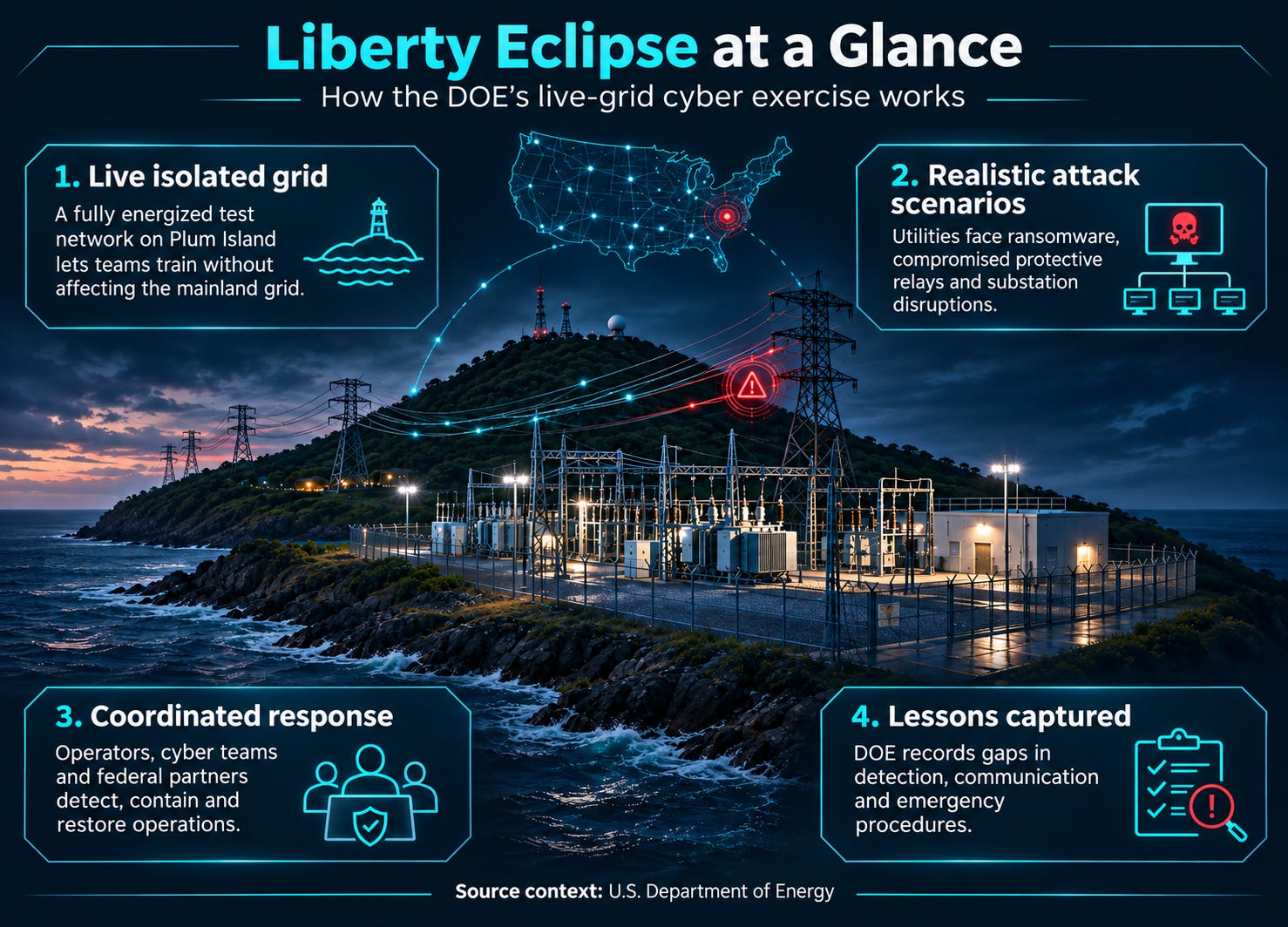
Previous exercises have included ransomware attacks, data theft, manipulation of electrical controls and sophisticated intrusions designed to avoid detection. The attacks have produced observable effects on the test network, including power fluctuations and equipment stress.
The latest exercise focused on scenarios involving ransomware targeting substations and compromised protective relays, which are devices responsible for detecting electrical faults and triggering protective actions to prevent damage.
Utility operators were required to identify suspicious activity, coordinate technical responses and manage the consequences of compromised infrastructure while maintaining communication with other teams and federal authorities.
According to CESER, the exercise generated structured information about the performance of participants, defensive tools and emergency procedures.
The department identified areas where detection technologies lagged, response plans performed effectively and coordination between information technology and operational technology personnel broke down.
Federal Warnings Over Iranian Cyber Activity
The exercise follows a series of federal cybersecurity warnings about foreign-linked operations targeting equipment responsible for controlling physical infrastructure.
On April 7, the Cybersecurity and Infrastructure Security Agency (CISA), working with the FBI, National Security Agency, Department of Energy and other federal partners, warned that Iranian-affiliated cyber actors were exploiting internet-connected programmable logic controllers across multiple American critical infrastructure sectors.
The affected sectors included energy, water and wastewater systems, and government facilities.
Programmable logic controllers are industrial computers that automate physical processes, including electrical switching, pumps and other machinery.
According to the advisory, attackers manipulated project files and information displayed on industrial monitoring systems, producing operational disruptions and financial losses.
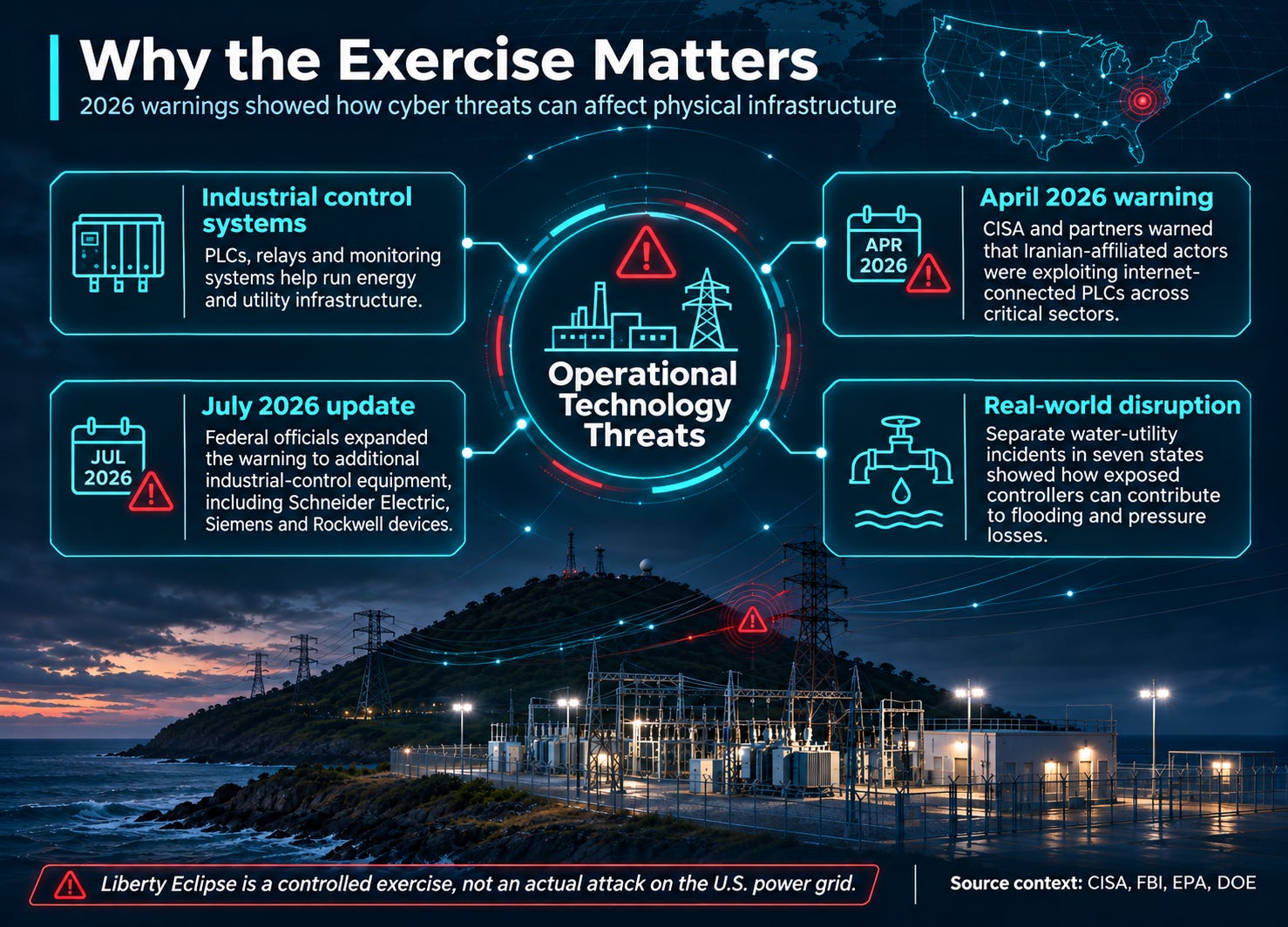
A subsequent July 22 update expanded the warning to include observed targeting of industrial-control equipment manufactured by Schneider Electric and Siemens, alongside previously identified Rockwell Automation devices.
Federal officials urged infrastructure operators to restrict direct internet access to industrial controllers, examine systems for unauthorized changes and strengthen protections against remote intrusions.
Separate incidents demonstrated the potential physical consequences of attacks on industrial equipment.
On July 30, the FBI and Environmental Protection Agency reported that water utilities in at least seven states had experienced cyber incidents involving exposed industrial controllers.
Attackers remotely modified device settings, including network addresses and passwords, interfering with operators’ ability to monitor and control equipment.
The incidents reportedly caused operational problems, including water-pressure losses and flooding. The FBI advisory did not publicly attribute those incidents to a particular threat group.
Together, the federal warnings illustrate the growing importance of defending operational technology, where cyber intrusions can interfere directly with physical infrastructure rather than remaining confined to computer networks and stolen data.
AI-Powered Monitoring and Grid Defenses
The latest Liberty Eclipse exercise also incorporated technologies developed through several Department of Energy cybersecurity initiatives, including Sandia National Laboratories’ artificial intelligence-based grid monitoring system, known as griDNA.
The technology is designed to identify suspicious activity by monitoring both digital communications and the physical behavior of infrastructure systems.
According to Sandia National Laboratories, griDNA continuously gathers and analyzes information from electrical equipment and supporting computer networks, using artificial intelligence to detect abnormal behavior that could indicate equipment failures or malicious cyber activity.
The system employs neural-network techniques to identify patterns in the relationship between digital operations and physical electrical processes.
By combining these different sources of information, the technology is intended to help operators distinguish between routine equipment problems and potentially hostile interference.
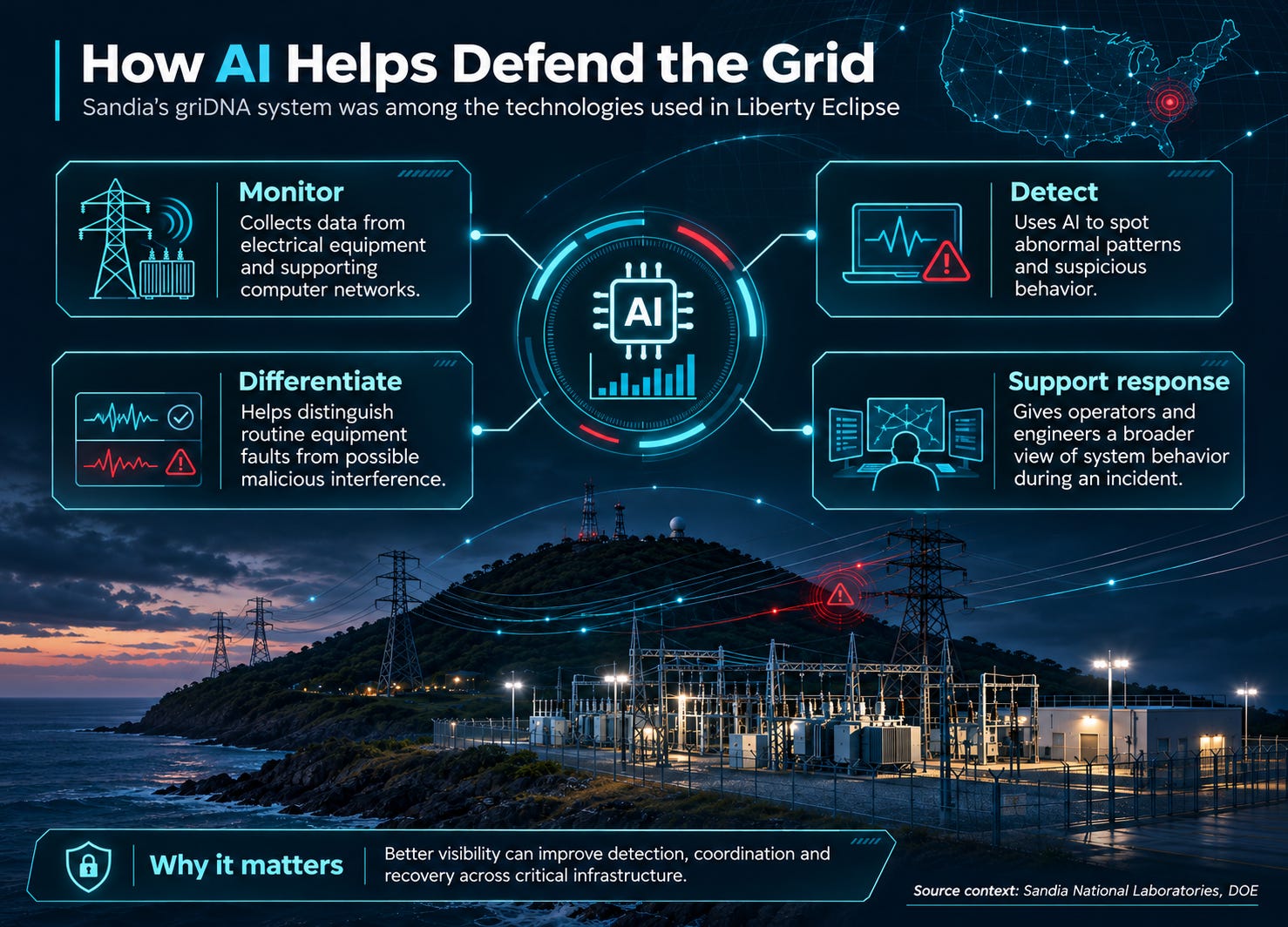
Its monitoring architecture operates across multiple levels, from individual components to interconnected infrastructure networks, giving cybersecurity personnel and electrical engineers a more comprehensive view of system behavior.
Sandia has also identified potential applications beyond the electrical grid, including pipelines and transportation systems.
The Department of Energy said Liberty Eclipse incorporated griDNA alongside its Rural and Municipal Utility Cybersecurity ACTShack program and Energy Threat Analysis Center operations, evaluating how these capabilities and associated procedures performed in a live training environment.
Washington Moves to Secure the Power Grid
The cybersecurity exercise also follows broader federal efforts to strengthen the security of American electrical infrastructure.
On August 26, President Donald Trump issued Executive Order 14421, declaring a national emergency concerning security threats associated with foreign-supplied equipment used in the U.S. bulk-power system.
The order identified vulnerabilities involving digital backdoors, malicious remote access, cyber exploitation and supply-chain weaknesses.
It authorized the Department of Energy to restrict certain foreign-produced electrical equipment determined to pose unacceptable national-security risks, subject to specified conditions.
While the executive order addresses potential vulnerabilities in the equipment and technology supporting American power infrastructure, Liberty Eclipse focuses on the ability of utilities to defend existing systems and recover from disruptive cyber incidents.
The Department of Energy said the latest exercise also examined communication between utility operators, cybersecurity teams and government agencies during emergency scenarios.
Participants practiced escalating threats through organizational chains of command, sharing information with federal partners and determining appropriate responses under operational pressure.
“Collaborating with our partners in private industry through exercises like Liberty Eclipse remains essential to American energy dominance as we reinforce preparedness across the energy sector,” said CESER Director Andrew McClure.
The department has not published a comprehensive public breakdown of individual utility performance or the specific technical vulnerabilities identified during the latest exercise.
However, officials said the findings would help participating organizations improve their detection capabilities, emergency response procedures and coordination with federal authorities.
As industrial control systems become increasingly interconnected, the exercise reflects a growing emphasis on preparing American infrastructure operators for cyberattacks that could produce consequences far beyond the digital environment.
Guarding against cyber attacks is good, but we need to harden our grid, resurrect, and pass the SHIELD Act.