


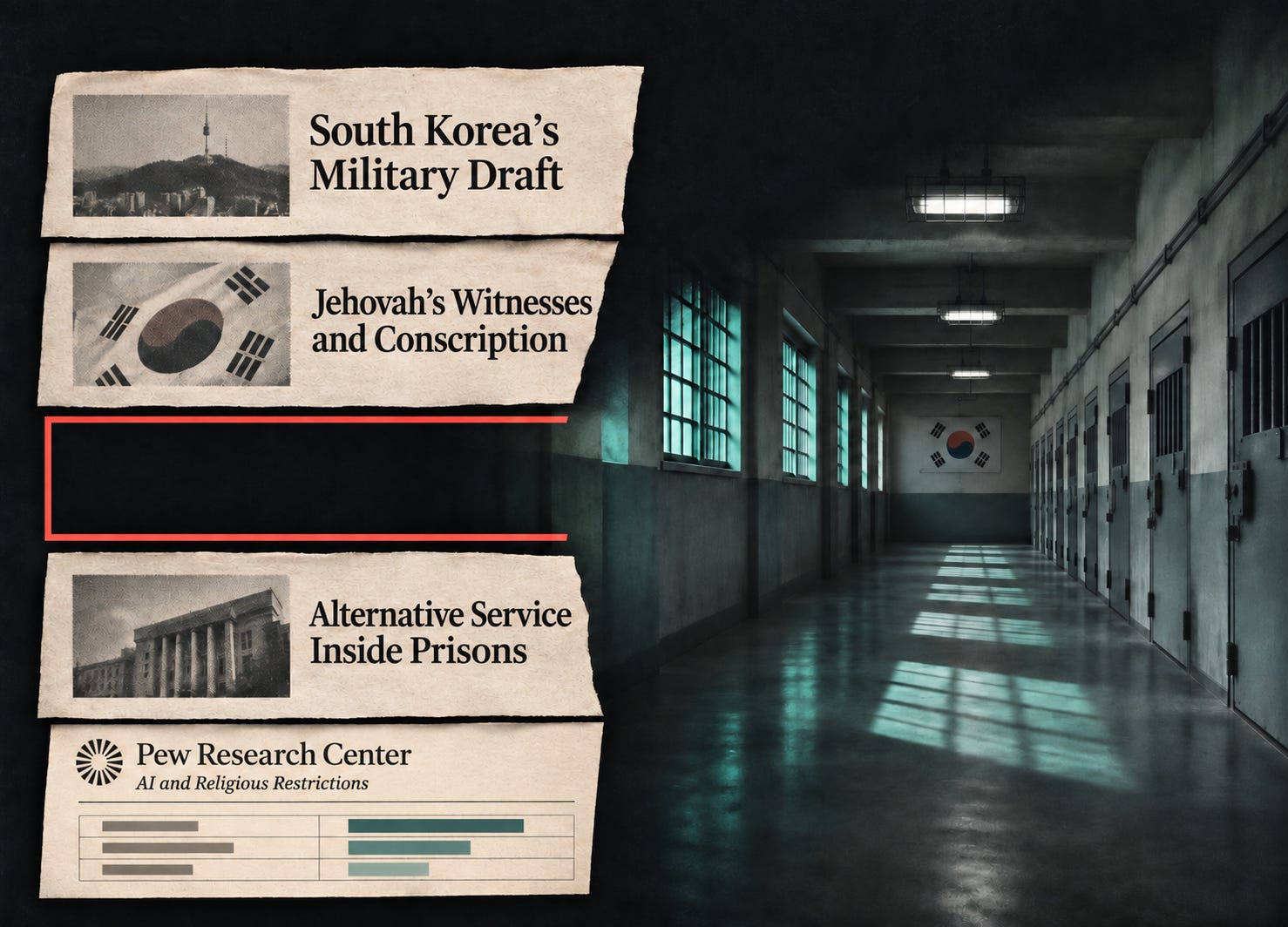
In a Nov. 24 write-up, Pew researchers Samirah Majumdar and Samuel Bestvater described two experiments to see whether AI could speed up the work behind the center’s annual report on religious restrictions in 198 countries and territories. One of the stories LexisNexis’ AI search tool failed to surface concerned South Korea’s prison-based alternative to military service. Many of the conscientious objectors assigned to the program were Jehovah’s Witnesses.


The TIME article Pew cited reported that conscientious objectors assigned to alternative service had to live and work in correctional facilities for three years. It profiled Kim Hye-min, a Jehovah’s Witness who faced prosecution after refusing the assignment. Leaders of the Christian denomination told the State Department they considered the three-year term punitive compared with the 18 to 21 months required for military service.
What the Searches Missed
Pew’s tests showed that an AI tool can cite its sources accurately and still leave out cases that matter when tracking religious persecution. LexisNexis’ Nexis+ AI, the tool Pew used in the South Korea test, searched licensed English-language news. It surfaced more information in countries with substantial English-language media and missed local reporting that had never been translated. Pew did not establish whether the TIME article was in the licensed database. The tool also struggled with subjects that rarely make headlines, including changes to how governments register religious groups. Some searches brought back articles citing Pew’s own findings even after researchers asked the tool to exclude Pew data.
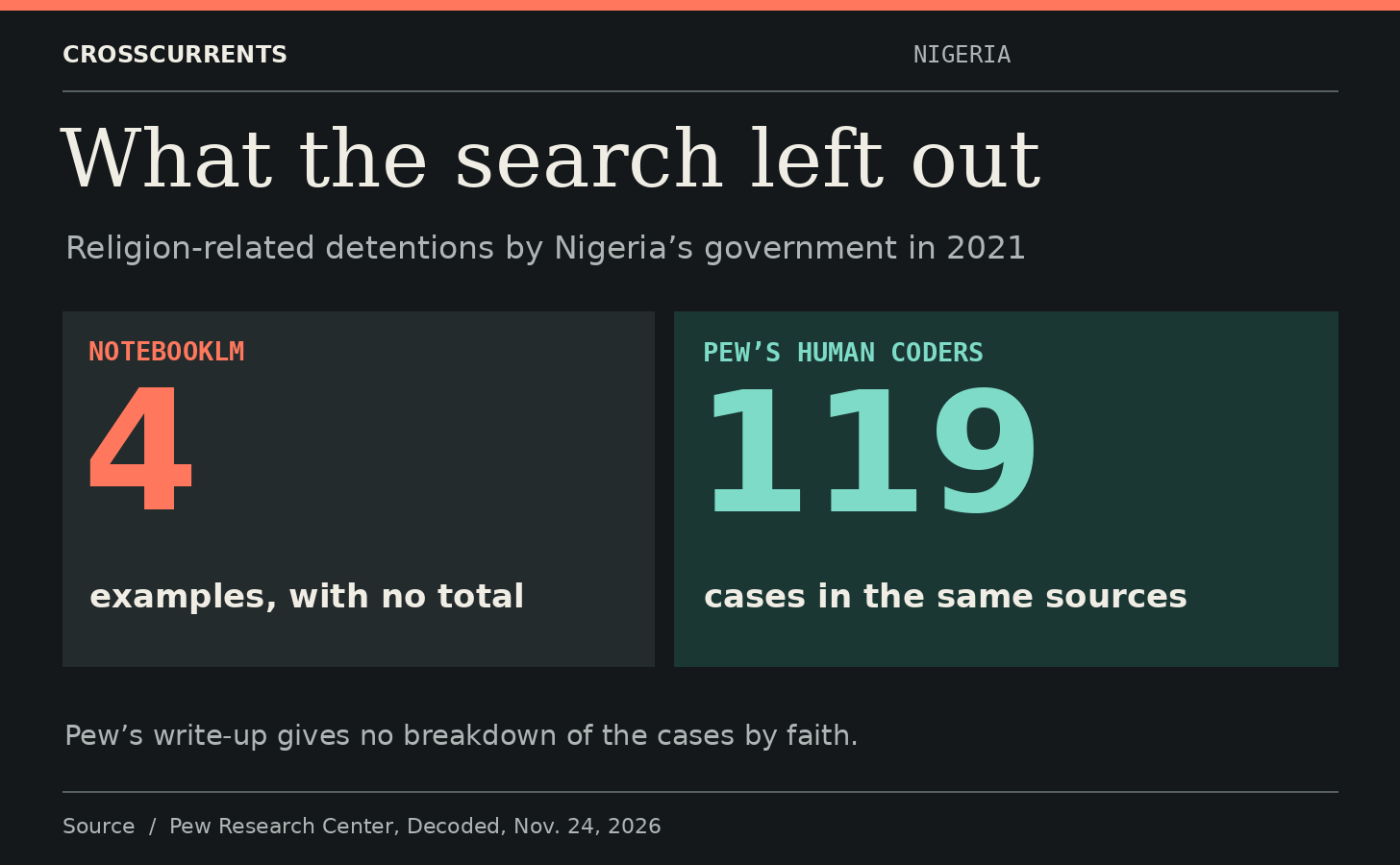
Google’s NotebookLM missed cases even when researchers supplied the documents. Asked to tally religion-related detentions by the Nigerian government in 2021, it listed four examples without giving a total. Pew’s human researchers found 119 cases in the same sources. The write-up gives no breakdown of those cases by faith. Pew also found that NotebookLM tended to draw on executive summaries, sometimes overlooking details deeper in documents such as the State Department’s religious freedom reports.
The omissions matter for researchers tracking Christian persecution. Pew’s latest harassment tally found that Christians faced government or private harassment in 165 countries in 2023. The figure measures where harassment was reported and includes both physical and nonphysical incidents. If the sources documented only one incident of anti-Christian harassment in a country, missing that report could leave the country out of the Christian harassment tally. Pew’s AI experiments covered selected countries and questions and did not estimate how often the tools miss incidents involving Christians.
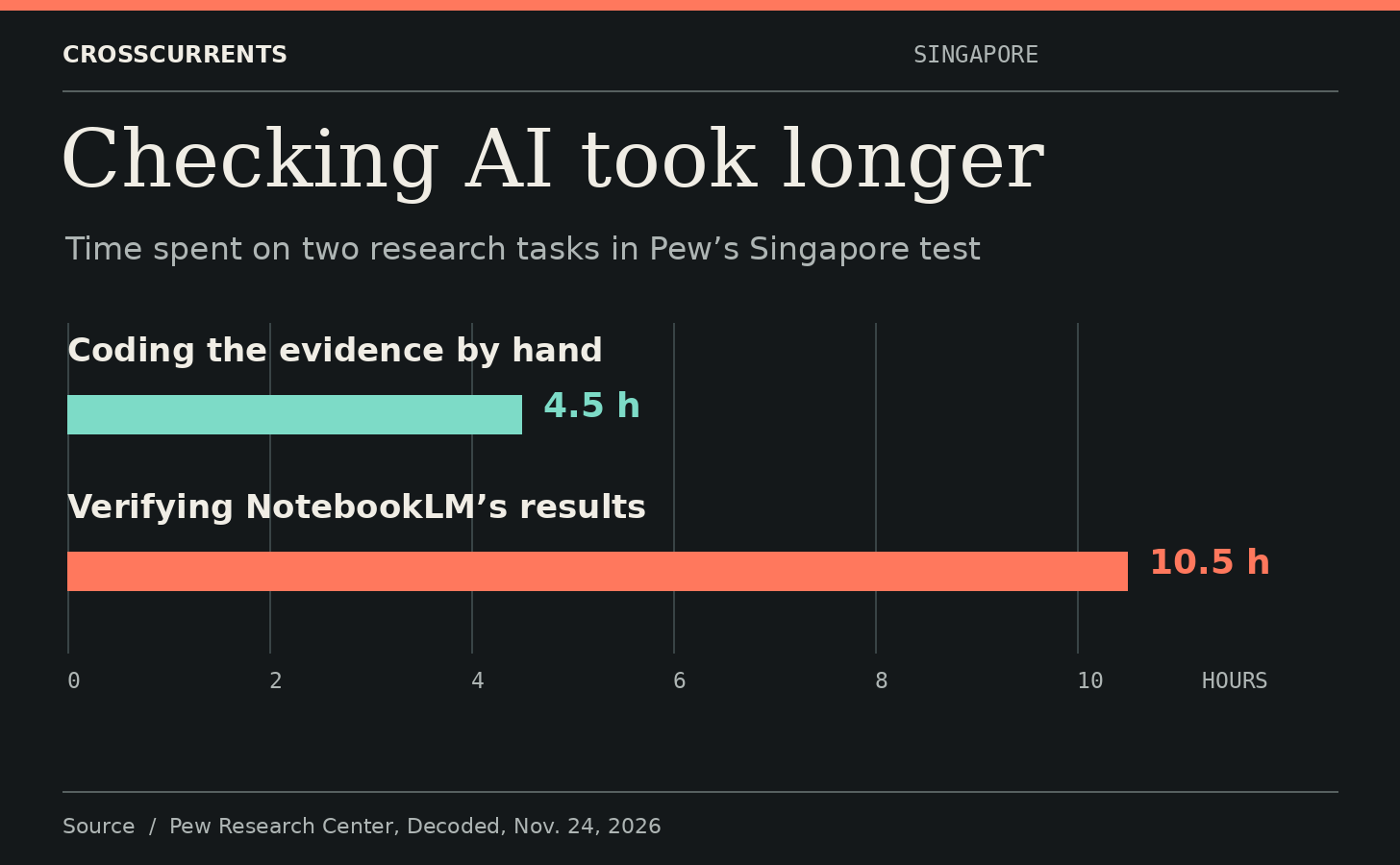
Pew’s researchers could verify the tools’ answers against the sources they cited. Checking those citations, however, almost always took longer than the tools saved on searching. A researcher typically spent about 4.5 hours reviewing and classifying the evidence on religious restrictions in Singapore by hand. Verifying NotebookLM’s results for Singapore took about 10.5 hours.'
Both tools also gave different answers to identical questions on different days. Nexis+ AI was especially sensitive to small changes in wording or word order. Pew said that inconsistency could undermine comparisons across countries and years. A single missed or misread incident can affect a country’s score.
Pew said it had no plans to adopt either tested version for its formal research workflow. The researchers saw potential for using AI to give staff a quick overview of a country before they start work. Pew tested NotebookLM from December 2024 through February 2025 and Nexis+ AI from July through August 2025. The experiments showed how much evidence could be missing even when the information the tools returned checked out.