


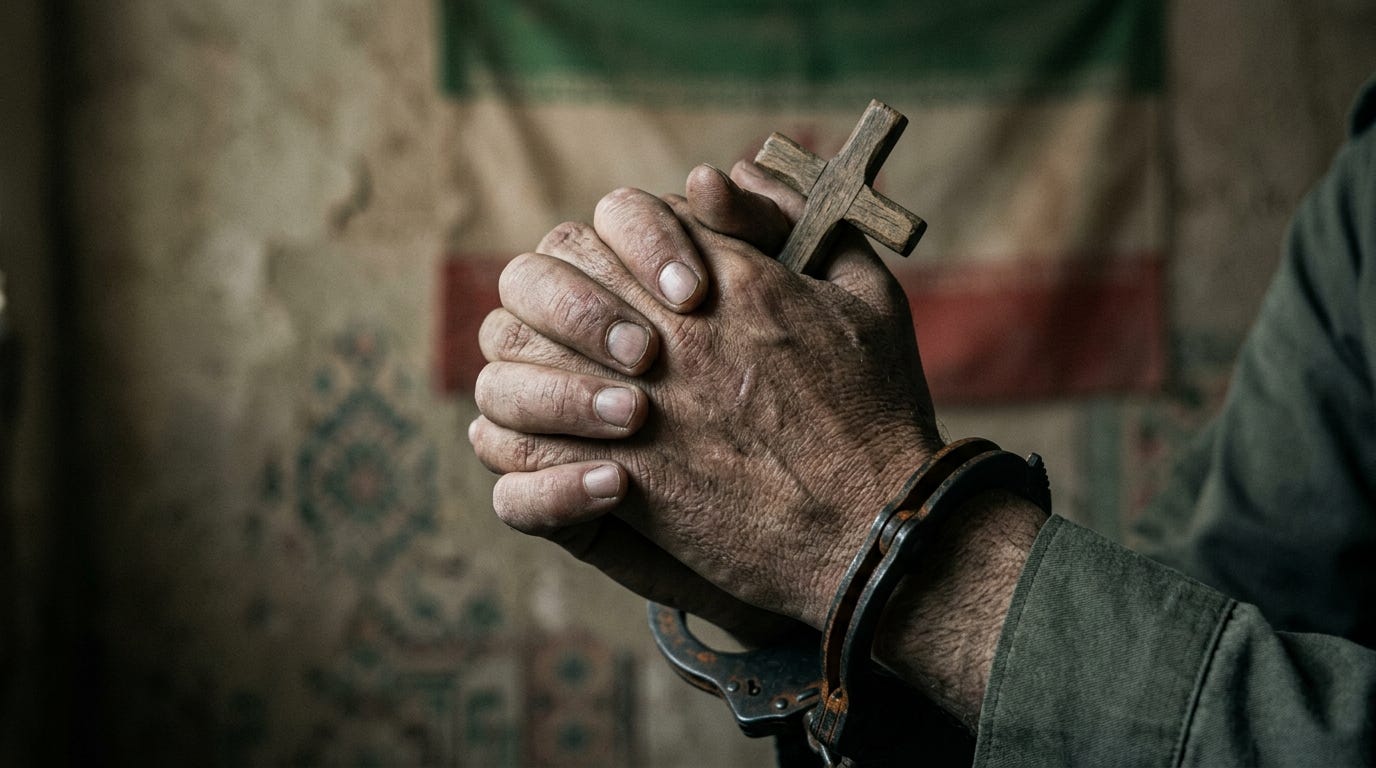
Iran’s Islamic Revolutionary Guard maintains an “extensive security apparatus authorized to violently repress minority religious expression,” according to a new report from International Christian Concern. In a country where loyalty to the state requires adherence to Twelver Ja’afari Shia Islam, conversion from Islam to Christianity isn’t just prohibited. It’s punishable by death.
Yet the report notes something remarkable: despite decades of repression under Iran’s regime, the Christian church continues to thrive—a testament to the resilience of the Christian faith.
The Architecture of Repression
I’ve been trying to understand how a system this repressive still fails to eliminate what it views as its primary ideological threat. The answer lies in the peculiar structure of Iranian theocracy itself. Iran’s constitution, finalized after the 1979 revolution, is a religious manifesto that quotes the Quran extensively and mandates the military to fulfill “the ideological mission of jihad in Allah’s way; that is, extending the sovereignty of Allah’s law throughout the world.”


This isn’t incidental language. It reveals how deeply religion and politics are intertwined in one of only six theocracies worldwide. The government deploys “morality police” on the streets to ensure strict adherence to Islamic customs. Torture, amputation, floggings, and stonings are all used to penalize religious and political dissidents. The regime holds an unknown number of prisoners of conscience in a network of prisons known for severely inhumane conditions.


While the government allows small, isolated communities of recognized religious minorities to exist, conversion from Islam remains strictly prohibited. A 2021 law outlaws insulting “divine religions or Islamic schools of thought” and committing “any deviant educational or proselytizing activity that contradicts or interferes with the sacred law of Islam.” Sharing one’s faith with a Muslim carries a death sentence.
When Rights Depend on Conformity
The Iranian constitution claims to protect human, political, economic, social, and cultural rights. But these rights are granted conditionally on “conformity with Islamic criteria,” rendering them effectively meaningless. The government makes regular practice of trampling citizens’ rights in favor of Islamic customs, leaving no room even for Sunni Islam, much less religious minorities like Christianity.
This conditional framework explains why persecution intensifies during moments of regime vulnerability. When a government’s legitimacy rests entirely on religious conformity, any alternative belief system becomes not just theological disagreement but existential threat. Christians aren’t persecuted despite the constitutional protections. They’re persecuted because those protections never applied to them in the first place.
The mechanism operates through what the report describes as three pressure points. Government restrictions hinder both corporate and private religious practice. Government violence through the security apparatus actively represses minority expression. And social pressure from friends, families, and neighbors targets Christians, especially converts from Islam.
The Impossibility of Outside Help
International religious organizations are not allowed to operate in Iran. Any work they attempt must be done in extreme secrecy. Citizens found working with international NGOs, particularly on religious causes, are considered enemies of the state and subjected to degrading treatment in Iran’s penal system.


This isolation matters because it reveals how thoroughly the regime has insulated itself from external accountability. Western governments have struggled to instigate meaningful improvements for Iran’s religious minority population. The United States doesn’t maintain diplomatic relations with Iran. The country is already heavily sanctioned on account of broader military and human rights issues, negating one potential avenue of pressure.
Iran also presents severe threats to international geopolitical stability with efforts to develop nuclear weapons capability and counter Western interests in the Middle East. Religious persecution gets discussed but rarely drives policy decisions focused on nuclear programs and regional proxies.
Growth Under Pressure
Yet here’s what makes Iran unusual among authoritarian religious states. Despite everything described above, the Christian population continues expanding. The church in Iran is proving resilient to government pressure that surrounds believers every day. Though still a tiny fraction of Iran’s approximately 87.59 million people, something about the combination of political repression and ideological rigidity appears to be creating space for alternative communities of meaning.

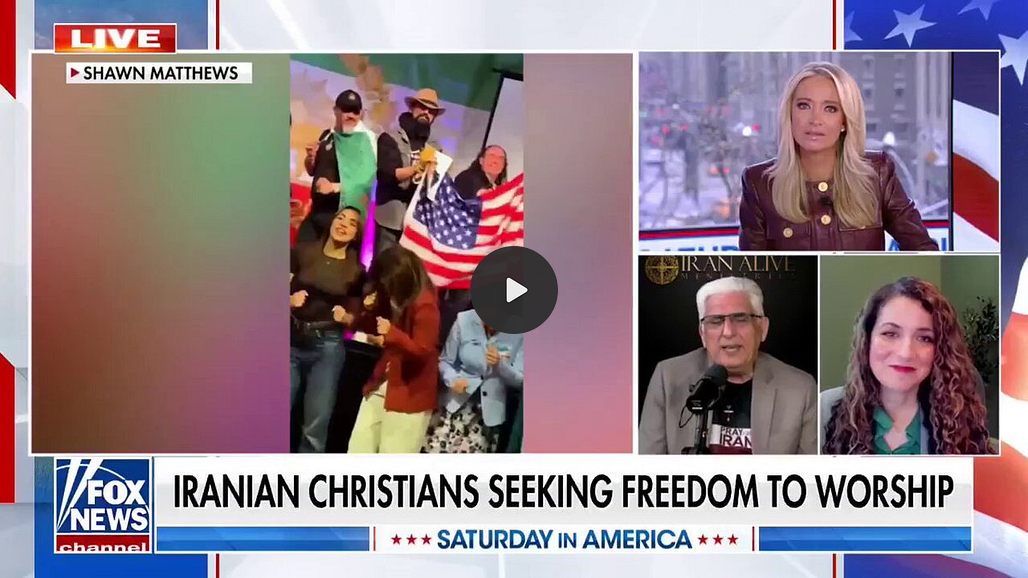
This growth under pressure suggests the regime faces a legitimacy problem deeper than external threats or internal dissent. When your entire governmental structure rests on mandatory religious conformity and that conformity increasingly requires violent enforcement, you’re not demonstrating strength. You’re revealing fragility.
For anyone tracking how authoritarian systems manage ideological challenges, Iran represents an extreme case study. The state has built a comprehensive architecture of repression spanning legal code, security apparatus, judicial system, and social pressure. It has isolated itself from international accountability and made outside assistance nearly impossible. It has tied religious conformity directly to state loyalty in constitutional language.
And still the thing it’s trying to eliminate keeps growing.
From pagan Romans to atheist communists to Islamic fundamentalists, Christianity has a way of not only surviving but flourishing that no other religion can match.